





 Portuguese
  English
  Spanish
  4 min of reading
  0 comments


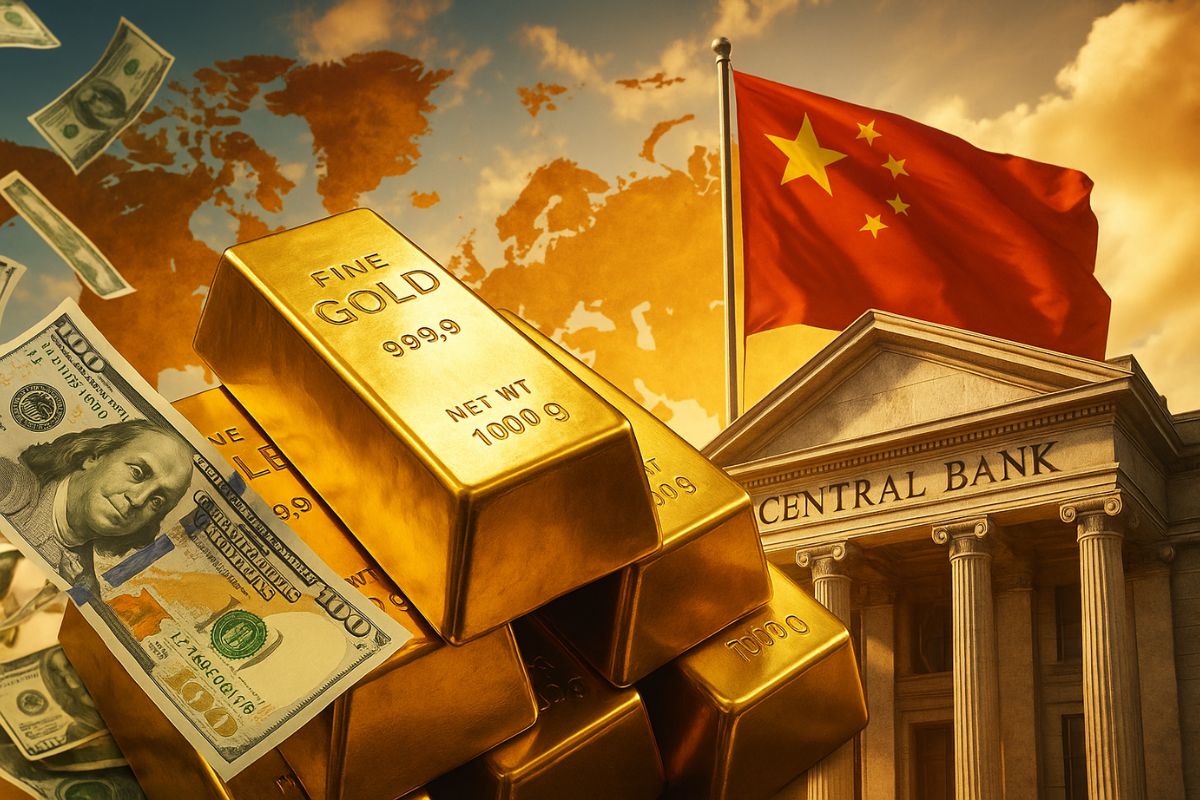
Dedollarization Movement Gains Strength with Gold at Records, Aggressive Central Bank Buying, and Search for Store of Value Amid Geopolitical and Monetary Uncertainties, According to Analyses by Raul Sena
The dedollarization has ceased to be a distant hypothesis and has become an observable behavior in public coffers. With gold reaching new highs and monetary authorities increasing their stockpiles, the perception grows that part of the world wants to reduce dependence on the dollar and strengthen store of value in an environment of tensions and inflation. According to Raul Sena, entrepreneur and founding CEO of Investidor Sardinha, official appetite for precious metal reflects an “increase of the wall” against systemic risks.
In the background, there are historical and recent factors. From the creation of the Bretton Woods system to the end of the gold standard, the United States gained flexibility to issue currency while the dollar became a global benchmark. The gold rally combines geopolitical fear, imported inflation, and a cycle of record central bank buying, ingredients that sustain the narrative of ongoing dedollarization.
Gold at Records and Why It Matters
Gold is not just a decorative asset.
-
Brazilian city bets on the business environment to generate jobs and attract investments in the energy sector — secretary reveals strategy at Macaé Energy 2026.

-
50 viaducts, 4 tunnels, 28 bridges, and 40 kilometers of bike paths: BR-262 in Espírito Santo will receive 8.6 billion reais for the largest engineering project in the state’s history, inspired by the Immigrant Highway in São Paulo.

-
Brazil produces too much clean energy and doesn’t know what to do with it: over 20% of solar and wind capacity was wasted in 2025 while investors flee and 509 renewable generation projects were abandoned in the last year.

-
Piauí will produce a new fuel that replaces diesel without needing to change anything in the truck’s engine and reduces pollutant gas emissions by half: truck drivers from all over the Northeast are already celebrating the news that will arrive later this decade.


Raul Sena emphasizes that the metal serves as a universal store of value, with industrial use and a unique monetary history.
In times of stress, investors and states seek protection in a scarce, divisible, and globally accepted good.
In the current cycle, the metal returns to the top as uncertainties grow.
For the analyst, when countries “increase the wall” by buying gold, billionaires and families tend to imitate them, reinforcing demand.
This behavior has a feedback effect on prices and amplifies the debate on dedollarization.
Central Banks Buying Nonstop and the Link to Dedollarization
According to Raul Sena, official purchases were record-setting between 2022 and 2023, exceeding one thousand tons, with countries like China, Russia, and emerging economies rapidly increasing their reserves.
The goal is to reduce exposure to the dollar and create safety nets for geopolitical shocks, sanctions, and exchange rate volatility.
This movement does not mean the end of the dollar, but signals accelerated diversification.
Gold becomes “neutral currency” among disputing blocs, while dedollarization progresses as a gradual process, guided by policy and public financing costs.
From Gold Standard to Global Dollar: The Context That Explains Today
From the classical gold standard to the Bretton Woods agreement, when the dollar was anchored to the metal and other currencies were anchored to the dollar.
In the 1970s, the end of the dollar’s convertibility into gold increased the freedom of issuance in the U.S., while the world maintained the American currency as a reserve.
Over time, the expansion of the monetary base and episodes of crisis reinforced the appeal of gold with each shock.
Inflation transfers out of the U.S. and the accumulation of geopolitical tensions fuel the current preference of central banks for physical metal and, consequently, the rhetoric of dedollarization.
What Investors Should Read from This Movement
Gold is a store of value, not a productive investment. The role of the metal is to protect purchasing power in adverse scenarios, not to maximize return.
Therefore, allocation should be considered as insurance, taking into account wealth, liquidity, and goals.
In practice, diversification across classes and geographies reduces dependence on a single scenario. In dedollarization environments, a portfolio that balances risk, reserves, and growth tends to better navigate shock cycles.
Sena highlights that the size of the position and time horizon matter more than attempts to “hit the top.”
Risks, Counterbalances, and Misinterpretations
Not every rise in gold implies catastrophe, emphasizes Raul Sena.
Often the market only prices in more uncertainty, not a collapse. On the other hand, ignoring the signals from central banks can be costly in crises.
The balance lies in recognizing the role of the metal without turning the portfolio into a single bet.
Another warning is to confuse dedollarization with an instantaneous replacement of the dollar.
It is a plural process, with paths through gold, bilateral agreements, and other instruments, each with trade-offs and limitations.
The gold rally reflects gradual dedollarization, geopolitical fear, and the urgent search for store of value. For investors and policymakers, the message is to adjust portfolios and reserves for a more fragmented world, without falling into extremes.
Do you agree that dedollarization is already underway or do you see only a temporary protection cycle? How are you distributing your store of value today and what role should gold have in the Brazilian portfolio? Share your opinion in the comments — we want to hear from those living this in practice.








Seja o primeiro a reagir!