





 Portuguese
  English
  Spanish
  4 min of reading
  2 comments


Discover What North Korea’s ‘Capitalist City’ Really Hides When It Opens to Tourists!
In the heart of North Korea’s totalitarian regime lies an economic anomaly called Rason. Yes, you read that right! A “capitalist city” within one of the world’s most closed countries. This city, which houses the country’s only Special Economic Zone (SEZ), is a controlled experiment where some capitalist practices are allowed. In a country where private property is practically a myth, Rason stands out by allowing its residents to buy and sell real estate, open private bank accounts, and conduct business transactions. But hold on, nothing happens without the government’s watchful eye. The city remains under intense surveillance, and the opening to international tourism arouses both curiosity and a certain degree of apprehension.
The Tourist Itinerary in Rason – What to Expect?
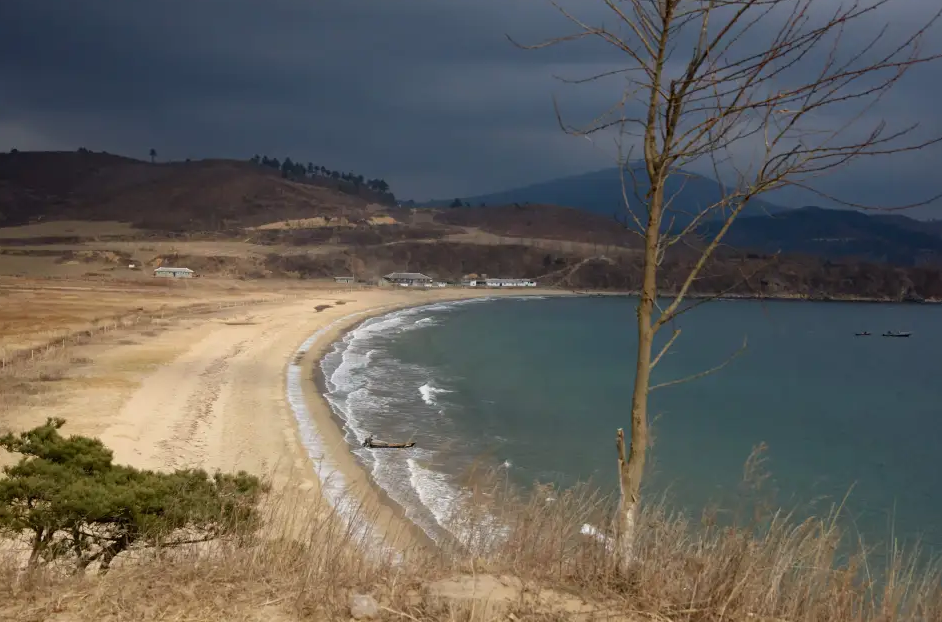
Day 1 – Arrival and First Impressions
The journey begins by crossing the China-North Korea border via the Wonjong Bridge. Upon arriving in Rajin, the largest city in Rason, tourists will encounter a rather peculiar scene: immaculate lawns at the Hae’an Park and a massive screen displaying, guess what… state news! As if that weren’t enough, visitors will also check out a greenhouse where flowers named after North Korean leaders are cultivated: Kimilsungia and Kimjongilia. Oh, and before the experience wraps up, there will be a Taekwondo presentation and a visit to the Palace of Students and School-Aged Children. All of this before settling into the Namsan Hotel, described as “modest” and “a bit outdated”.
-
Larger than entire cities in Brazil: BYD is building a 4.6 km² complex in Bahia with a capacity for 600,000 vehicles per year, but the discovery of 163 workers in conditions analogous to slavery has shaken the entire project.

-
With an investment of R$ 612 million, a capacity to process 1.2 million liters of milk per day, Piracanjuba inaugurates a mega cheese factory that increases national production, reduces dependence on imports, and repositions Brazil on the global dairy map.

-
Brazilian city gains industrial hub for 85 companies that is equivalent to 55 football fields.

-
Peugeot and Citroën factory in Argentina cuts production by half and opens a layoff program for more than 2,000 employees after Brazil drastically reduced purchases of Argentine vehicles.


Day 2 – North Korean Culture and Tradition
The second day starts with a touch of culture. Tourists will visit a foreign language bookstore and an art gallery, which is, interestingly, located in a small windowless building. Next, the itinerary continues with a boat trip to Pipha Island to observe seals. But the experience doesn’t end there: visitors will also learn how to prepare kimchi and visit a center dedicated to the Chinese game “Go”. To wrap up the day, there’s a visit to a local bank, where it’s possible to exchange money for North Korean currency – just don’t try to take it out of the country! And to top it off, a tour of the Rason School Uniform Factory.
Day 3 – Tourism and Economic Curiosities
The third day takes on a more curious tone. The itinerary includes an excursion to the city of Tumangang, where the borders with China and Russia practically meet. Visitors will get to know the Russia-DPRK Friendship House and the Three-Country Border Viewpoint. Next, comes a rather unusual part of the itinerary: a visit to a duck farm that raises black swans and another that cultivates… sea cucumbers. That’s right! At the end of the day, there’s a tour of the city of Sonbong and a hike on Mount Shahyang to relax a bit.
Day 4 – Mandatory Celebrations
The fourth day of the trip falls right on the anniversary of the late General Kim Jong Il. And do you know what that means? That the entire schedule will be replaced by celebrations. Tourists will need to prepare for mass dances and festivities spread throughout the city. The day’s itinerary is flexible, but one thing is certain: there will be no escaping the tributes to the leader.
Day 5 – An Unusual Farewell
To close the trip, nothing like a toast! Tourists will visit the Ryongysong Beer Factory and sample a clear lager beer of British origin, which has an interesting history – it was originally produced in an old brewery in Wiltshire. Additionally, the day includes a stop at the Paekhaksan Combined Food Processing Factory and a visit to the Chonghak Sanatorium, where, according to local guides, the mineral water can “cure” chronic gastritis and rheumatoid arthritis. After that, it’s time to hit the road back to China and conclude this surreal journey.
Is It Worth Visiting North Korea’s Capitalist City?
Visiting a “capitalist city” within North Korea is undoubtedly a unique experience. But is it worth it? The British government warns of the risks of arbitrary detention, and any slip-up, such as an ill-placed comment about the regime, can be taken very seriously.




Não entendi porque censuraram a palavra cra_p_u_la, esse site é co_mu_nis_ta também?
Tanto lugar interessante para visitar, só mesmo um doente pelo comunismo aceita deixar seu dinheiro para esse **** do Kim!