





 Portuguese
  English
  Spanish
  7 min of reading
  4 comments


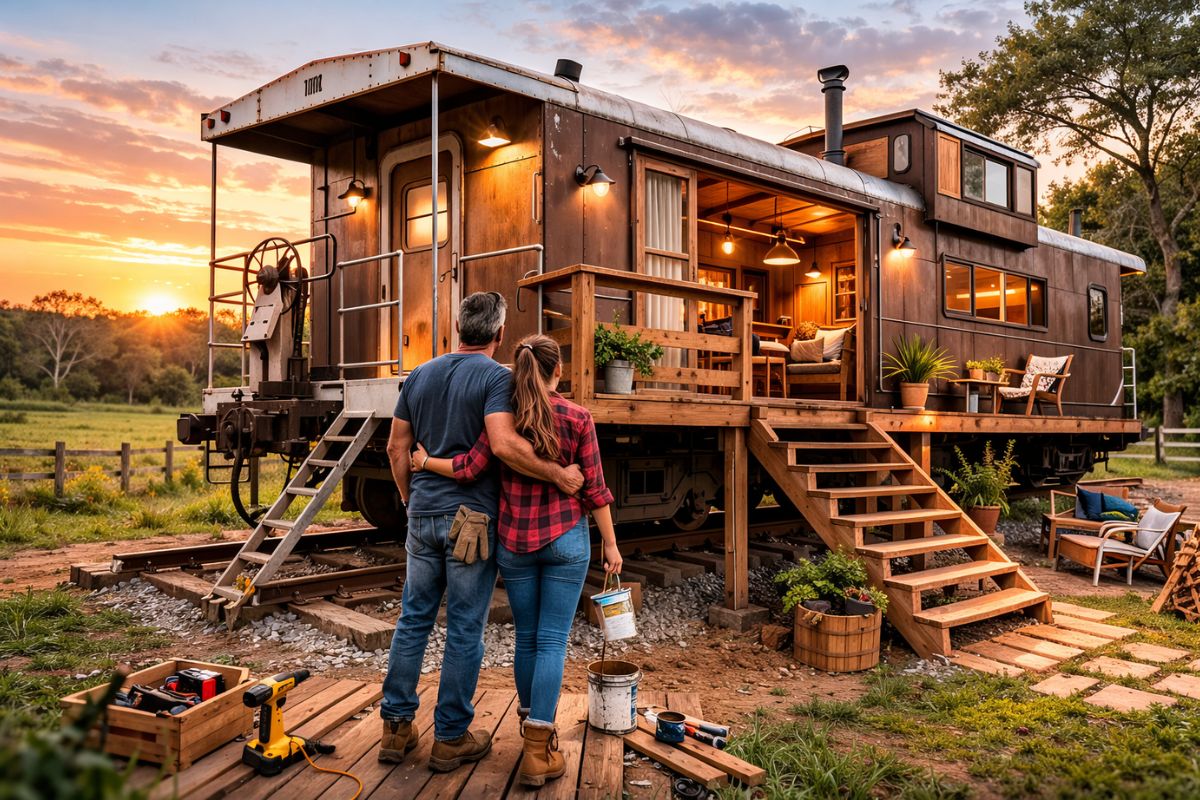


Bought for US$ 8 thousand at a junkyard in Iowa and transported for about US$ 2 thousand, the SOO 124 car from 1973 gained a new function after six months of renovation: keeping original elements, accommodating up to four people, and becoming seasonal accommodation surrounded by nature with discreet comfort.
The car that was to be dismantled and reused as metal in a junkyard ended up having another destination when Jim Dotzenrod, a retired carpenter, decided to buy it in 2016 and take it to his property in Iowa. Together with his daughter, Danielle Dotzenrod, he saw in the old railway piece a rare opportunity to combine memory, craftsmanship, and income generation without erasing the original identity of the structure.
The transformation required more than enthusiasm. The project involved the purchase of the SOO 124 freight car for US$ 8 thousand, about US$ 2 thousand in transportation, an estimated budget of US$ 4 thousand for the renovation, and about 300 hours of work spread over six months. In the end, the old train composition from 1973 turned into a listing on Airbnb, with a queen bed, bunk beds, bathroom, compact kitchen, Wi-Fi, TV, and a view of a pasture with horses.
From Railway Scrap to Concrete Opportunity
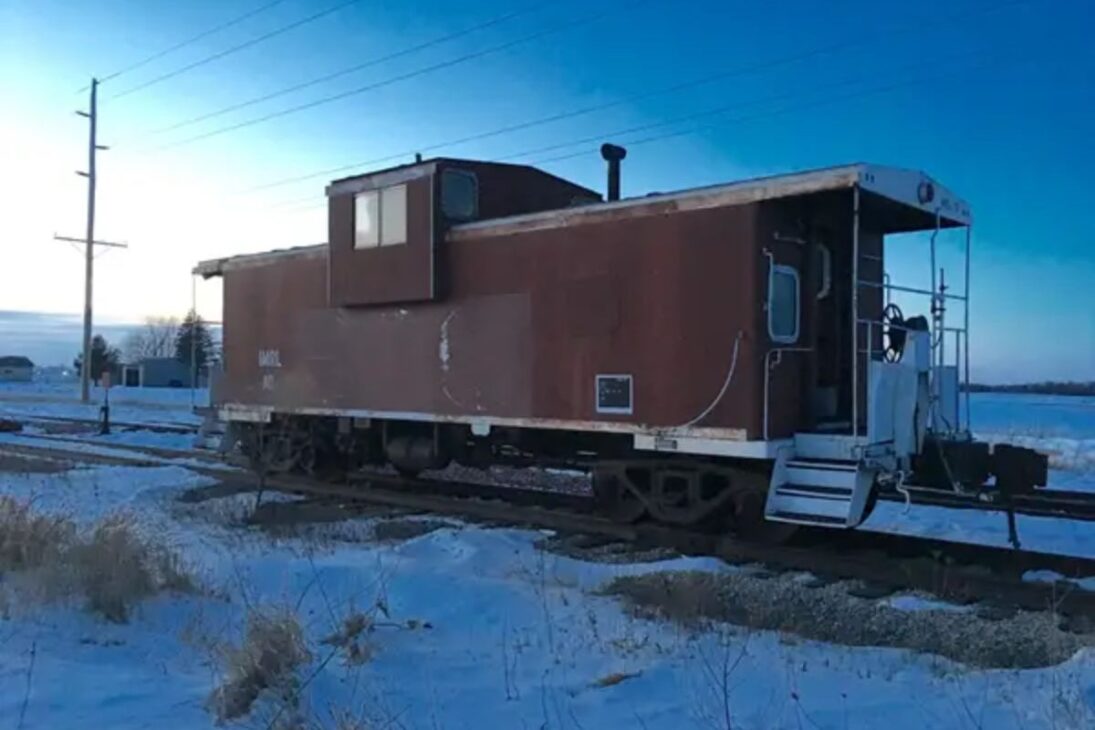
The idea came about after Jim drove past a row of cars along a road near Decorah, Iowa, several times. He had been observing those structures for some time and began to think about what could be done with one of them. It was then that the possibility of transforming it into accommodation began to make sense, especially since he already had experience repurposing buildings and converting them into seasonal rentals.
-
Santa Catarina produces up to 7 times more than it consumes in some sectors, and its century-old industries founded by grandparents and great-grandparents now compete on equal footing with Germany and the United States in the international market.

-
U.S. war giant weighing 9,600 tons and equipped with long-range missiles is sent to the Atlantic to protect global internet and hunt submarines.

-
Storms on Jupiter are up to 100 times more powerful than on Earth and reveal extreme phenomena that challenge everything we know about weather.

-
With five floors, the building made of red sandstone, marble, and limestone surprises with its strength, appears to float, and remains stable even when submerged in water, thanks to its hydraulic engineering.


When he tried to buy one of the cars he had seen first, he couldn’t advance in negotiations. The solution appeared through another route: his daughter’s then-boyfriend commented that there was a caboose about 48 kilometers away, in a recycling junkyard. The car was to be dismantled and sold as scrap, but Jim negotiated the purchase of the SOO 124 for US$ 8 thousand. What was about to become scrap came to be treated as a reusable asset, with both economic potential and historical value at the same time.
The Transport of the Car Required Heavy Operation
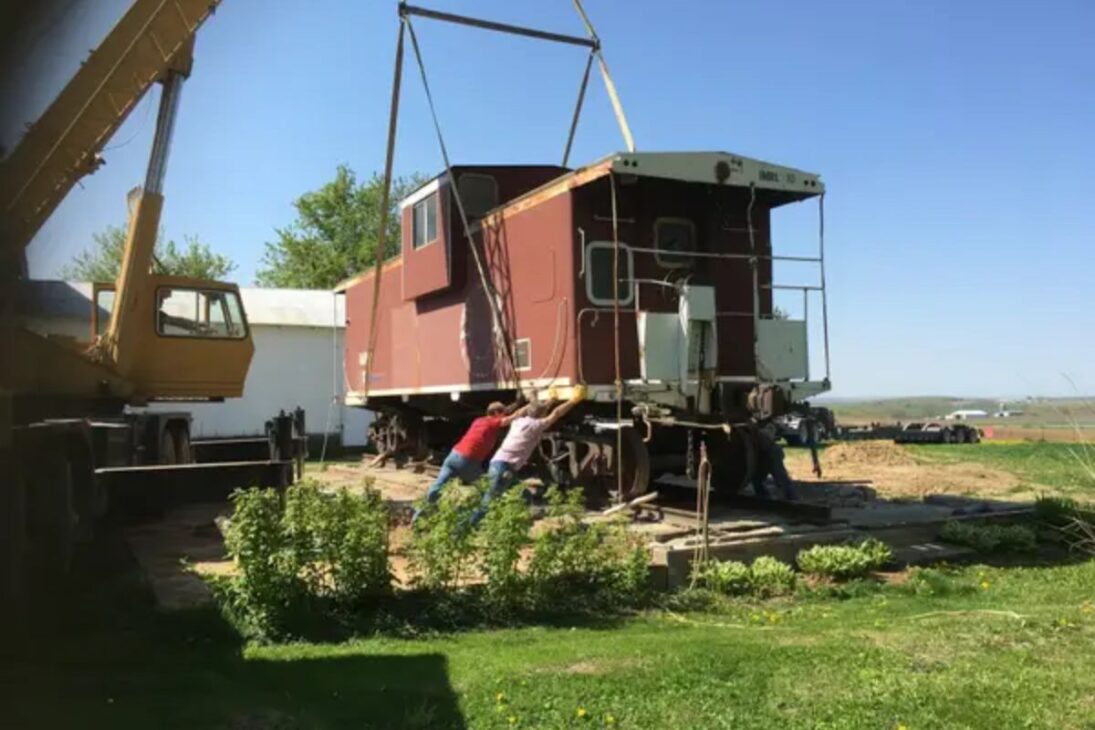
Buying the car was just the first challenge. Taking a structure built in 1973, weighing about 52 thousand pounds, from the junkyard to the farm required a heavy logistics operation, involving a semi-truck, crane, lift platform, and excavators. At the site of origin, two large machines were used to lift the car using straps and place it on the trailer rented by Jim.
Upon arrival at the property, the plan was already well defined. Jim had obtained real train tracks to serve as a base, so the car would not just be resting on the ground, but installed coherently with its history.
The truck positioned the piece under a large crane, which lifted it and placed it on the isolated tracks. According to Jim, the unloading stage took about an hour. The transport cost about US$ 2 thousand, and the car measures approximately 2.6 meters by 9 meters, a small space that needed to be carefully considered.
The Renovation Was Deep, But Did Not Erase the Original Identity
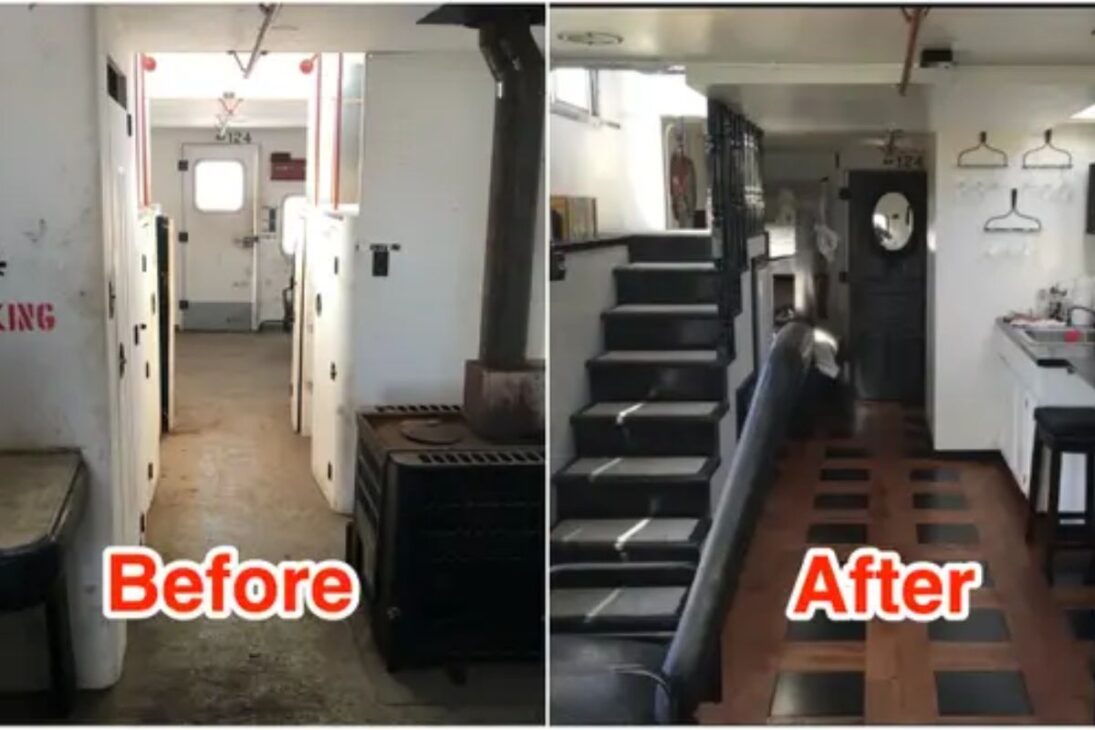
After being positioned on the ground, the car needed to be completely emptied. Decades of use left physical marks and a strong diesel smell, which became one of the first obstacles of the renovation.
Jim removed the old internal material, dismantled what was no longer useful, and washed the entire structure with pressurized water to eliminate the lingering odor. The process was straightforward, heavy, and not decorative. This was not an aesthetic makeover, but a real reconstruction.
The renovation, estimated at around US$ 4 thousand, progressed slowly because Jim still had a full-time job and could only work on the project at night or on weekends. Over approximately six months, he dedicated around 300 hours to the car.
The old iron structure was replaced with a new wooden base, more suitable for residential use. New windows were also opened on the sides with external help, and Jim built a handmade staircase after installing cabinets and organizing the queen bed area.
Father and Daughter Divided Functions to Make the Interior Functional and Welcoming
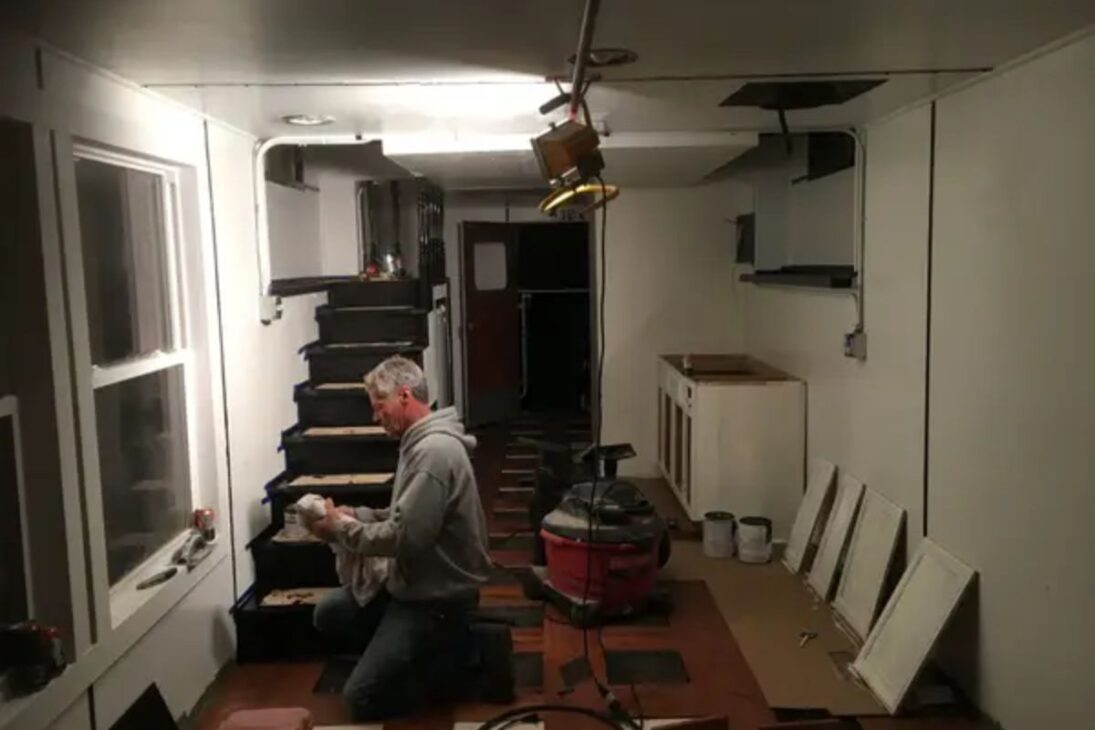
While Jim took on the structural part, Danielle provided the environment’s compositional eye. Their partnership was crucial to ensure the car did not just become a curious space, but a truly comfortable accommodation.
She helped define the flooring, combining black tiles with oak wood, participated in choosing the color palette, and added details that provided visual unity to the project. She also helped to apply tiles, including on the shower walls.
The result was a small but well-resolved interior. The car features a queen bed in the upper part, bunk beds on the main floor, a bathroom with shower and toilet, microwave, refrigerator, two-burner electric stove, and bar utensils.
There is also air conditioning, Wi-Fi, TV, sofa, mirror, and electric fireplace. Some of these items were sourced by Danielle from nearby cities, such as Madison in Wisconsin and Minneapolis. This blend of carpentry, repurposing, and piece curation helped transform a small space into an accommodation with its own personality.
Preserving the Car Inside Was Just as Important as Renovating It
From the beginning, Jim and Danielle did not want visitors to enter the car and feel like they were in any generic cabin. The goal was to keep clear signs that the space had once had a railway life. Therefore, they preserved important original elements, such as the conductor’s chairs and the central handrail.
The intention was not just to decorate with train references, but to keep a part of the material experience that made that place something unique.
This decision gave the project a rare balance. The exterior still unmistakably resembles a car, while the interior combines comfort and memory. The conductor’s chairs, which still swivel, were kept near the windows with a view of the property.
The original handrail remains in the center of the ceiling. Instead of erasing the past to facilitate the renovation, father and daughter chose to use the past as the main differentiator. It is this choice that prevents the accommodation from losing its identity in the modernization process.
The Outside Expanded the Experience and Helped Add Value to the Accommodation
Besides the interior, Jim also built a wooden deck next to the car, visible through the windows and facing the property’s pasture. This outdoor area became an important part of the experience for those staying there.
The space allows sitting, watching the sunset, seeing the horses, and experiencing a routine very different from urban life. What could have been just an unusual rental gained the dimension of a rural retreat.
According to Danielle, the horses became an unexpected attraction, appearing in a large part of the reviews. Guests can feed and pet the animals, while Jim is also willing to offer buggy rides.
The surroundings further enhance the car’s appeal as accommodation: there is the possibility to kayak on the Upper Iowa River, explore a 17.7-kilometer trail, participate in activities at a local shooting range, and visit Toppling Goliath Brewery in Decorah, about 15 minutes away.
The car is not just marketed as shelter but as a gateway to a slower and more observant pace of life.
The Car Became a Source of Income Without Losing the Value of a Historical Piece
Jim’s bet also had a clear financial goal. He believed that the car could generate extra income, and his previous experience with a silo transformed into a seasonal rental reinforced this conviction.
The accommodation was listed on Airbnb as CR Station Train Caboose and began attracting visitors from nearby cities, such as Des Moines, as well as families interested in a stay outside the traditional standard.
This performance shows why such projects attract attention. The car combines three difficult-to-combine factors: repurposing a historical structure, functional adaptation for accommodation, and emotional appeal linked to the rural landscape.
During the summer, occupancy tends to be high, especially among families wanting to escape the urban setting for a few days. Rather than building something from scratch, Jim and Danielle extracted value from a nearly discarded piece and proved that preservation and profitability can walk hand in hand.
The story of this car shows how an old railway structure can gain a new meaning when there is planning, technical work, and respect for the original identity. What started as an unlikely purchase at a junkyard ended as a different, functional accommodation full of memory.
Would you spend a few days inside a car transformed into accommodation or do you think it’s more interesting to preserve this type of piece without adapting it for rental?








Amei, Muito Criativo Boa Matéria!!!
Eu até moraria nele!!
A quem interessa essa matéria????? Não tem nada a ver nem com o Brasil…
Se vc quiser conhecer. É para isso que serve a matéria.
Além do mais, preservar faz bem. Não é como aqui que temos vários vagões antigos ao relento, estragando e a história se perdendo.