





 Portuguese
  English
  Spanish
 5 min of reading
  0 comments


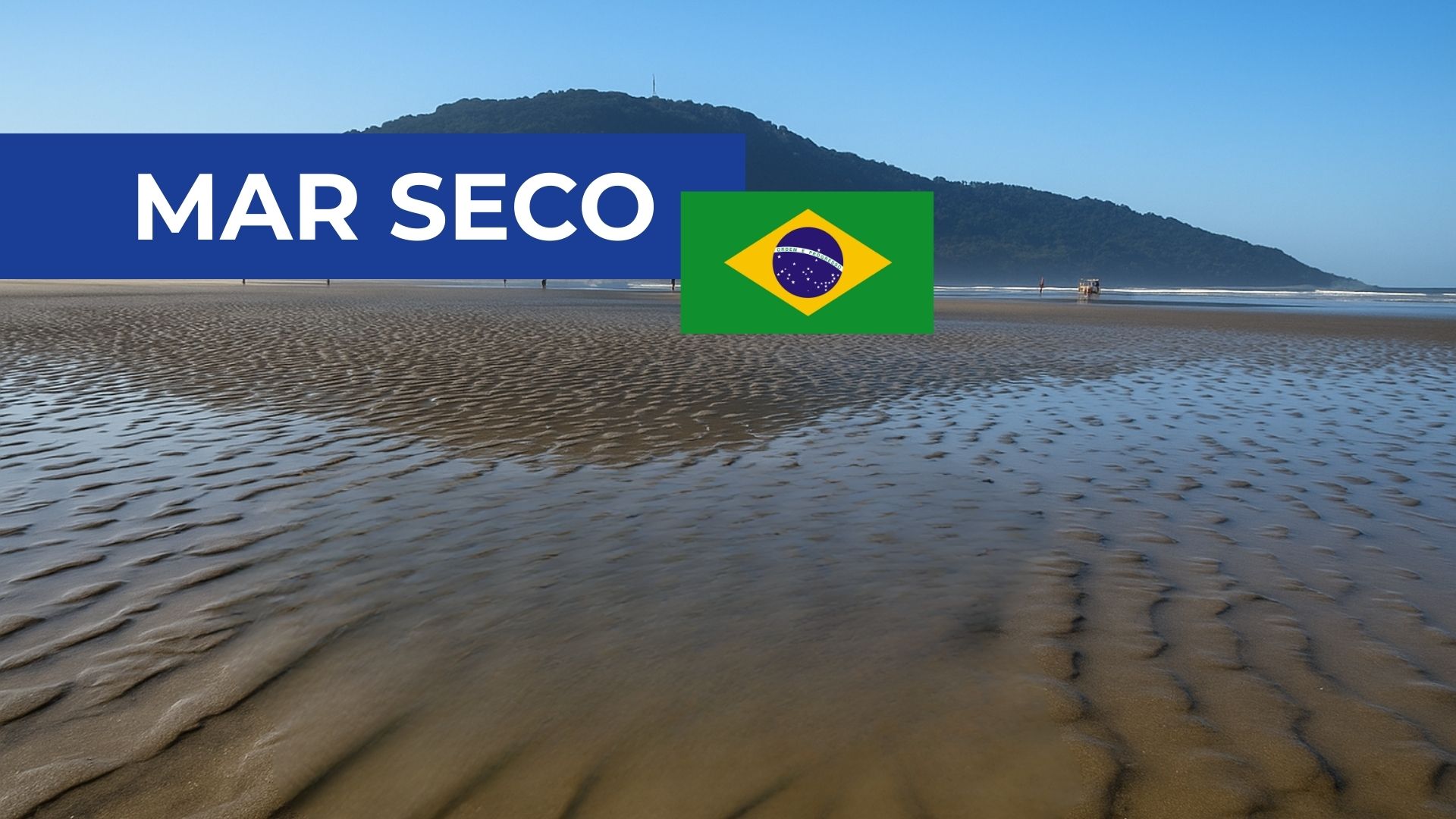
Residents of Praia Grande Registered the Retreat of the Sea This Thursday (21), a Phenomenon That Left the Sands Exposed and Caught Attention on Social Media. The Incident, Although Unusual for the Population, Is Related to the Natural Variation of Tides.
Residents of Praia Grande, on the coast of São Paulo, Woke Up This Thursday (21) to an Unusual Scene.
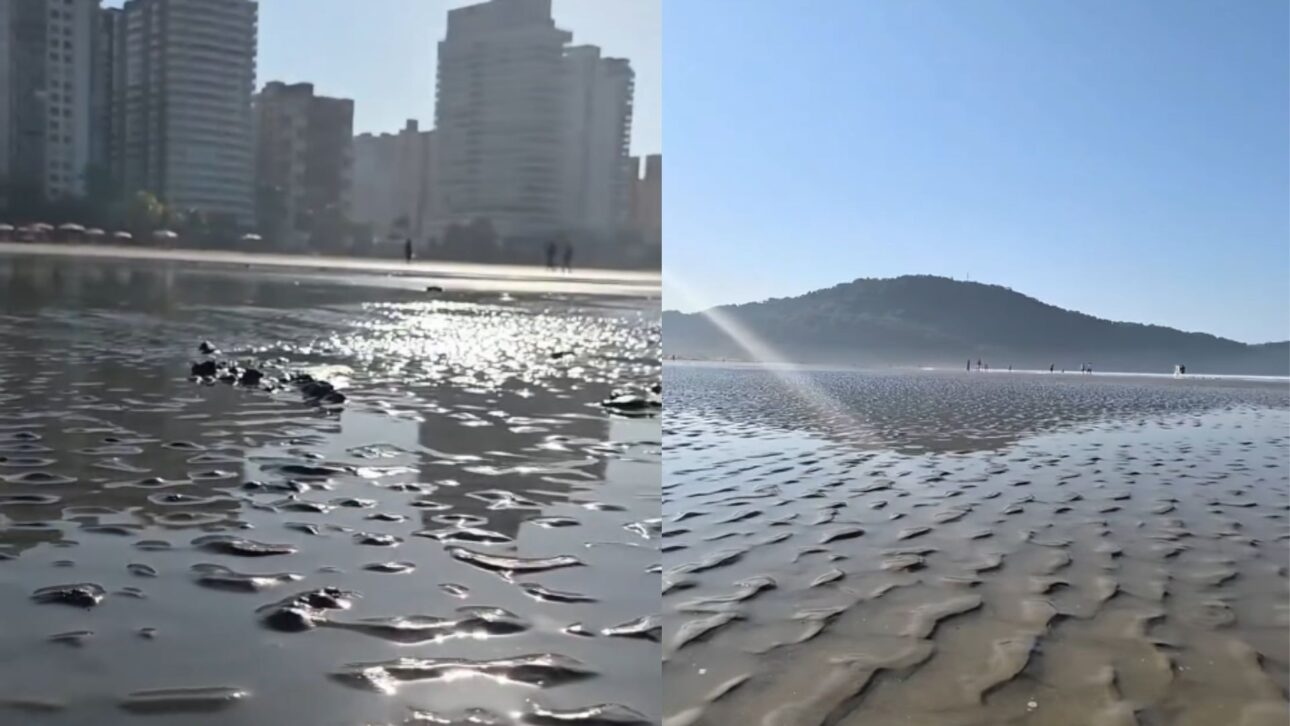
Stretches of sand were exposed, and the sea retreated enough to give the impression that it “simply dried up.”
Images posted on Instagram show the water level quite low near the break and prompted concerned comments on social media, as reported by the Diário do Litoral.
-
These living root bridges and ladders are over 700 years old and help indigenous people survive in one of the rainiest regions in the world.

-
From sertanejo star to international investor: Ana Castela invests millions in a mansion in the USA, creates a themed accommodation in Orlando, and shows that the “boiadeira” also wants to grow away from the stage.

-
The 10 most stunning motorhomes in the world: a $3 million trailer with a rooftop nightclub and garage for a Ferrari, “palaces on wheels” with Italian marble, private cinema, and five-star hotel luxury for billionaires.

-
Trump wanted to spend $400 million on the White House, but the courts prohibited the million-dollar construction.


Despite the scare, the situation corresponds to low tide, a natural variation in sea level primarily determined by the gravitational pull of the Moon and Sun, as well as meteorological factors.
In specific episodes, the combination of these elements can accentuate the retreat and make the phenomenon more evident along the coast.
Retreat of the Sea in Praia Grande
In conditions of persistent winds blowing from land to sea and high atmospheric pressure, the ocean can recede from the shoreline for several hours.
When this situation coincides with the phase of the lowest astronomical tide, the retreat intensifies.
There is a greater likelihood of this occurring during the passage of extratropical cyclones, which reorganize the wind field and the distribution of water mass over the coastal platform.
The perception of a sudden reduction in water is usually greater on gently sloping beaches, such as those on the São Paulo coastline, because small variations in level already expose extensive areas of sand.
The very dynamics of the break also change during these moments, with channels and sandbanks becoming more visible.
Where Does the Water Go During Low Tide
The water does not disappear. It redistributes, moving to areas farther from the coast and occupying lower levels of the water column until the next phase of the tide — the flood — gradually brings the level back.
This cycle is predictable within the tidal regime, although meteorology can amplify or soften the effect observed on the beach.
Still, the sense of novelty often fuels doubts. In Praia Grande, part of the reaction on social media was one of concern. “I’m afraid of the receded sea,” wrote one internet user.
Another resident linked the episode to recent events in the region: “Storm, flood, sea surge, and now this? I’m in!”
Expert Dismisses Tsunami Risk
The most discussed hypothesis in situations like this is that a significant retreat could precede a tsunami. However, this association does not hold in the recorded case.
According to the Diário do Litoral, oceanographer Regina Souza from the Hydrodynamics Research Center of Unisanta (NPH-Unisanta), explained that what was observed is a normal tidal variation, with no indication of risk for the region.
According to the expert, this episode was not the most extreme of the year.
“Though today’s tide was negative, it was not the lowest of the year. In June, for example, there were two even lower tides than today,” she said.
The São Paulo coast experiences predictable fluctuations, some more visible than others.
Phenomenon of Syzygy on the São Paulo Coast
In addition to meteorological effects, the astronomical configuration also plays a role.
On July 11, the São Paulo coast experienced a period of syzygy, when the Sun, Moon, and Earth align and the amplitude of the tides tends to increase.
In such phases, ebb tides are lower and flood tides are higher, amplifying the contrast observed on the beach.
The mechanism is natural and repeats itself according to the lunar calendar. However, not every lower tide is directly linked to syzygies.
Local readings require consideration of wind, pressure, and swell on the day, alongside the coastal underwater topography. What is observed on the sand results from the sum of the predicted astronomical tide and the adjustments imposed by the atmosphere.
Wind and Pressure Influence Sea Level
Winds from the west quadrant, when persistent, tend to “push” the water layer out to sea and temporarily reduce the level near the coast.
At the same time, higher pressure can “sink” the surface of the sea slightly, reinforcing the momentary drop in level.
On the other hand, winds directed towards the coast produce the opposite effect and can accelerate the return of the water.
On the southern and central coast of São Paulo, the orientation of the beaches and the presence of sandbanks and internal channels tend to visually amplify these movements.
Thus, small deviations of a few centimeters can turn into meters of exposed sandy areas, especially during quadrature tides or in the ebb of syzygy tides.
Population Reaction
The astonishment is compounded by memories of recent episodes of storm surges, heavy rains, and flooding in the region, which helps explain residents’ sensitivity to any unusual signs.
This time, the difference was the appearance of the phenomenon: where water was expected up to the ankle, dry patches and isolated puddles appeared.
Throughout the morning, new posts on social media fueled the conversation and repeated the comparison that the sea had “simply dried up.”
The description, according to the Diário do Litoral, refers only to the tidal mechanism, observed along the entire Brazilian coast.
Changes in the Sea During Low Tide
Those who frequent the beach may notice channels and sandbanks exposed, faster currents in certain stretches, and changes in the point where the waves break.
These changes require extra caution from bathers, surfers, and fishermen, especially during the transition to the flood, when the water returns and the beach profile changes again.
The recommendation is to monitor tide times and sea conditions before entering the water. Additionally, a correct reading of the situation avoids misinterpretations about exceptional risks.
In typical scenarios like the one recorded in Praia Grande, the return of the level follows the natural progression of the tidal cycle throughout the day.








-

-

-

5 pessoas reagiram a isso.