





 English
  Francês
  Alemão
  Italiano
  Japonês
  Norueguês
  Portuguese
  Spanish
  3 min of reading
  2 comments


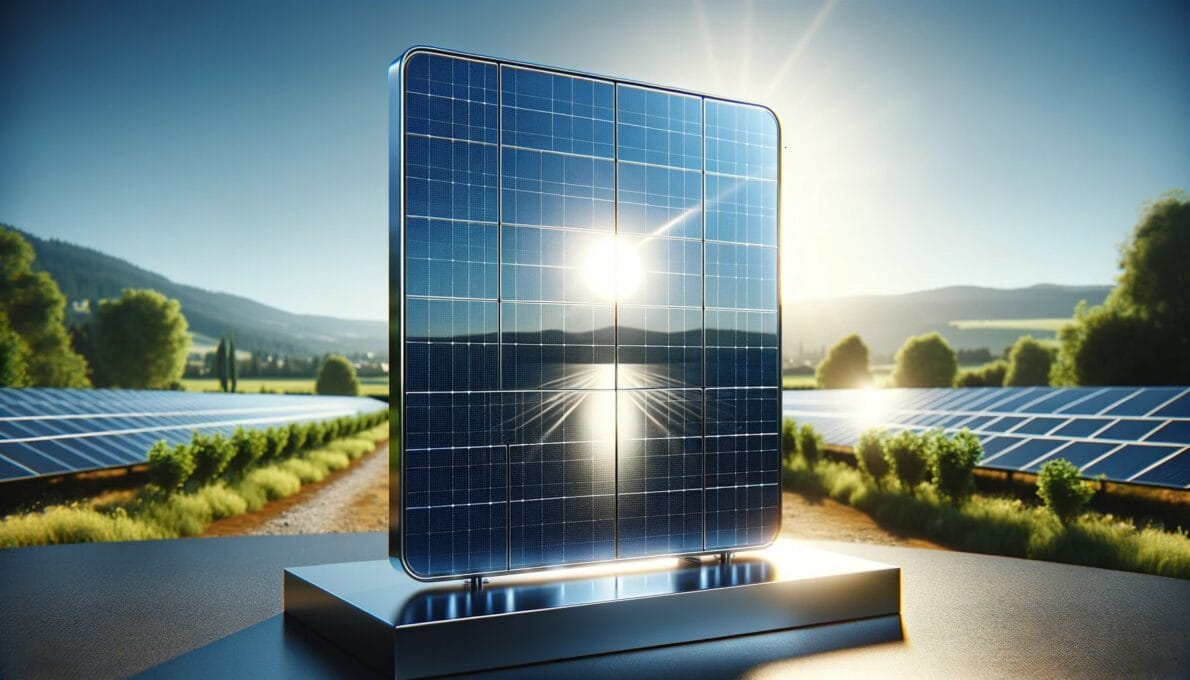

Scientists Are Constantly Working on New More Efficient and Cheaper Photovoltaic Modules. The Idea of the Bifacial Solar Panel Is to Differentiate Itself from the Others by Generating Almost Half More Efficiency.
There is no doubt that, in recent years, solar photovoltaic energy has experienced significant technological advancements. Innovation is constant, and the latest is the development of bifacial solar panels, which generate more energy. The best part is that they are more economical than traditional photovoltaic modules. The bifacial solar panel is what is known in the market as a bifacial module. If this is your first time hearing about this solution, the bifacial panel is basically a solar panel that generates energy from both sides.
Unlike conventional photovoltaic modules, the bifacial module is capable of capturing sunlight from both the front and the back.
Bifacial Photovoltaic Modules Can Generate Up to 30% More Energy
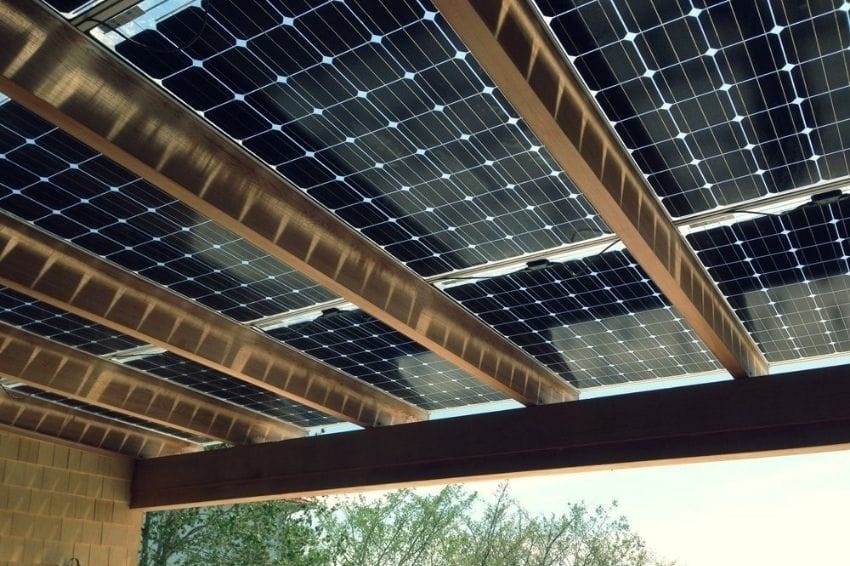
The bifacial solar panel can generate up to 30% more energy compared to conventional modules. The increase in energy production depends on how the photovoltaic module is installed, as well as the reflective capacity of the surface on which it is positioned.
-
Renewable energy advances over protected areas in Brazil, and a survey by the Energy Transition Observatory reveals silent impacts that challenge environmental conservation and pressure sensitive traditional territories.

-
Rio Grande do Sul accelerates energy transition: State invests in renewable technologies and consolidates decarbonization strategies and pathways to attract billions in new industrial investments.

-
With 160,000 m² of collectors, an area larger than 20 football fields, Silkeborg, in Denmark, hosts a solar thermal plant that heats 19,500 homes and could become the largest solar heating plant in the world.

-
A study reveals the expansion of renewable energy procurement in Brazil and shows how companies are taking advantage of opportunities to reduce expenses, ensure energy efficiency, and strengthen strategic environmental commitments.

Less reflective surfaces will result in a smaller additional gain, while highly reflective surfaces can significantly increase the energy production of photovoltaic modules. Thus, the clearer and more reflective the surface, the greater the yield.
Bifacial solar panels are gaining more and more space in the market, and now we are on the brink of a new era of this technology. Currently, most photovoltaic modules are produced with crystalline silicon solar cells, a technology that offers a relatively lower bifaciality factor.
How Does the Bifacial Solar Panel Work?


If we take a datasheet of a bifacial photovoltaic module and look at its bifaciality factor, this factor is 70%. This means that the back part of the photovoltaic modules can generate up to 70% of the energy that the front part is capable of producing; that is, the greater the bifaciality, the greater the use of solar irradiation from the back side, and consequently, we will have greater power being generated by the photovoltaic module.
Researchers used perovskite instead of silicon in the production of their bifacial solar panel. Bifacial perovskite devices were manufactured using single-walled carbon nanotubes as front and back electrodes, and this part of manufacturing is a bit more complex.
These single-walled carbon nanotubes offer high transparency, conductivity, and stability, and this is where the big difference lies. These characteristics allow bifacial perovskite photovoltaic cells to achieve a bifaciality factor of over 98%. And it doesn’t stop there; according to the study, the material costs of these bifacial perovskites, entirely based on carbon electrode, are 70% lower compared to the monofacial device.
This means that in the quest for cheaper solutions to accelerate solar photovoltaic energy worldwide and also to democratize, bifacial solar panels can be an excellent solution.
Photovoltaic Modules Can Generate More Than 36 MW per Square Centimeter
The team responsible for the study included scientists from the Surrey Advanced Technology Institute in the UK, along with colleagues from the University of Cambridge, the Chinese Academy of Sciences, Xidian University, and Zhengzhou University in China.
According to Jing Zhang, a researcher at the Surrey Advanced Technology Institute, their bifacial photovoltaic modules can collect sunlight from both the front and back panels. This generates more energy and is less dependent on the angle at which the light strikes them. It is worth mentioning that the bifacial solar panel can generate more than 36 MW per cm².









Quanto a geração parece não deixar dúvidas, a questão será o preço.
Parece bastante viável se for mais eficientes e mais baratos eu gostei
Gostaria de saber o preços se vale à pena mesmo