





 Portuguese
  English
  Spanish
  5 min of reading
  8 comments


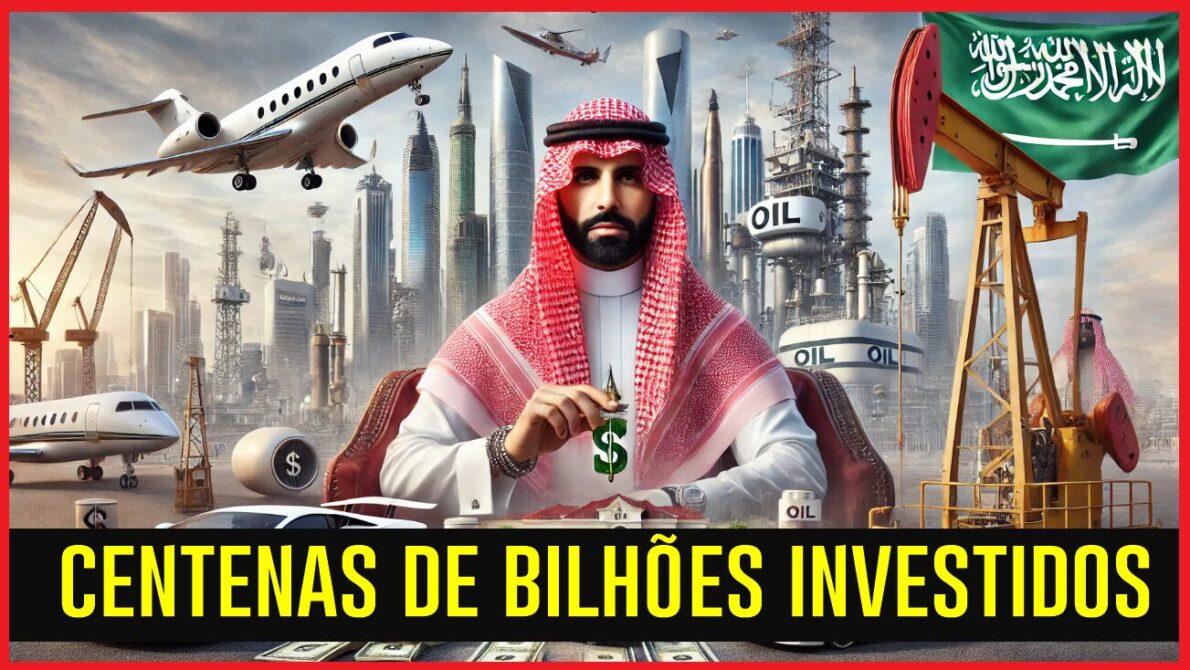

Oil-Rich Countries, Such as Saudi Arabia, United Arab Emirates, and Qatar, Are Shifting Economic Focus and Investing Billions in a Promising New Sector, With Potential to Be Worth US$ 1 Trillion by 2027
The sovereign funds of the Middle East play a crucial role in the global investment landscape, particularly due to their strong ties to the oil sector. These funds, often fueled by the vast revenues generated from oil exports, are used by countries like Saudi Arabia, United Arab Emirates, Kuwait, and Qatar to diversify their economies and secure financial stability for the future.
In parallel, in recent years, artificial intelligence (AI) has emerged as one of the main drivers of technological innovation on a global scale.
With notable advances in various areas such as machine learning, automation, and natural language processing, AI has been shaping the future of entire industries and redefining how companies operate.
-
The rise in oil prices could ensure an extra revenue of R$ 100 billion for the Federal Government, indicates a recent economic study.

-
Naturgy begins an investment of R$ 1.6 million to expand the gas network in Niterói and benefit thousands of new residences and businesses.
-
A major turn in the Justice system suspends tax increases and directly impacts oil and gas companies in Brazil by affecting costs, contracts, and financial planning, leaving uncertain what could happen to the sector if these costs had increased.

-
Brava Energia begins drilling in Papa-Terra and Atlanta and could change the game by reducing costs in oil while increasing production and strengthening competitiveness in the offshore market.
The AI market, previously focused on small technological initiatives, is now on an accelerated growth trajectory, with potential to reach between US$ 780 billion and US$ 990 billion by 2027, according to estimates from Bain.
In this context, Middle Eastern countries, historically dependent on oil revenues, are shifting their focus to strategic investments in the AI sector, preparing for a technological future.

The Accelerated Growth of AI and Its Market Potential
Generative AI, one of the most promising areas of artificial intelligence, has been responsible for driving this transformation.
According to NVIDIA CEO Jensen Huang, generative AI represents the largest market expansion for hardware and software in decades.
Leading technology companies like Microsoft, Google, and Meta are developing increasingly advanced AI models, with a growing demand for robust infrastructure, high-capacity data centers, and greater computing power.
This movement is creating a global race for innovation, with private sector players and sovereign funds seeking to capitalize on the potential of this emerging market.
According to forecasts, the AI market will continue to grow substantially, driven by investments in research and development (R&D), as well as the integration of AI into everyday products and services.
Major cloud and software-as-a-service providers are leading this expansion, focusing on continuous innovation and development of new AI-based products.
Middle East: From Oil Dependency to AI Leadership
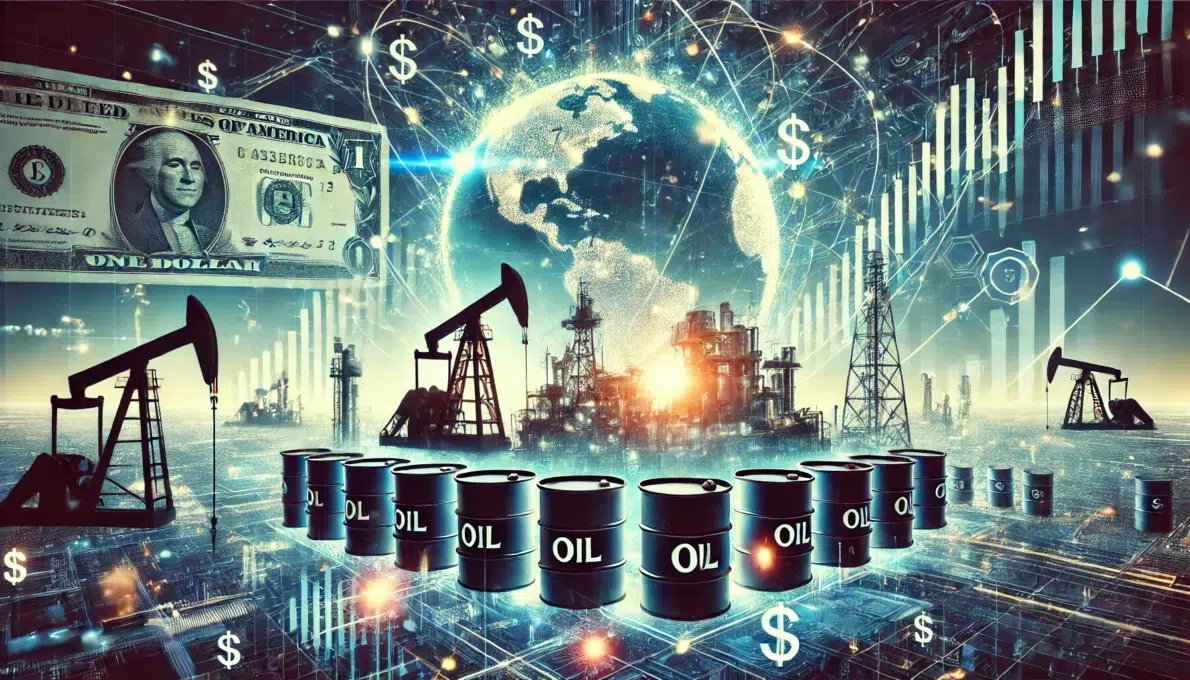
In the Middle East, a silent but powerful transformation is underway. Traditionally known for their dependence on oil exports, countries such as Saudi Arabia, United Arab Emirates, Kuwait, and Qatar are diversifying their economies and using their sovereign funds to invest in innovative sectors like artificial intelligence.
This strategic movement is driven by the need to adapt to a future where clean energy and sustainable technologies dominate the market over fossil fuels.
The region’s sovereign funds, such as the Saudi Public Investment Fund (PIF) and Abu Dhabi’s Mubadala, are emerging as key financiers of AI startups in Silicon Valley.
In 2022, funding from these funds increased fivefold, according to data from Pitchbook. The MGX fund from the United Arab Emirates is a striking example, having recently invested in OpenAI, raising the company’s valuation to US$ 150 billion.
Moreover, the Mubadala fund has formed strategic partnerships with giants like Microsoft and BlackRock to raise up to US$ 100 billion for building AI infrastructure.
Driving the AI Revolution with Oil Money
With rising energy prices in recent years, the sovereign funds of the Middle East have accumulated vast resources being directed towards the AI sector.
Among the major players, the Saudi Public Investment Fund (PIF) has over US$ 925 billion in assets, while the Abu Dhabi Investment Authority manages around US$ 1 trillion.
These funds possess the economic power necessary to shape the future of AI, both in the Middle East and globally.
In addition to investments in AI, these funds also operate in strategic sectors such as sports, infrastructure, and technology. The PIF, for example, has invested billions in Uber and sports initiatives, such as the LIV golf league and professional football.
Additionally, it is in negotiations to form a US$ 40 billion partnership with Andreessen Horowitz, one of the most renowned venture capital firms in the U.S.
Geopolitics and Strategic Investments in AI
Investments in AI by Middle Eastern countries are not just an economic issue but also a geopolitical one.
For the United States, ensuring that strategic allies such as Saudi Arabia and the United Arab Emirates invest in American companies is a priority. This prevents competitive nations, like China, from dominating the global tech sector.
As highlighted by Jared Cohen of the Goldman Sachs Global Institute, capital from countries like Saudi Arabia and the United Arab Emirates is shaping the global economic and political future, making them influential geopolitical players.
However, these partnerships face challenges. Some Western startups, like Anthropic, have rejected investments from Saudi Arabia due to national security concerns and human rights issues.
The assassination of journalist Jamal Khashoggi in 2018 generated a negative reaction in the global business community, leading some investors to distance themselves from partnerships with the country.
Still, Saudi Arabia is determined to become a global leader in AI, having established the Saudi Company for Artificial Intelligence (SCAI), a fund dedicated exclusively to AI development.
The Future of AI: Challenges and Opportunities
The explosive growth of AI brings with it a series of challenges. The increasing demand for data centers and computing power is putting pressure on energy infrastructures worldwide. Large data centers, which currently consume about 100 megawatts, are scaling up to gigawatts, overloading power grids and creating an urgent need for more efficient and sustainable solutions.
Additionally, companies and governments are seeking ways to reduce latency and increase security in the use of generative AI.
Smaller language models developed for specific tasks are becoming increasingly important, offering a more energy-efficient and cost-effective alternative. Startups and independent software providers are also racing to incorporate AI into their products, creating a vibrant and innovative ecosystem.
The Role of the Middle East in the Future of AI
As the world moves towards a future increasingly dominated by artificial intelligence, the Middle East is positioning itself as an essential player in this new landscape.
With vast financial resources from oil, the region’s sovereign funds are aggressively investing in AI startups, shaping the future of global technology. However, geopolitical challenges and human rights issues continue to be significant obstacles to these investments.
The global AI market is rapidly expanding, and nations that can dominate this sector will have a significant advantage in terms of innovation, economic power, and political influence.
With its renewed focus on AI, the Middle East is determined to secure its place among the leaders of this technological revolution.







Qui magnífica ideia.
De
Boa leitura sobre as relações entre a IA e a correlação q esta terá c os grupos geo económicos q já existem, nomeadamente os árabes, estes principalmente(por causa ds petrodolares), o oriente( c a China a querer assumir como o maior player das tecnologias) e o west world. O artigo é exaustivo….. Weldone!
Interessante!