





 Portuguese
  English
  Spanish
  4 min of reading
  0 comments


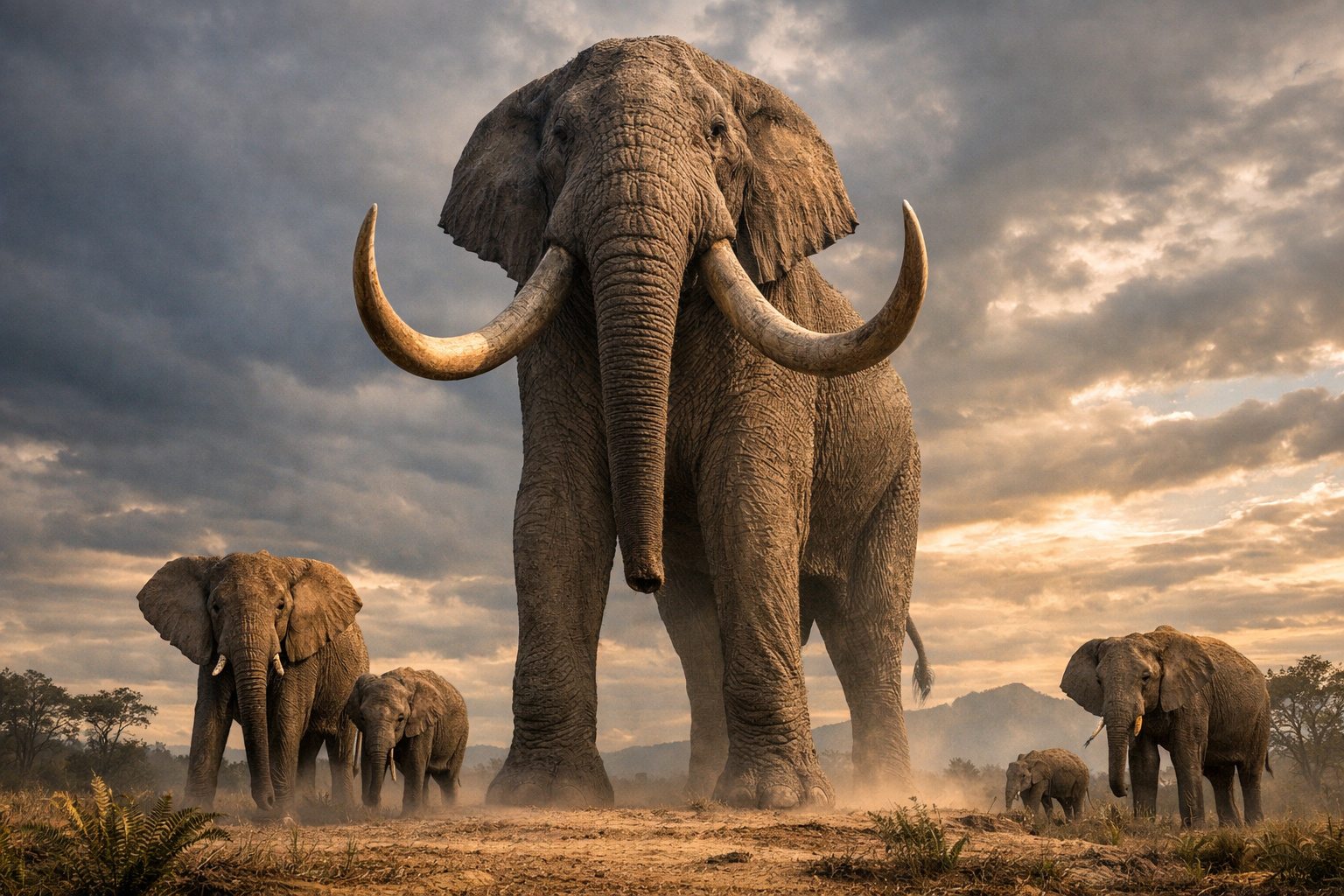
With More Than 5 Meters Tall And Weighing Up To 22 Tons, The Palaeoloxodon Namadicus Was The Largest Elephant And One Of The Largest Terrestrial Mammals Ever Recorded By Science.
When talking about giant elephants, the most common image tends to be that of the current African elephant, impressive in its own right. However, paleontology shows that it is far from being the largest representative of the group. That title belongs to the Palaeoloxodon namadicus, a prehistoric elephant that lived in Asia during the Pleistocene and completely redefined the size limits for a terrestrial mammal.
Unlike popular exaggerations that circulate on the internet, the gigantism of this animal is well documented in fossils, especially in long bones and skull fragments found in the Indian subcontinent. Based on this evidence, researchers reconstructed an animal with no known precedents.
Dimensions That Put Any Living Elephant In The Background
The most widely accepted estimates indicate that the Palaeoloxodon namadicus reached between 4.8 and 5.2 meters at the shoulder, well exceeding the approximately 4 meters of the largest African elephant ever measured. In terms of body mass, the numbers are even more impressive.
-
At an altitude of 400 km by astronauts from the International Space Station, Paris transforms at night into a golden mesh so precise that it reveals the outline of the Seine River, avenues, and entire neighborhoods like a luminous map drawn over the Earth.

-
iPhone 17 reaches historic low price with 256 GB, 120 Hz display, and drops to R$ 5,703 on Shopee, featuring A19 chip, dual 48 MP cameras, battery life of up to 30 hours, and advanced AI features.

-
Trip to Mars getting closer: Pulsar Fusion, from the UK, advances with plasma ignition in fusion engine and could drastically reduce space travel time, making crewed missions faster, safer, and economically viable.

-
Made with recycled plastic, a Lego-inspired brick builds a 180 m² house in 15 days, providing thermal comfort, preventing moisture, and turning waste into income, kits, and accelerated construction in the country.


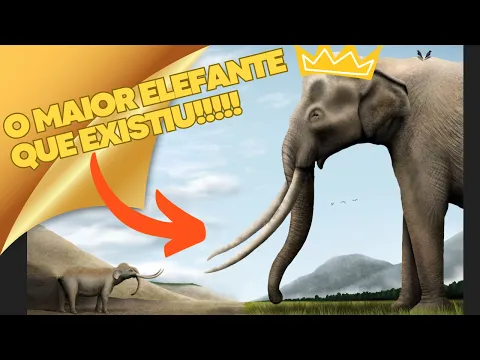

Calculations based on the thickness and volume of the bones suggest a weight between 15 and 22 tons, with some studies proposing values close to the upper limit of this range. This means that this elephant could weigh more than three adult African elephants combined, making it one of the largest terrestrial mammals that ever walked the Earth.
Giant Straight Tusks And Unique Anatomy
One of the most striking features of the Palaeoloxodon namadicus was its long and relatively straight tusks, a characteristic that distinguishes this group from modern elephants. These tusks could exceed several meters in length and were used for both digging and defense and competition among individuals.
The skull also showed a robust structure, with thick bones capable of supporting the enormous weight of the tusks and the associated musculature. The combination of extreme height, massive skeleton, and colossal tusks gave the animal a physical presence comparable to that of a small two-story building.
Direct Comparison With Other Giants Of Prehistory
Although other elephants and mammoths reached notable sizes, none of them surpassed the Palaeoloxodon namadicus in height and mass combined. The Mammuthus Trogontherii, for example, reached about 4.5 meters in height and weighed between 8 and 10 tons, being gigantic, but still significantly smaller.
Even the Deinotherium, another prehistoric proboscidean famous for its size, did not exceed the maximum estimates attributed to the Palaeoloxodon. This places this Asian elephant in its own category, above all its known relatives.
Habitat And Way Of Life
The Palaeoloxodon namadicus lived in varied environments in Asia, including open plains, savannas, and more sparse forest areas, where its gigantic size was an ecological advantage. Its size ensured access to large amounts of food and placed it practically out of reach of predators.
Like modern elephants, it was herbivorous, consuming enormous volumes of vegetation daily. The need to sustain a body of over 20 tons indicates that these animals depended on highly productive and relatively stable ecosystems.
Why Did Such A Large Animal Become Extinct?
The extinction of the Palaeoloxodon namadicus occurred at the end of the Pleistocene, during a period marked by rapid climate changes and the expansion of human populations. The reduction of suitable habitats, combined with hunting pressure and the lower reproductive rate typical of giant animals, made the survival of this colossus increasingly difficult.
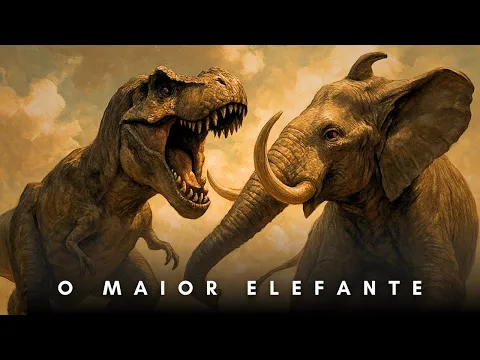
As is the case with much of prehistoric megafauna, the disappearance was not caused by a single factor, but by a combination of unstable environment and increasing human impact.
The Largest Terrestrial Mammal That Ever Existed
Based on the fossil evidence available today, scientific consensus indicates that the Palaeoloxodon namadicus was among the largest terrestrial mammals that ever existed, being the largest elephant in history. However, it was not the largest land animal of all time.
This title belongs to the Paraceratherium, known as the “giraffe-rhinoceros,” which surpassed the Palaeoloxodon in body length and total mass, becoming the largest terrestrial mammal ever recorded. Nevertheless, the Palaeoloxodon namadicus remains an extreme symbol of gigantism among elephants and one of the largest animals to ever walk the Earth.









-

-

-

-

-

33 pessoas reagiram a isso.