





 Portuguese
  English
  Spanish
  3 min of reading
  0 comments


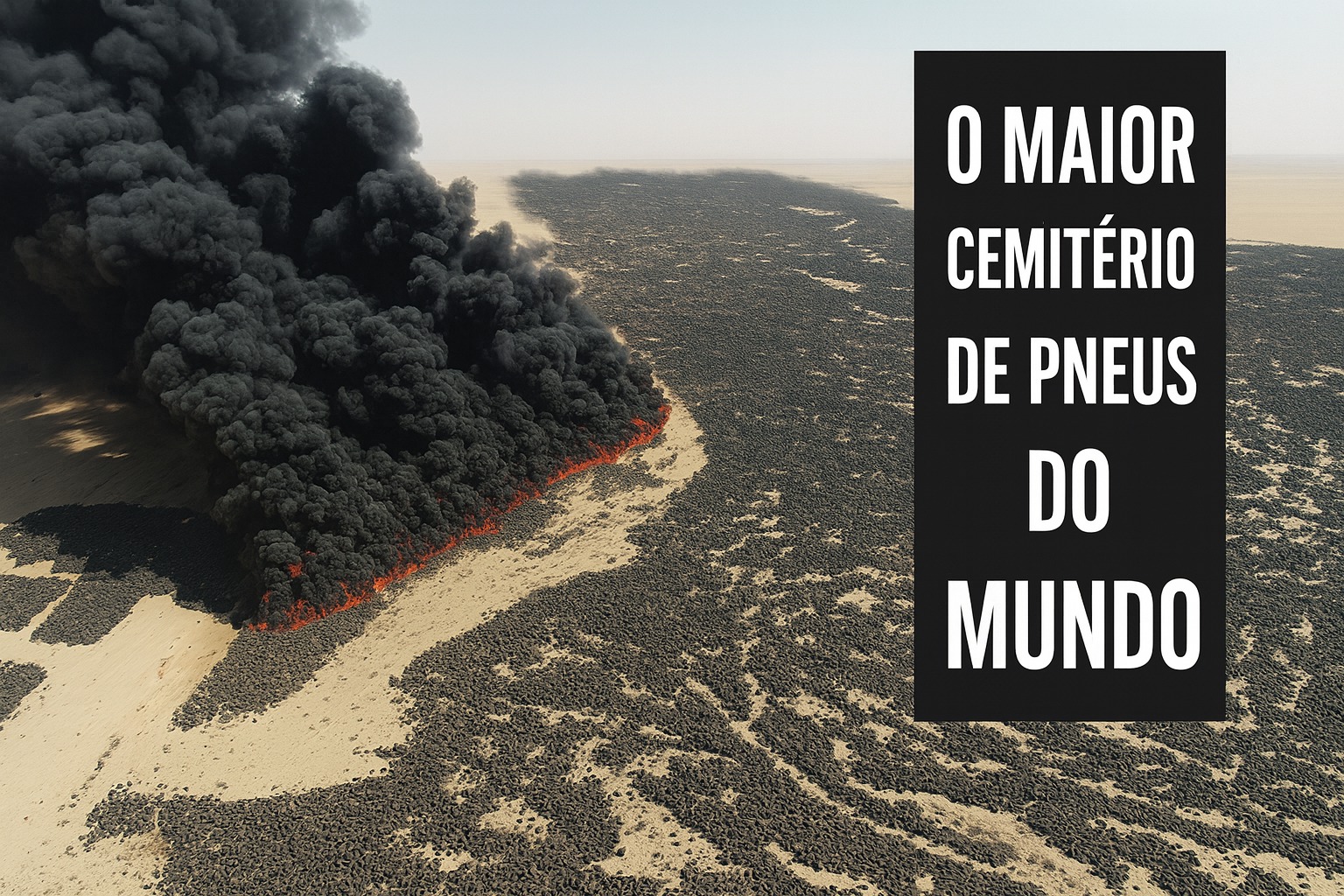
After Decades Accumulating More Than Fifty Million Tyres and Facing Successive Fires, Sulaibiya Underwent a Mega Operation for Removal and Recycling That Eliminated the Giant Deposit and Became an International Environmental Reference
For more than two decades, Sulaibiya became known for housing something difficult to imagine. Millions of tyres were left there because there was no immediate alternative destination. This accumulation formed the largest tyre cemetery in the world and created a problem that caught international attention. Moreover, the size of the site was so vast that it could be seen from space.
The number of tyres exceeded fifty million. This had a profound impact on the region because the volume was huge and was becoming increasingly dangerous.
Repeated fires between 2012 and 2020 showed how the situation could no longer continue in that way.
-
These are the drivers who may stop paying tolls on highways in a project that promises to reduce costs for those who live from transportation in Brazil.

-
(Video): Italian pilot lands plane on moving train at 120 km/h and achieves unprecedented feat in aviation, even with a narrow runway and without direct visual contact.
-
It seems to have come out of a science fiction movie: A Brazilian city where it rains almost every day, recording over 4,000 mm per year, driven by climatic factors — a direct result of its strategic location in the Amazon.

-
The water crisis that could change everything this year has already begun; it’s not just about the climate, it affects technology, raises product prices, and can halt entire companies without warning.



Three Major Fires and Increasing Risks
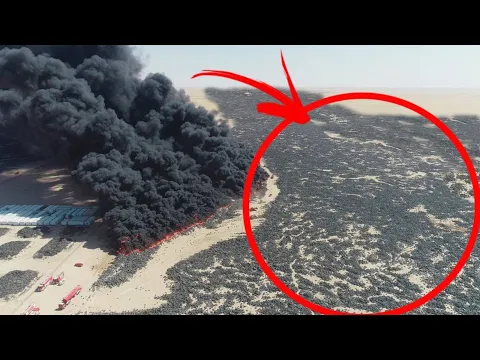
Between 2012 and 2020, three fires hit the deposit. The flames arose due to high temperatures and released toxic substances.
The air became laden with harmful particles, therefore the health of nearby residents was affected.
These episodes exposed the extent of the environmental risk. The dark smoke spread easily. It was impossible to ignore that the place needed urgent attention.
Many factors combined and pressured the government to make a quick decision.
Additionally, the proximity of major events in the region reinforced this need. The 2022 World Cup in Qatar would put the Middle East under the spotlight.
Maintaining the largest tyre cemetery on the planet in that scenario would be an even bigger problem.
The Project That Changed the Destiny of the Tyres
The Kuwaiti government then initiated a large relocation and recycling plan. The initiative stretched over several years because the volume was enormous.
Between 2012 and 2020, several recycling facilities were created. They had the capacity to process significant amounts of tyres and transform them into new materials.
Satellite images from September 2021 showed that all the tyres had been removed. The Sulaibiya area was completely clean.
This change represented an important milestone because it eliminated an environmental liability accumulated over twenty years. One point stands out: what happened to all those tyres?

Recycling by Pyrolysis and Its Subproducts
Most of it underwent pyrolysis. It is a process that heats the material to around 450 degrees Celsius. Thus, the tyre transforms into gas.
The gas is then cooled and turned into biofuel. The carbon black is separated and stored, while the metal wires are recycled.
This method not only solved the disposal problem but also generated valuable subproducts. Therefore, the action brought both environmental and economic benefits.
In some cases, before pyrolysis, the tyres were cut into small pieces. These fragments could be used in flooring and roofing, further expanding reuse possibilities.
An Example for Other Countries
The elimination of the tyre cemetery in Sulaibiya highlighted a relevant point. Annually, the world produces about one billion discarded tyres.
Additionally, approximately four billion still remain in landfills and deposits.
Kuwait showed that it is possible to tackle such a large problem and find efficient solutions. This initiative became a reference because it addressed a serious environmental issue and restored safety to the region.
Today, the former cemetery has become an example of how recycling policies can transform a huge liability into useful materials.
With information from Times of India.






-

-

-

-

8 pessoas reagiram a isso.