





 Portuguese
  English
  Spanish
  4 min of reading
  0 comments


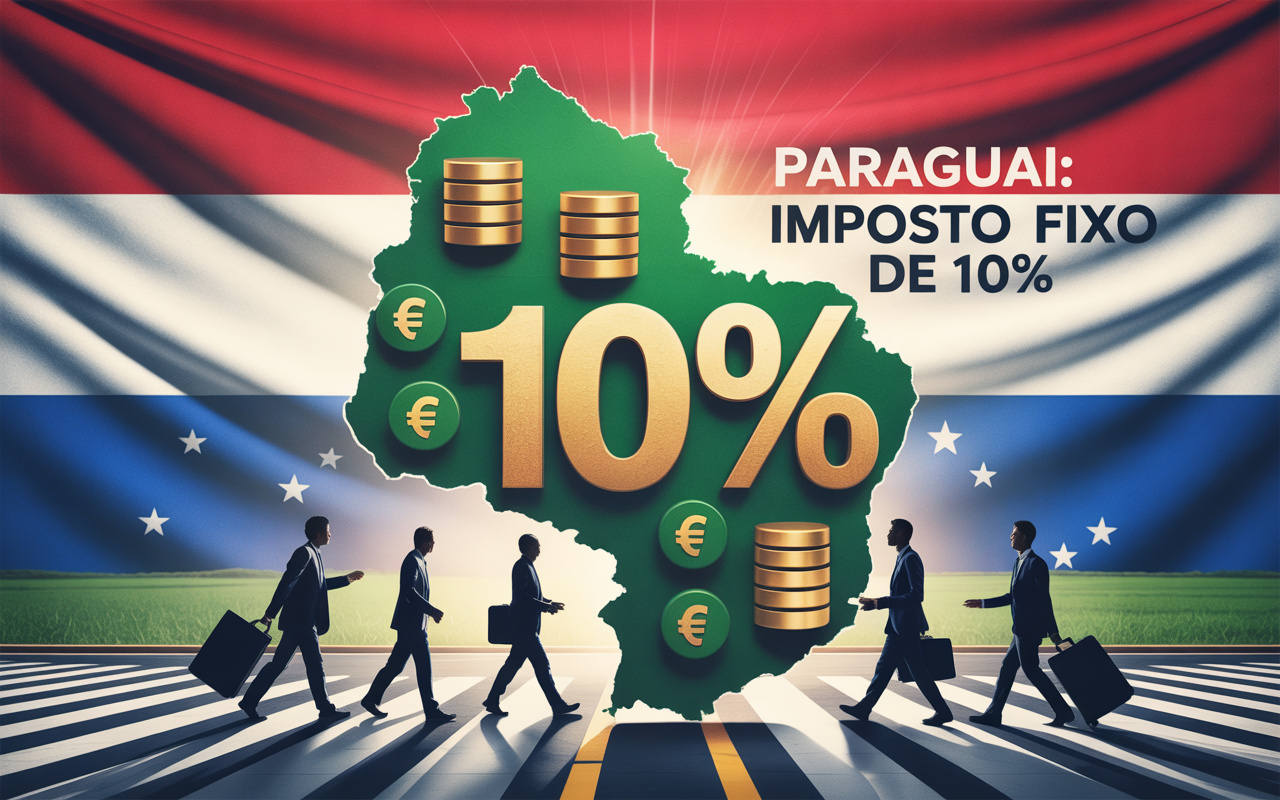
Paraguay Adopts Fixed Tax of 10% for Companies and Individuals, Becoming a Hub for Brazilians Escaping Tax Bureaucracy and Seeking Lower Costs.
What seemed impossible for decades is now a reality: while Brazil engages in endless discussions about tax reform, Paraguay has consolidated one of the simplest and most competitive models in the world. According to reports from Jornal Empresas & Negócios (2023) and analyses released by BBC Brasil (2024), the neighboring country has adopted a fixed tax rate of 10% for both individuals and companies, becoming an attractive destination for Brazilians tired of the complexity and burden of national taxes.
According to data from Rediex (Paraguay’s Network for Investments and Exports), hundreds of Brazilian entrepreneurs have already transferred their operations or opened branches in Paraguay in recent years, taking advantage of the tax simplicity, low electricity costs, and direct export incentives. No wonder, Paraguayan cities like Ciudad del Este and Hernandarias have transformed into true industrial hubs driven by Brazilian capital.
Paraguay’s Tax System: Simplicity That Attracts Investors


While in Brazil companies need to deal with over 90 types of taxes, in addition to federal, state, and municipal legislations that frequently overlap, Paraguay presents an almost minimalist scenario:
-
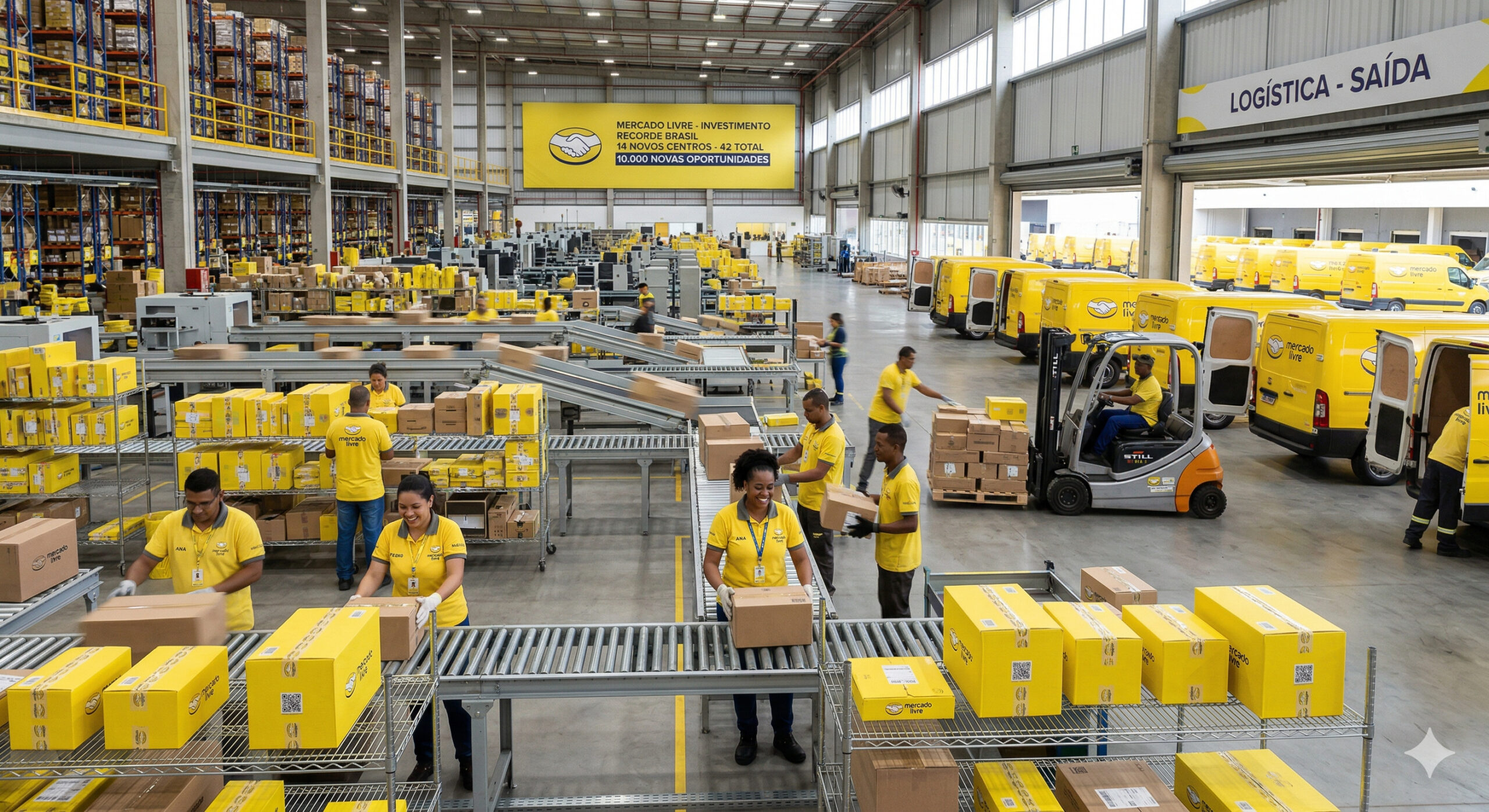
Mercado Livre “opens the vault” and announces a record investment of R$ 57 billion in Brazil in 2026, a value 50% higher than the previous year, with an expansion plan that includes 14 new logistics centers, totaling 42 units in the country and hiring an additional 10,000 employees.
-
How investment in technology can revolutionize the national economy and enhance industrial gains, according to a study that highlights the direct impact on productivity, innovation, and wealth retention within Brazil.

-
The largest food company on the planet, JBS, has just opened a 4,000 square meter laboratory in Florianópolis to develop customized proteins that modulate muscle mass gain, immune response, and metabolic performance.

-
After nearly 30 bids and competition among industry giants, a Spanish company purchases one of the largest airports in Brazil for almost R$ 3 billion and takes over the management of Galeão in a concession that will last until 2039.


- Corporate Income Tax (IRACIS): 10%
- Individual Income Tax (IRP): 10%
- Value Added Tax (VAT): 10%
- Dividend Tax: 5% to 10%
This streamlined model creates an environment of predictability and trust. The entrepreneur knows exactly how much they will pay, without the need for large legal and accounting teams just to interpret tax regulations, something common in Brazil.
Empresas & Negócios highlighted that this structure allows companies to achieve savings of up to 40% on tax costs, which explains the growing migration of Brazilian industries to the neighboring country.
Cheap Energy: The Strength of Itaipu and Yacyretá
In addition to low taxes, Paraguay offers another competitive advantage: cheap and abundant electricity.
Thanks to the hydroelectric plants of Itaipu, shared with Brazil, and Yacyretá, in partnership with Argentina, the country has a generation capacity far superior to its internal consumption.
According to ANDE (National Electricity Administration), Paraguay exports over 60% of the energy it produces.
This means that the local cost of electricity is up to 60% lower than in Brazil, a decisive attraction for industrial sectors with high consumption, such as steel, processed foods, refrigeration, and textiles.
Maquila Law: Fiscal Incentive That Drives Exports
Another central pillar of the Paraguayan model is the Maquila Law, created to attract foreign companies. This regime reduces taxation on exporting industries to just 1% on the value added on Paraguayan territory.
According to a survey by Rediex, more than 250 international companies have already established operations in Paraguay under this system, including hundreds of Brazilian companies.
Among the sectors that benefit the most are textiles, automotive, furniture, and footwear, which found in the combination of low taxes and affordable labor an almost unbeatable formula to compete in the international market.
The tax simplification also attracts individuals, especially freelancers and small entrepreneurs.
While in Brazil the income tax declaration system is full of deductions, tables, and progressive brackets, in Paraguay the logic is straightforward: 10% fixed on earnings.
Direct Comparison: Brazil x Paraguay
- Tax Burden: Brazil ~34% on corporate profits x Paraguay 10% fixed
- Number of Taxes: Brazil with over 90 taxes x Paraguay with fewer than 5 main ones
- Electricity Cost: Brazil among the most expensive in the continent x Paraguay among the cheapest (ANDE, 2023)
- Time Spent Paying Taxes: in Brazil, according to the World Bank (2020), a company spends an average of 1,500 hours/year; in Paraguay, less than 400 hours
These numbers demonstrate why Brazilian entrepreneurs are crossing the border: besides immediate savings, there is less legal uncertainty and less wasted time on bureaucracy.
Criticisms and Challenges to the Paraguayan Model
Despite the advantages, experts warn of some risks. The Inter-American Development Bank (IDB) points out that Paraguay still faces limitations in logistics infrastructure, a reduced consumer market, and weaker institutions compared to Brazil.
Moreover, critics argue that low labor costs may generate social tensions, with risks of precariousness. However, for many analysts, the fiscal benefits outweigh the challenges, especially when companies aim to export to Mercosur or international markets.
Brazil Loses Competitiveness While Paraguay Grows
Economists from FGV warn that the exit of Brazilian companies to Paraguay exacerbates national deindustrialization. By losing industries, Brazil forfeits tax revenue and thousands of formal jobs.
On the other hand, Paraguay has managed to accelerate its economic growth. According to data from the Central Bank of Paraguay, the industry’s share in the country’s GDP has increased in the last ten years, partly due to the migration of foreign companies, especially Brazilian ones.
Paraguay as a Tax and Productive Refuge
Ultimately, the adoption of a fixed tax of 10% for companies and individuals has transformed Paraguay into a true tax haven within South America.
Fiscal predictability, cheap energy, and export incentives have created a fertile environment for business, while Brazil continues bogged down in discussions about how to simplify its system.
If previously the idea of opening a company in Paraguay sounded like a joke, it is now a concrete strategy. For Brazilian entrepreneurs and workers, this movement is not just about taxes, but about seeking a future that is less bureaucratic, more competitive, and financially viable.










Seja o primeiro a reagir!