





 Portuguese
  English
  Spanish
 3 min of reading


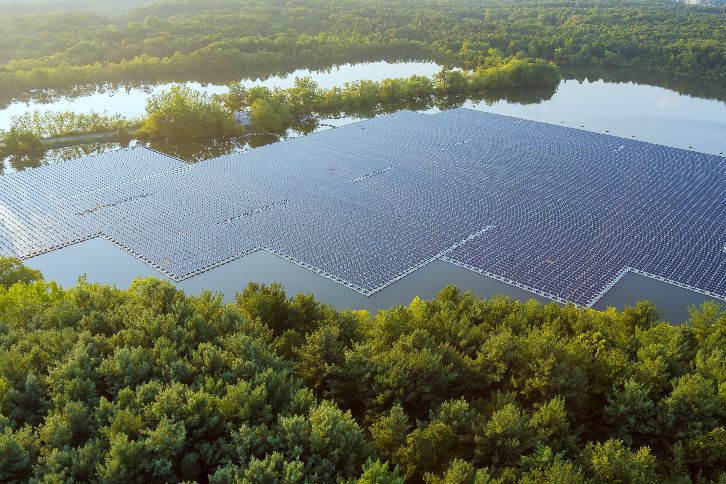
With a Photovoltaic Panel Valued at € 2 Million, the Spanish Group Iberdrola Will Enter the Floating Solar Energy Circuit. The Equipment Will Be Built and Installed on the Island of Fernando de Noronha, More Precisely in the Waters of a Volcanic Archipelago, the Xaréu Dam. Fernando de Noronha is Considered the Largest Marine Park and Protected Ecological Sanctuary in Brazil, Located About 350 km from the State of Pernambuco, to Which It Is Administratively Subordinate.
The project has ambitious goals. It aims to supply about half of the energy needs of the Companhia Pernambucana de Saneamento, Compesa, the supplier of water and sewage in Fernando de Noronha. The floating solar energy matrix to be installed has a capacity of 630 kWh and is expected to begin construction by the end of 2023. It is one of the most paradisiacal natural world heritage sites of UNESCO that has carried out various initiatives to ensure zero pollutant emissions into the environment. Iberdrola’s first global project.
To Change the Face of the Global Energy System
This is the promise of floating photovoltaic energy. Therefore, projects have been spreading across the planet very quickly, as it has immense potential for exploring water surfaces, especially in areas where land constructions have the potential to cause environmental harm. According to the U.S. Department of Energy, in a study conducted in 2020, a study pointed out that all projects have the potential to meet nearly 50% of the energy needs of the locations where photovoltaic panels are installed.
Matrix systems capable of surviving in extremely inhospitable areas have also been developed, exploiting reservoirs, lakes, and other surfaces. In addition to providing clean energy and utilizing transmission lines from sanitation companies to deliver energy to cities, floating solar energy matrices also assist in agriculture through water pumping and help reduce evaporation rates in reservoirs, also contributing to decrease algae proliferation due to shaded areas.
-
Renewable energy advances over protected areas in Brazil, and a survey by the Energy Transition Observatory reveals silent impacts that challenge environmental conservation and pressure sensitive traditional territories.

-
Rio Grande do Sul accelerates energy transition: State invests in renewable technologies and consolidates decarbonization strategies and pathways to attract billions in new industrial investments.

-
With 160,000 m² of collectors, an area larger than 20 football fields, Silkeborg, in Denmark, hosts a solar thermal plant that heats 19,500 homes and could become the largest solar heating plant in the world.

-
A study reveals the expansion of renewable energy procurement in Brazil and shows how companies are taking advantage of opportunities to reduce expenses, ensure energy efficiency, and strengthen strategic environmental commitments.


In Brazil, there are several ongoing projects for supplying floating solar energy, such as the Balbina hydropower plant in Presidente Figueiredo, Amazon, which generates 250 MW of energy but delivers less than half of that energy to the population due to regional droughts and low reservoir levels. Floating solar energy is certainly a solution to issues like this.
Moreover, it is possible to list even more advantages of the floating solar energy system. It frees up land, adding sustainability, as it prevents trees from being removed and deforestation from occurring. There is a reduction in evaporation and an increase in energy efficiency, as the proximity to water cools the photovoltaic panel modules and ensures greater performance and more energy generation. Compared to the conventional system, which delivers 5% efficiency, the floating system delivers 15%. It also provides better tracking possibilities.
Among the main projects in operation in Brazil, we can mention the one in Rosana, São Paulo, installed in 2013 at the Porto Primavera hydropower plant. There is also the Sobradinho hydropower plant, inaugurated in August 2019 in the semi-arid region of the São Francisco River, the largest floating solar energy plant installed in the country. Worldwide, highlights include projects in Asia and the United States, especially in China, the largest producer of floating solar energy on the planet.









Seja o primeiro a reagir!