





 English
  Francês
  Alemão
  Italiano
  Japonês
  Norueguês
  Portuguese
  Spanish
  3 min of reading



Survey Was Conducted by the Inter-American Development Bank (IDB) and The Economist Magazine, Which Indicate Brazil as the Best Environment for Establishing Public-Private Partnerships in Latin America
The Brazil has the best environment for developing public-private partnerships (PPP) in Latin America. This information comes from a report released this Wednesday, the 13th, by the IDB, Inter-American Development Bank, and The Economist magazine.
The authors of the information released did not create a ranking but divided the 26 examined countries into groups. Brazil is in the “developed” country category, with a score ranging from 60 to 79.9 in Latin America.
In the same category as Brazil for public-private partnerships in Latin America are Chile, Uruguay, Peru, Colombia, Panama, and Costa Rica. With scores ranging from 0 to 100, Brazil achieved 76.3 points, slightly above Chile, the second-place country in Latin America, which reached 75.3 points. The regional average was 47.3 points.
-
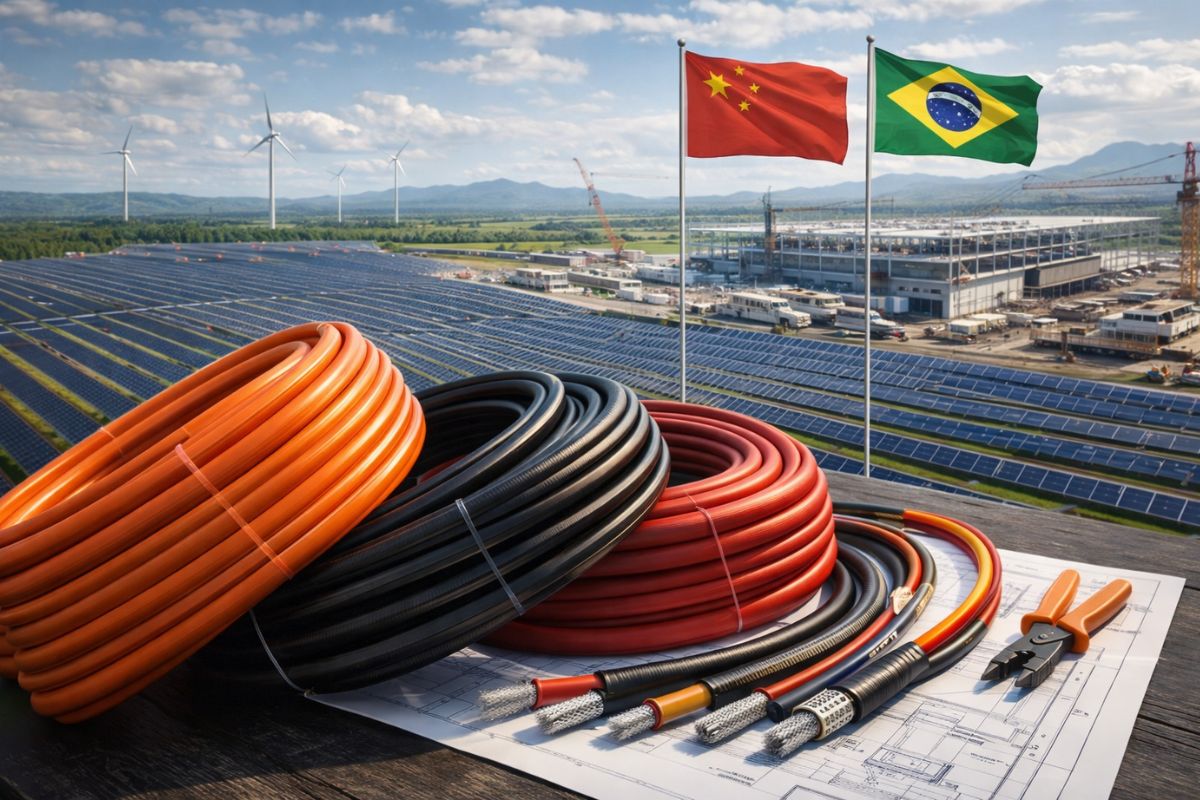
Chinese giant worth nearly R$ 4 billion that manufactures cables for electric cars, solar energy, and robotics wants to open a factory in SC.
-
Many employers do not know, but the law guarantees domestic workers a 25% increase in salary during trips, 50% for overtime, 20% for night shifts, and 17 additional benefits that can lead to labor lawsuits if not paid.

-
Gasoline prices soar and the question arises: is ethanol more advantageous? The 70% rule reveals the limit with gasoline.

-
The government has made a decision and is starting a test with more ethanol in gasoline, anticipating a mixture of up to 35%, diesel with 25% biodiesel, and a study to assess the impacts on engines.


Predicted in Law 11.079/2004, public-private partnerships represent a way for the government to confer a service to the private initiative. The private entity invests and provides a service to the government, being compensated in two ways: fully by the State (at no cost to the citizen) or partially by the State and partially by the service user, through fees.
The model is convenient in cases where a common concession, which is when the State fully delivers a company or service to the private initiative, would result in fees that are too high for consumers.
The public-private partnership is also proposed in projects that carry high risks for the private sector or have large capital needs. This is because, in this modality, the State can bear part of the risk and costs that would fall on the service user.
Regarding Brazil, the report showed that the country has “one of the most active public-private partnership markets in the Latin America,” accounting for just over 40% of the region’s public-private partnership investments between 2011 and 2020.
From 2010 to 2019, the data highlighted that public-private partnerships represented 25% of total infrastructure spending in Brazil. The evidence points to the energy sector, which accounted for approximately 77% of the amount invested in public-private partnerships from 2018 to 2020.
Structure of Public-Private Partnership
According to the report, the business environment for public-private partnerships in Brazil has four strengths. The first is the structure of the Investment Partnerships Program Secretariat (SPPI), established in 2016 and viewed by the report as a “well-equipped and well-financed agency.”
The other three strengths identified by the report are: the skilled selection and preparation of projects to be included in public-private partnerships; the commitment to environmental and social sustainability; and, lastly, the ongoing assessment of performance and impact during project development.
The survey conducted in the Latin American region considered recent advances, such as the new Bidding Law (Law 14.133/2021), which introduced the competitive dialogue modality.
Challenges
Despite progress, according to the criteria considered by the IDB and The Economist magazine for the research in Latin America, the report highlighted challenges for Brazil. The first challenge identified is issues in the allocation of risks between the public and private counterparts.
Projects where the State poses significant risks to the private initiative may result in contracts ending prematurely, as the private sector may not be able to make the necessary investments.
The second challenge is the lack of logistics among the different agencies involved, supervision, and implementation of projects. The third issue is the lack of clear procedures for terminating contracts before the end of the term, and the final challenge is the deficiency in monitoring social and environmental impacts after the establishment of public-private partnerships.









Seja o primeiro a reagir!