





 Portuguese
  English
  Spanish
  4 min of reading
  0 comments


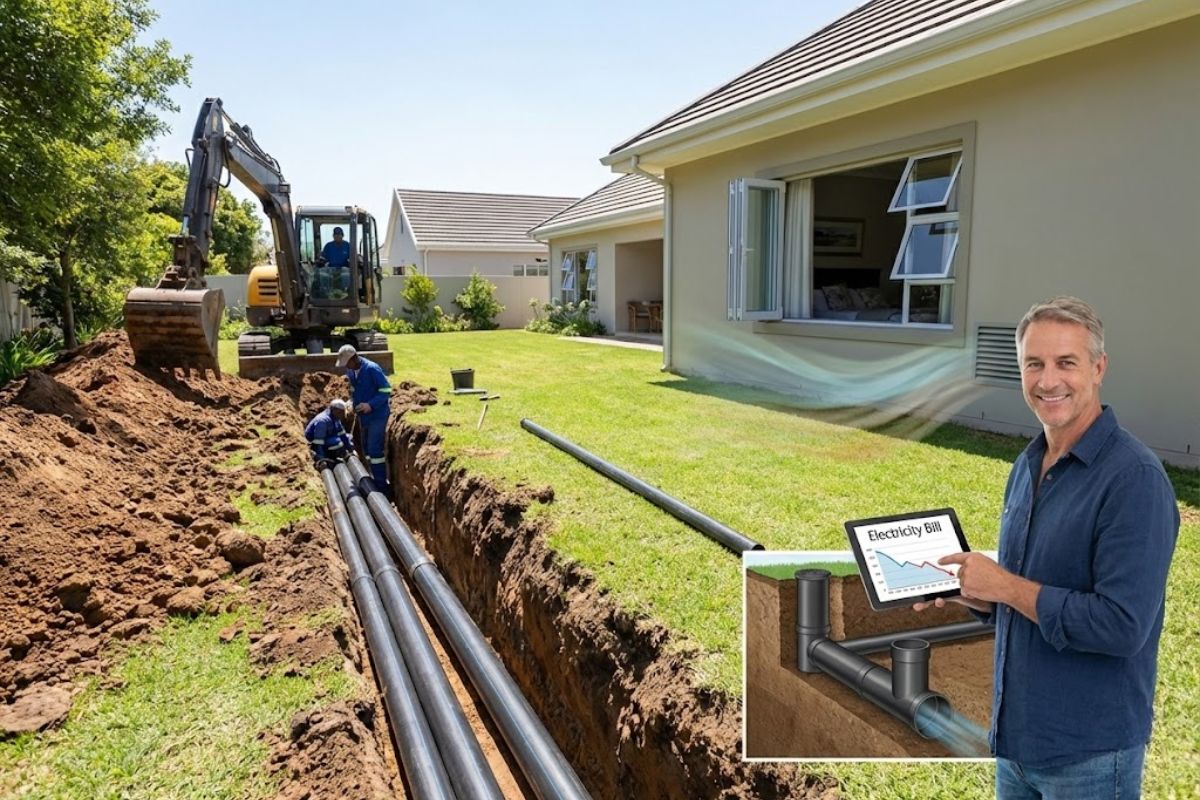
In 2025, the Canadian well gains ground as a sustainable solution to face scorching summers without expensive air conditioning. With buried pipes in the backyard, the system uses the stable temperature of the soil to cool the air, reducing energy costs and keeping the house surprisingly comfortable all day until night.
In 2025, while many people struggle with ever-increasing electricity bills to keep the heat out of their homes, the Canadian well emerges as a simple and ingenious alternative. The technology uses the soil itself as a natural “refrigerator” to cool the air before it enters the rooms.
Instead of relying on noisy compressors and motors, the system diverts the airflow into tunnels buried in the backyard. In this passage, the warm air loses heat to the cooler ground and reaches inside the house already cooled, reducing that oven-like feeling during the hottest summer days.
How the Canadian Well Turns Soil into a Natural Refrigerator

The principle is called shallow geothermal energy. A few centimeters below the surface, the soil temperature varies much less than the outside air, even on very hot days.
-
An inventor in China creates flying drones shaped like swords that respond to hand gestures in real time, with technology based on motion sensors transforming interaction into a scene worthy of a movie and redefining the control of machines in the air.

-
100 times less energy consumption: the innovation that could solve the huge energy crisis of AI.

-
Scientists reveal a new method using solar light that transforms plastic into vinegar and could change the game against pollution, converting waste into a sustainable solution with future global impact.

-
3,500-year-old tear discovered reveals a textile technique much more advanced than previously thought in the Bronze Age.


The Canadian well takes advantage of this stability.
The air enters through an external inlet, passes through buried pipes approximately 40 to 70 centimeters deep and, along the way, exchanges heat with the ground.
When it reaches the internal inlets of the house, it is already considerably cooler and ready to refresh spaces like the living room, bedrooms, or offices.
Continuous Circulation Without Relying on Air Conditioning
The operation is practically passive. The cool air that rises through the internal ducts tends to push the warm air outside, creating a constant circulation.
This flow reduces the need for air conditioning units to be on all the time and decreases the use of electric compressors.
If the resident wants to enhance the effect, they can install simple fans at strategic points in the house.
With this minimal mechanical assistance, the Canadian well makes the environments much more pleasant, especially during the hottest hours, using significantly less energy than traditional systems.
Simple Materials and Work More Accessible Than It Seems
Unlike large industrial climate control projects, the Canadian well can be assembled with relatively common materials, such as PVC pipes or brick galleries.
What requires more planning is the excavation of the land to make space for the underground ducts.
Another important detail is drainage. The project usually includes a “T” connection to drain water and prevent moisture from accumulating inside the pipes.
This care helps preserve the system, keep the air healthier, and prevent problems like mold or bad odors over time.
Energy Savings and Return on Investment Over the Summers
The investment is considered medium-term. Most of the cost is in the initial excavation and installation of the pipes.
Once everything is set up, the Canadian well begins to yield returns every summer, reducing hours of air conditioning use and lowering the electricity bill month after month.
Since there is no compressor or refrigerant gas, the electrical consumption is much lower.
The resident essentially makes use of a source of cold that has always been there, under their feet, transforming the backyard into part of the home’s climate control system without resorting to expensive high-tech solutions.
Summer Mode and Winter Mode: A System That Can “Hibernate”
Another practical point is the versatility throughout the year. In summer, the external air inlet remains open to allow circulation through the underground ducts and cool the house.
In winter, just cover this inlet to “hibernate” the Canadian well and prevent the house from getting too cold.
This way, the same system that ensures thermal comfort on hot days can be easily turned off when temperatures drop, helping maintain a more stable interior without cold drafts and without needing to disassemble anything.
Why the Canadian Well Seems Like a Trick but Is Pure Physics
The idea of using the ground as a natural refrigerator sounds almost too good to be true, but the secret is in the basic physics of heat and the temperature difference between the soil and the air.
The Canadian well does not create cold out of nowhere, it simply makes better use of what nature already offers.
With a well-designed project, properly installed pipes, and correct drainage, the system can provide thermal comfort, energy savings, and more independence from traditional air conditioning, using a resource that is available on practically any terrain.
And you, would you let your backyard be transformed into a Canadian well system to retire air conditioning on the hottest days?









Seja o primeiro a reagir!