






 Portuguese
  Spanish


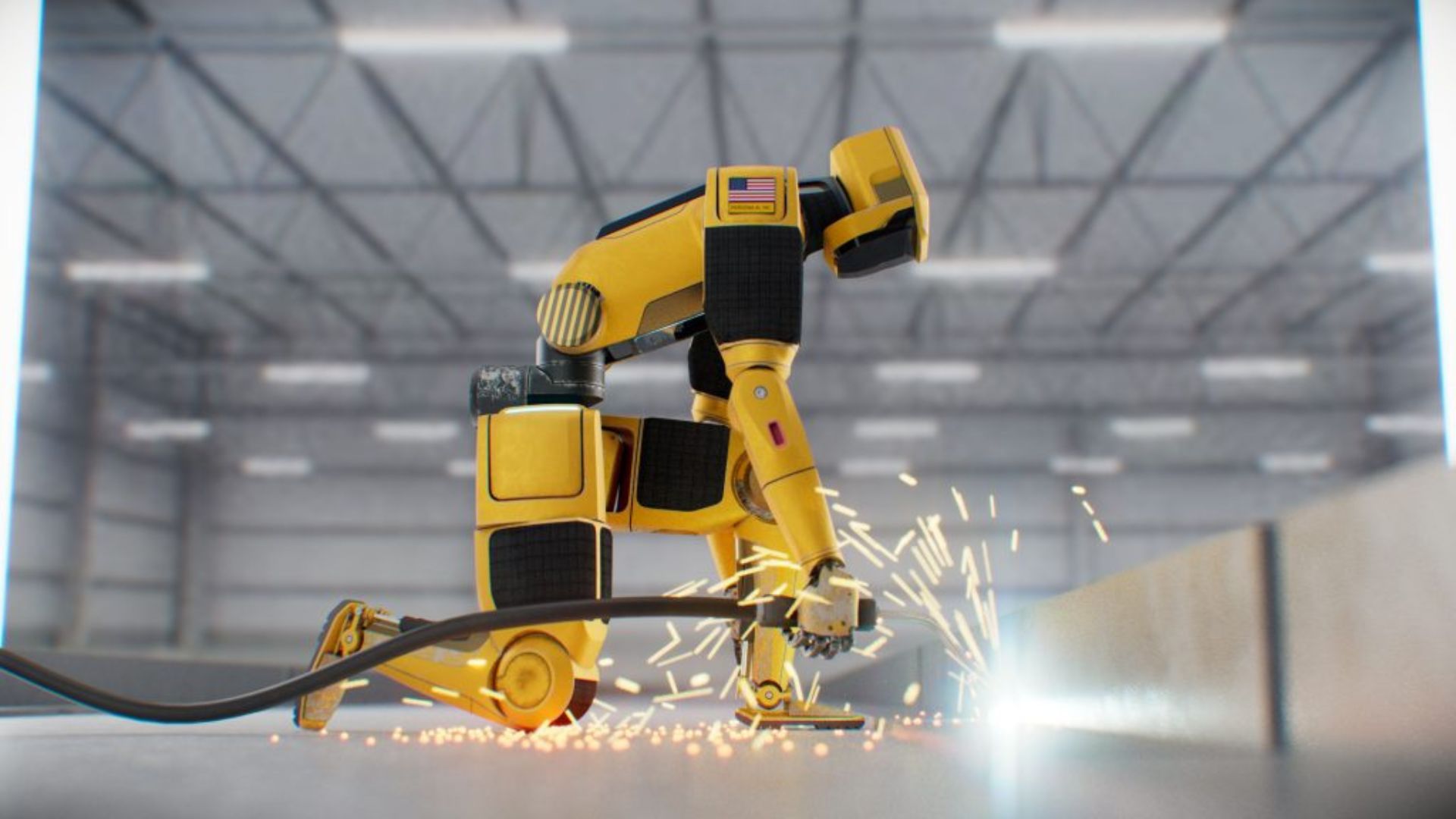
The partnership between HD Hyundai, Persona AI, and other affiliates aims to develop humanoid robots for shipbuilding, with a prototype by the end of 2026 and commercial entry in 2027 to address the labor shortage in shipyards
HD Hyundai has increased its investment in industrial automation by partnering with the American company Persona AI to develop humanoid welders for shipyards. The agreement also involves HD Korea Shipbuilding & Offshore Engineering and HD Hyundai Robotics, focusing on creating, testing, and commercializing robots capable of performing advanced welding tasks.
The initiative was formalized on March 23, during a ceremony held at HD Hyundai’s Global R&D Center in South Korea.
The partnership continues work that began in May 2025, following successful evaluations of the technical feasibility and practical application of a humanoid prototype.
-
Bosch Unveils Revolutionary 2.3 kg Hub Motor for E-Bikes with 45 Nm Torque and 400 Watts Power, Eliminating Resistance Above 25 km/h in Historic Shift for German Manufacturer

-
Brazilian Engineer Develops Marine Bacteria from Ubatuba into a Mini Power Plant Generating 227 mW per Square Meter, Cleans Air by Capturing CO₂ and Releasing Oxygen
-
Trump Signs Orders to Develop Quantum Computer and Bolster U.S. Systems Against Encryption-Breaking Attacks

-
Breakthrough in Clean Energy: Scientists Develop Battery-Free Artificial Photosynthesis Using Only Sunlight to Generate Chemical Energy


The collaboration was structured with a division of roles among the involved companies. HD Korea Shipbuilding & Offshore Engineering will be responsible for developing AI-based welding training systems, using data collected from shipyard operations and integrating this content into production flows.
HD Hyundai Robotics will oversee the integration of the system. This phase includes quality analysis, control technologies, and field tests aimed at the operation of robots in real shipbuilding environments.
Partnership targets welders for shipyards
Persona AI will be responsible for designing the bipedal humanoid platform that will serve as the foundation for the system. According to the terms of the agreement, this structure must be capable of maintaining stable movements in challenging shipyard environments, allowing for gradual deployment in different shipbuilding locations.
The goal is to develop robots capable of performing high-complexity tasks, combining welding, mobility, perception, and precision control. The proposal envisions these systems progressively advancing until they achieve presence in all shipyard operations.
The announced forecast is that a prototype will be completed by the end of 2026. After that, the schedule includes field tests and commercial deployment in 2027.
Labor shortage accelerates automation
The expansion of the project occurs amid a growing labor shortage in heavy industry. The problem is seen as especially urgent in high-risk tasks, such as welding, which has increased the demand for autonomous and robust humanoid robots.
Persona AI views the partnership with HD Hyundai and its affiliates as a step that goes beyond a symbolic collaboration. For the company, shipyards are among the largest real-world testing environments for the deployment and validation of durable humanoid robotic systems.
The company positions its robots as a response to the lack of skilled workers in demanding industrial sectors. Its systems are designed for high-intensity environments and aimed at tasks classified as “3D,” described as monotonous, dirty, and dangerous.
These activities are common in shipyards, construction, and energy infrastructure. In this context, the company’s proposal is to reduce the physical effort of human workers while increasing the presence of automation in heavy industrial operations.
Modular platform and focus on complex tasks
The technological foundation highlighted by Persona AI is influenced by advanced robotics developed by NASA. The company claims to combine this legacy with practical engineering aimed at concrete applications in the industrial environment.
At the center of this approach is a modular humanoid platform equipped with a highly agile robotic hand. This technology, derived from intellectual property linked to NASA, has been designed to enable precise work in complex and unstructured environments.
The platform also utilizes interchangeable “Personas,” a feature that allows adaptation to different sectors and tasks. In shipbuilding, the robots are designed to operate in confined spaces, welding hulls, and performing repair work.
According to the company, in these roles, labor turnover can exceed 30%. In the energy sector, the systems are directed towards welding, inspection, and maintenance of pipelines, in a context marked by an aging workforce and the advancement of automation.
Persona AI claims to seek to provide scalable and reliable labor through continuous operation, increased efficiency, and reduced rework. For HD Hyundai, the collaboration represents an important step towards smart shipyards, with humans and robots operating side by side.


Be the first to react!