





 Portuguese
  English
  Spanish
  7 min of reading
  0 comments


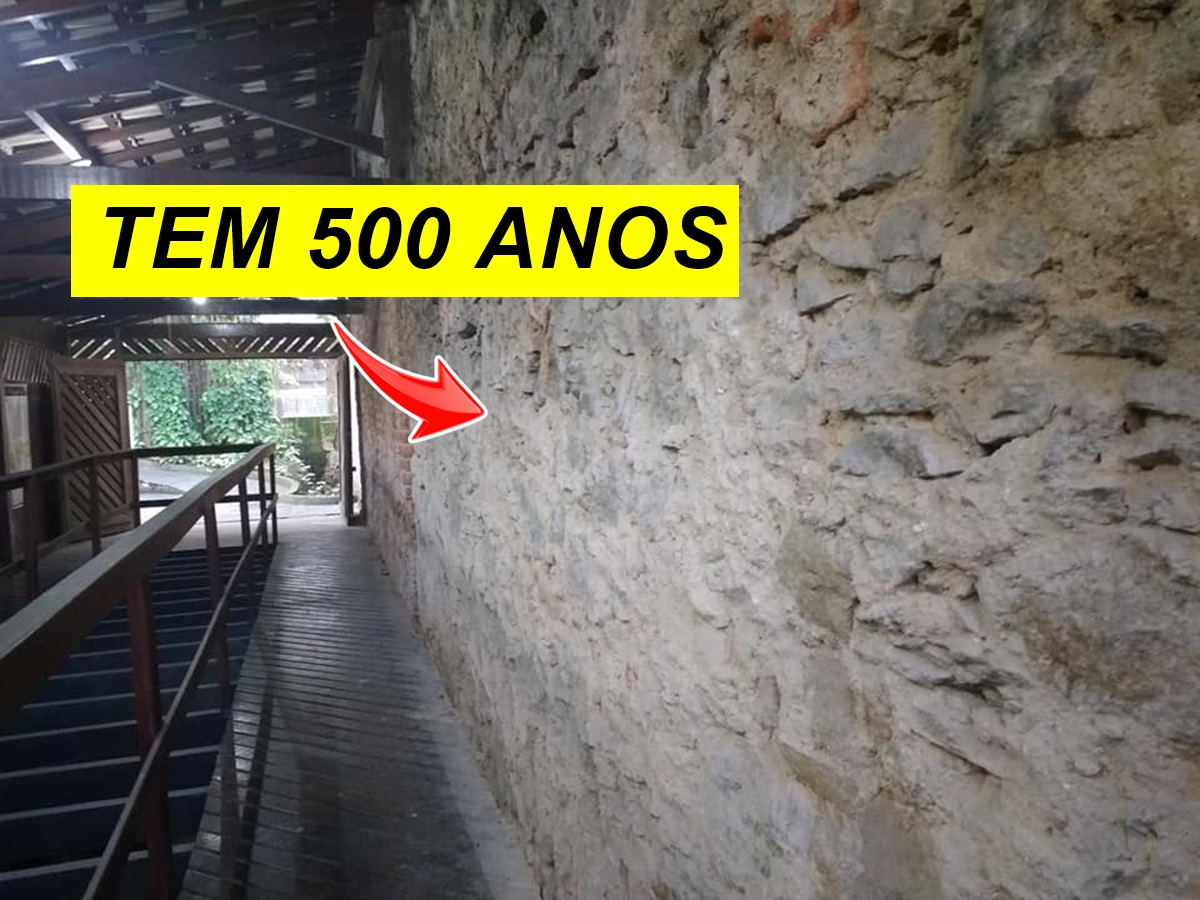
In The Heart Of The Historical Center Of São Vicente (SP), A Wall Built In The Early Sixteenth Century Resists Time. Made With Ancestral Techniques, It Holds Secrets Of Portuguese Occupation And The History Of Brazil.
Amid the layers of time and Brazilian earth, a silent structure defies the centuries with its firm presence. It is the oldest wall in Brazil still standing, a physical testament to the national history predating the official founding of the first villages.
Built by colonial hands in the early sixteenth century, it has survived wars, urban renovations, and neglect, preserving in its composition material and cultural marks of a Brazil in formation.
Casa Martim Afonso
The Casa Martim Afonso is a historical monument located in Praça 22 de Janeiro, in the center of São Vicente (SP).
-
These living root bridges and ladders are over 700 years old and help indigenous people survive in one of the rainiest regions in the world.

-
From sertanejo star to international investor: Ana Castela invests millions in a mansion in the USA, creates a themed accommodation in Orlando, and shows that the “boiadeira” also wants to grow away from the stage.

-
The 10 most stunning motorhomes in the world: a $3 million trailer with a rooftop nightclub and garage for a Ferrari, “palaces on wheels” with Italian marble, private cinema, and five-star hotel luxury for billionaires.

-
Trump wanted to spend $400 million on the White House, but the courts prohibited the million-dollar construction.


Originally built in 1895 as a summer residence for the Baron of Piracicaba (Rafael Tobias de Aguiar Barros), the building now pays homage to Martim Afonso de Sousa, founder of the first village in Brazil.
In 2000, after decades of abandonment, the São Vicente City Hall transformed the property into a cultural and memory center: on the upper floor, there are temporary exhibitions about the city and Martim Afonso.
The building survived modifications, was partially demolished in 1997, but retains architectural features from the nineteenth century that enrich its historical value.
The Foundation Of São Vicente And Martim Afonso De Sousa
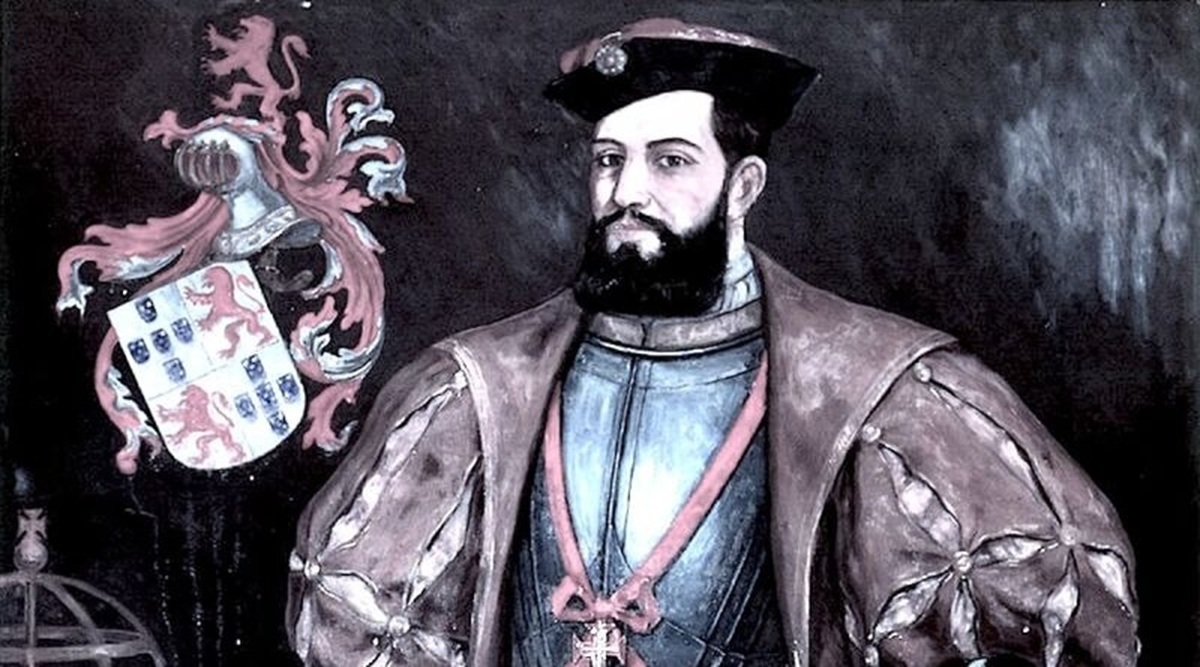
São Vicente was the first village established in Brazil, on January 22, 1532, the date of its founding by Martim Afonso de Sousa.
A noble Portuguese born in Vila Viçosa around 1500, Martim Afonso commanded the expedition sent by King D. João III to begin the effective colonization of the territory. He named the village São Vicente in honor of the saint of the day of its founding.
As the first donator of the Captaincy of São Vicente, Martim Afonso organized sugar mills, distributed land grants, and faced invaders, becoming a central figure in the history of colonial Brazil.
The name of the house reflects this legacy: it is dedicated to Martim Afonso de Sousa, whose early years in the then Village of São Vicente are depicted in exhibitions at the site.

Casa Martim Afonso And The Baron’s House Of Piracicaba
The Casa Martim Afonso includes two main structures. The former summer residence of the Baron of Piracicaba (Rafael Tobias de Aguiar Barros), also known as “The Baron’s House”, constitutes the main building.
Built in 1895, the house remained empty in the 1990s until it was purchased by the city hall and reopened as a cultural space in 2000.
Inside there are exhibition rooms about local history and Martim Afonso, as well as the headquarters of CEDOM. Meanwhile, at the back of the property stands a wooden building that houses the Archaeological Site Bacharel.
The title “Baron of Piracicaba” refers to Rafael Tobias de Aguiar Barros, who held this noble title and built the property in 1895. Today, the official name of the cultural facility is Casa Martim Afonso, in memory of the navigator who founded São Vicente.
The architectural ensemble, simple adapted one-story houses, does not display the luxury of colonial palaces, but records the historical continuity of the city.
The main building retains features of late nineteenth-century Paulist architecture, while the old stone house that served as its base was partially built in primitive colonial style.
Archaeological Site And The Oldest Wall In Brazil
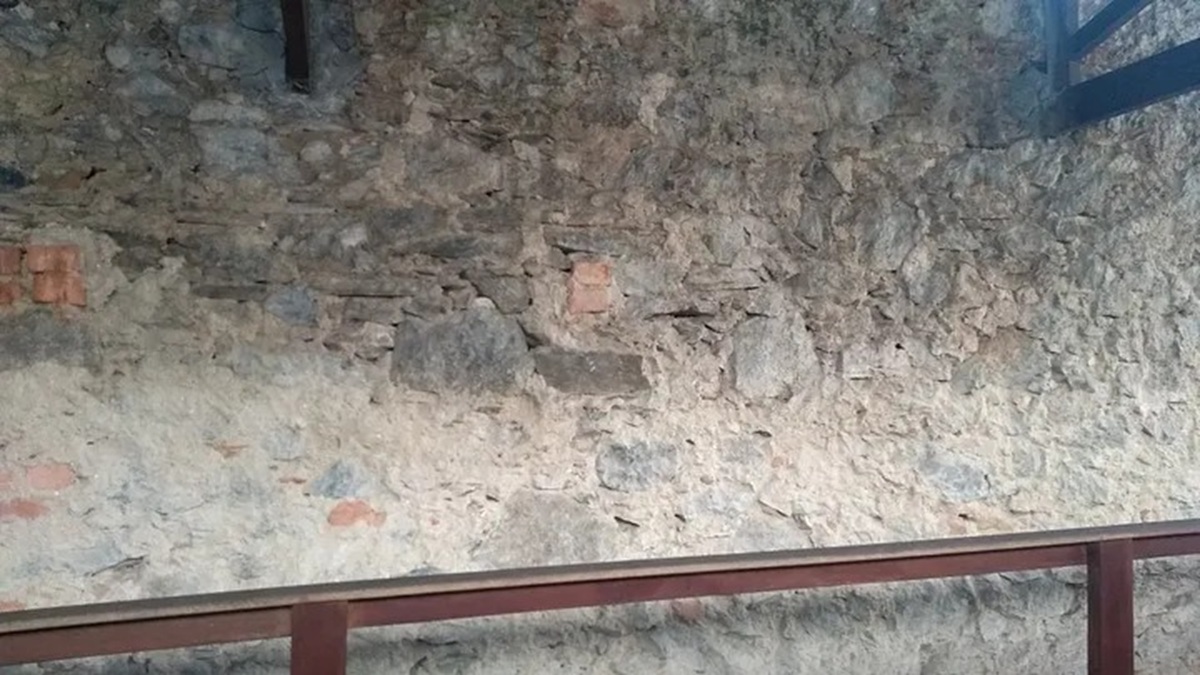
Behind Casa Martim Afonso, an archaeological site was discovered with the oldest stone wall in the country. The walls were made with a mixture of stone, sambaco lime and whale oil.
Excavations that began in the 1990s and resumed in 2009 revealed a masonry wall of about 25 meters that dates back to the early sixteenth century.
Studies indicate that this construction was erected between 1510 and 1520, even before Martim Afonso’s official arrival at the São Paulo coast.
It is believed to be the “Stone House” of the Bacharel de Cananéia (Cosme Fernandes), a Portuguese who set up a commercial outpost of water, food, and wood there between 1502 and 1530.
According to historian Marcos Braga and archaeologist Manuel Gonzalez, the wall may have been part of a stone fortress where Martim Afonso resided between 1532 and 1533. The discovery concretizes the historical tradition that São Vicente was the first village in Brazil.
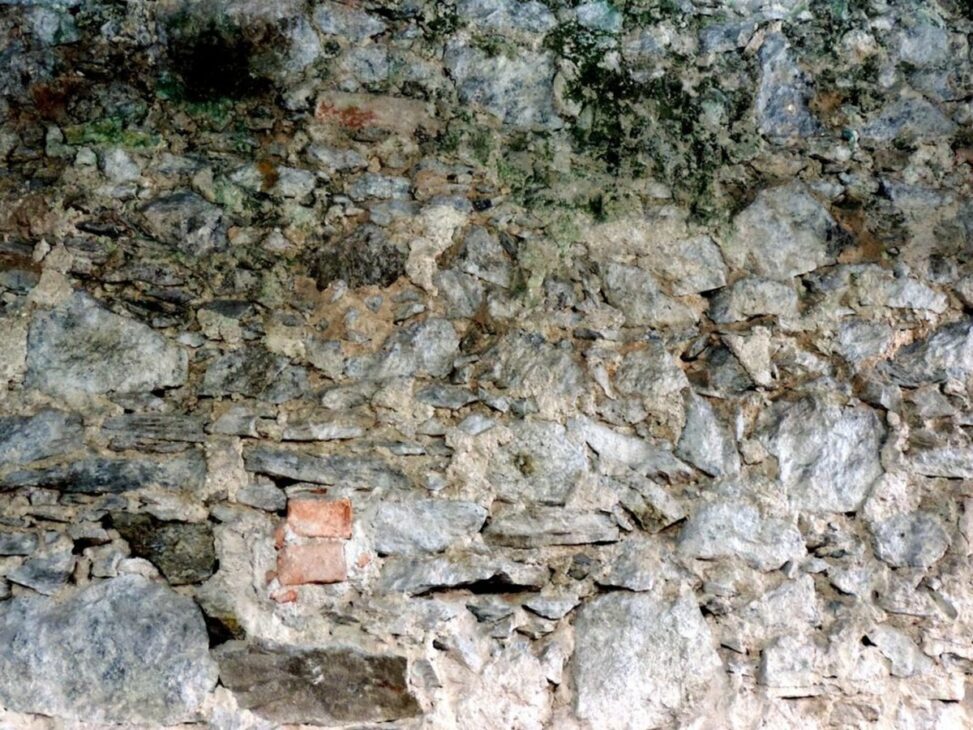
The excavations identified different layers of occupation: prehistoric sambaco structures (10,000–2,000 years ago), traces of Tupi indigenous ceramics (dated to ~800 years), and fragments of European pottery from the sixteenth to the nineteenth century.
Tens of thousands of artifacts (bones, indigenous pottery, lithic tools, faiences) reinforce the richness of the site.
The sixteenth-century wall emerged under a wattle-and-daub house, which had protected the remains for centuries, confirming it as one of the few locations with material evidence from the first decades of colonization.
The Mixture Of Shell Lime, Sand, And Whale Oil
During the colonial period, builders on the Brazilian coast developed an ingenious technique for mortar that combined sand, lime obtained from burned shells, and whale oil.
The lime was extracted from sambacos, ancient mounds formed by shells and marine remains accumulated by prehistoric peoples, and mixed with sand to create a solid and durable base.
The whale oil, derived from the animal’s fat, was heated and added to the mixture, serving as a binding and waterproofing agent.
This combination resulted in a mortar capable of resisting moisture and sea spray, common factors in Brazil’s coastal regions.
A Colonial Long-Term Solution
In many constructions, whale oil was used not only in the mixture but also as a protective coating for the walls, applied after drying to seal the pores and prevent leaks.
This practice increased the durability of buildings, making them more resistant to the action of time. Churches, forts, and mansions built with this type of mortar, such as those in Salvador, Recife and Santos, have stood for centuries, demonstrating the effectiveness of the technique.
Today, the method is remembered as a remarkable example of colonial adaptation to available natural resources, uniting empirical knowledge and creativity in a time without industrial cement.
Preservation And Heritage Status
The unique importance of Casa Martim Afonso motivated heritage protection measures. In 2011, the Municipal Council for the Defense of Historical Heritage of São Vicente (CONDEPHASV) officially designated the property and the historical wall as cultural assets of the city.
The municipal designation was part of the recognition of the “Remains of the Colonial Village” of São Vicente. At the federal level, the site currently integrates a study for specific designation by IPHAN and Condephaat, in order to officially recognize the sixteenth-century wall as national heritage.
These labels would reinforce the conservation of the building and the archaeological site, ensuring resources for restoration and research.
Since 2009, interventions have been subject to technical supervision; for example, the city hall launched a revitalization project for Casa Martim Afonso in 2017 to correct leaks, renovate roofs, and preserve the historical collection.
Thus, the property is protected on multiple levels, from local to federal, highlighting its architectural and historical value.
Current Cultural Contribution And Conclusion
Today, Casa Martim Afonso functions as a cultural facility in São Vicente, offering the public access to local history.
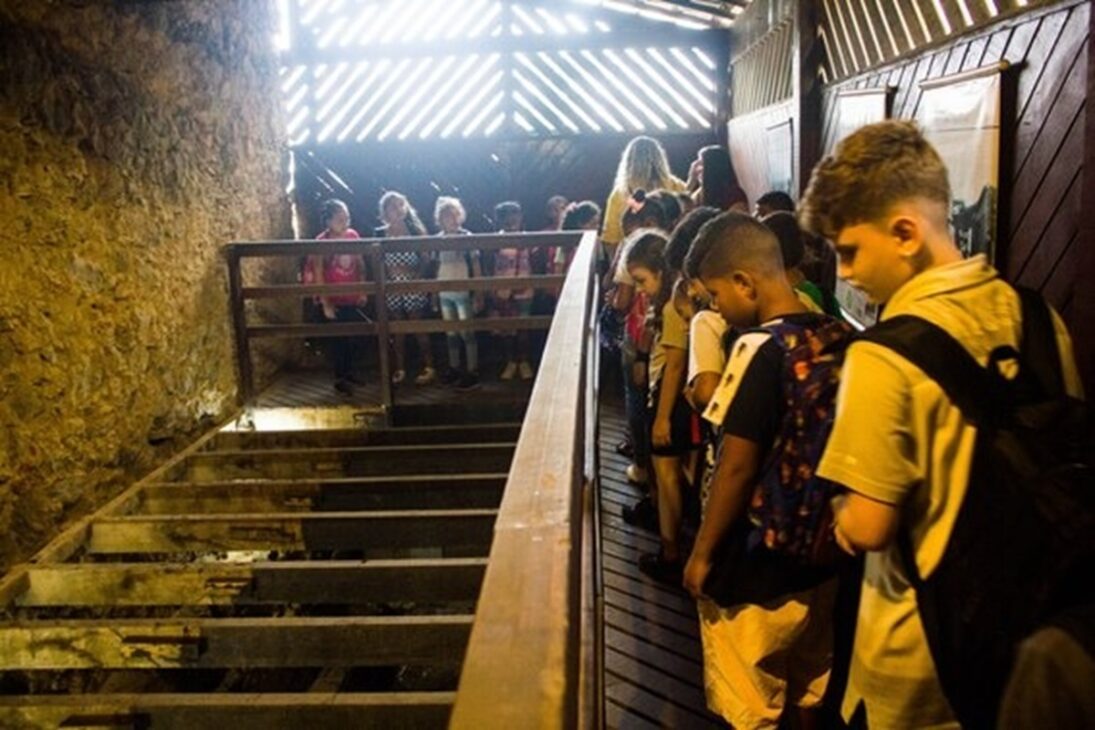
In addition to the CEDOM-SV, the space organizes temporary exhibitions, educational events, and receives visits from students, creating a link between past and present. Workshops, lectures, and planned archaeological trails enrich the cultural-tourist circuit of the city.
For instance, groups of children follow historians who explain the archaeological site and the models of sixteenth-century vessels, as shown in the photo above.
This social mobilization reinforces the identity of the residents of São Vicente, bringing the community closer to discoveries on their own soil.
In summary, Casa Martim Afonso and its archaeological site constitute a heritage of inestimable value for São Vicente and Brazil. The building dates back to the end of the Brazilian Empire and houses the documentary collection of the first Brazilian village, while the “sixteenth-century wall” witnesses the pre-colonial origins of the country.
The coexistence of these architectural and archaeological elements makes the place unique: a physical link between the foundation of São Vicente in 1532 and the contemporary city.
Thanks to preservation and heritage status, Casa Martim Afonso remains open as a museum and memory center, fulfilling an educational and tourist role.
Its historical value is recognized by scholars and authorities, ensuring that future generations learn about the roots of the first village in Brazil.








-

-

-

-

-

-

32 pessoas reagiram a isso.