





 English
  Francês
  Alemão
  Italiano
  Japonês
  Norueguês
  Portuguese
  Spanish
  3 min of reading
  0 comments


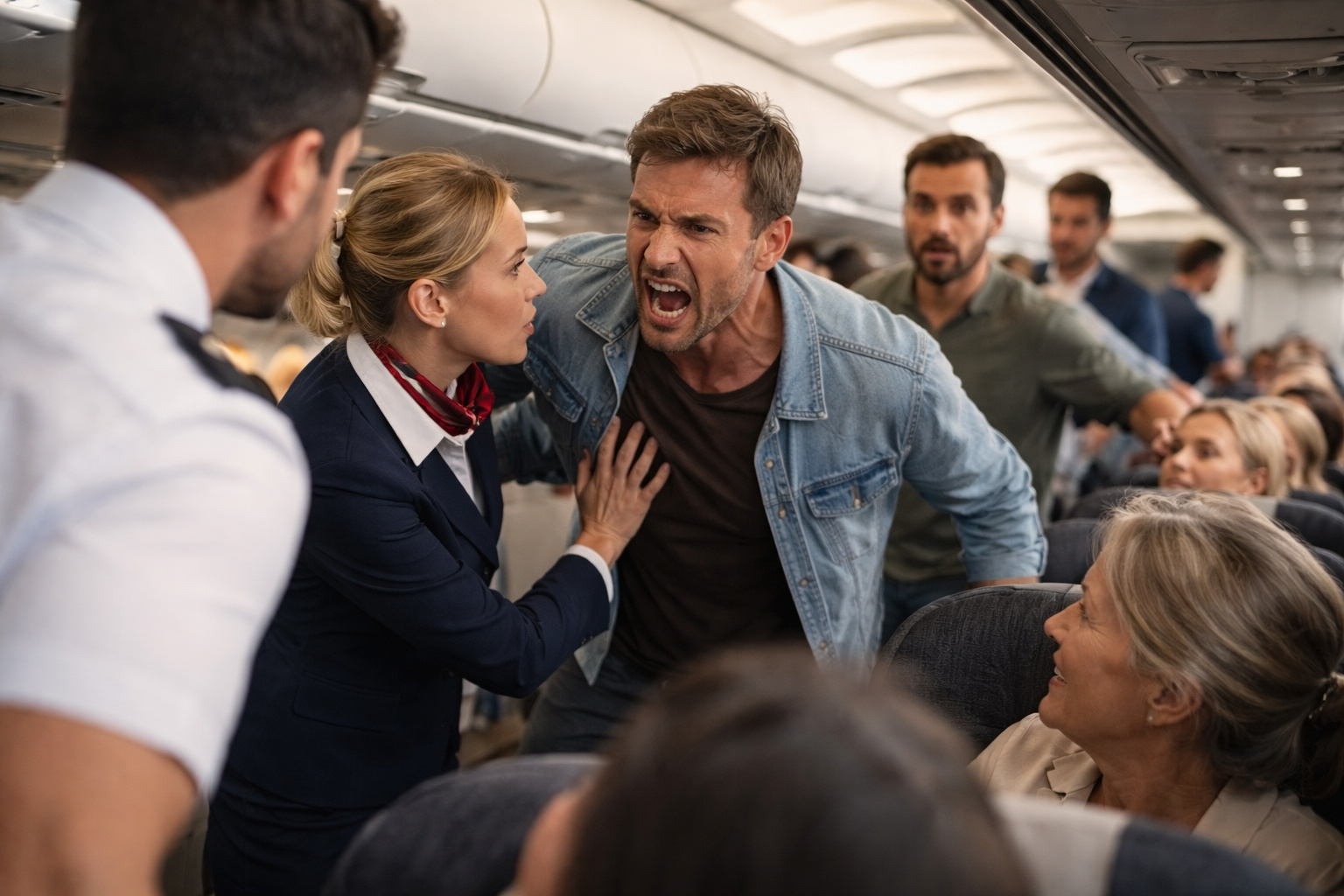
Increase in Incidents on Airplanes Leads Authorities to Discuss Stricter Punishments for Passengers Who Threaten Civil Aviation Safety
A discussion that directly involves the safety of Brazilian civil aviation has recently gained prominence in Congress.
During a public hearing held at the House of Representatives’ Committee on Transportation and Communications, the National Civil Aviation Agency (ANAC) advocated for the creation of tougher measures against passengers considered unruly on commercial flights.
The proposal arises at a time when the number of occurrences within aircraft has significantly increased in the country.
According to data presented by ANAC itself, reports of problematic behaviors have risen by approximately 70% in the last two years.
This increase in occurrences has led authorities and lawmakers to discuss mechanisms capable of strengthening flight safety and reducing episodes that put crew and passengers at risk.
-
Man Arrested After Halting Takeoff of Fire Department Helicopter During Child Rescue in Guaratuba

-
With 37 Tons of Cargo, Over 8,000 km Range, and Ability to Land on Unpaved Runways, the Airbus A400M Demonstrates How Europe Created a Military Giant That Transports Armored Vehicles, Aerially Refuels Fighters, and Operates in Conflict Zones and Humanitarian Missions Worldwide
-
Emergency Landing in Campos Amarais After Bird Strike on Small Plane
-
EU Aviation Sector Calls For Immediate Review Of New Border Control System
Change in Rules May Prevent New Embarkations
The main measure debated proposes creating a system that allows for the restriction of ticket purchases for passengers involved in serious incidents during flights.
In practice, people who create disturbances or threaten safety within aircraft may be banned from purchasing airline tickets for a period of up to one year.
This ban would aim to prevent passengers from causing problems on a flight and then purchasing a new ticket with another airline.
With this, authorities intend to create a mechanism that strengthens the accountability of those who compromise the safety of air operations.


High Fines Are Also Part of the Proposal
In addition to the restriction on new embarkations, the proposal also includes financial penalties for passengers who cause incidents during flights.
According to what was presented at the public hearing, fines can reach R$ 17,500, depending on the severity of the recorded behavior.
This combination of punishments aims to discourage conduct that risks aviation safety and the operation of flights.
Authorities Advocate for Tougher Punishments
The defense of the proposal was made by the National Civil Aviation Agency during the debate in the House of Representatives.
According to ANAC representatives, the increase in incidents requires the creation of more effective instruments to deal with behaviors that threaten flight safety.
In this context, the agency presented data that help to gauge the growth of the problem in recent years.
Only in 2025, for example, there were 1,764 occurrences involving passengers considered unruly.
Among these reports, 288 cases were classified as serious, as they posed a direct risk to the safety of air operations.
Serious Cases Involve Assaults and Threats
Among the most concerning episodes mentioned during the public hearing are situations that directly affect the functioning of the flight.
Among the recorded occurrences are assaults on airline employees, destruction of equipment within the aircraft, sexual harassment, and even bomb threats.
These cases are considered especially serious because they can compromise the safety of the crew, passengers, and the operation of the flight itself.
For this reason, ANAC representatives state that the creation of stricter punishment mechanisms may help reduce this type of behavior.
Voting on the Proposal Is Scheduled for This Friday
Despite the repercussions of the topic, the proposal is still under discussion in Congress.
According to information presented during the hearing in the House of Representatives’ Committee on Transportation and Communications, the text is set to be voted on this Friday, the 6th.
If the proposal is approved by lawmakers, the new rule may come into effect a few months after its official publication.
In this scenario, the measure would become part of the set of rules aimed at preserving the safety of civil aviation in Brazil.
Given the increase in occurrences within aircraft, the discussion about stricter punishments raises an important question: can tougher measures really reduce episodes of unruliness during flights?









Seja o primeiro a reagir!