





 Portuguese
  English
  Spanish
  6 min of reading
  0 comments


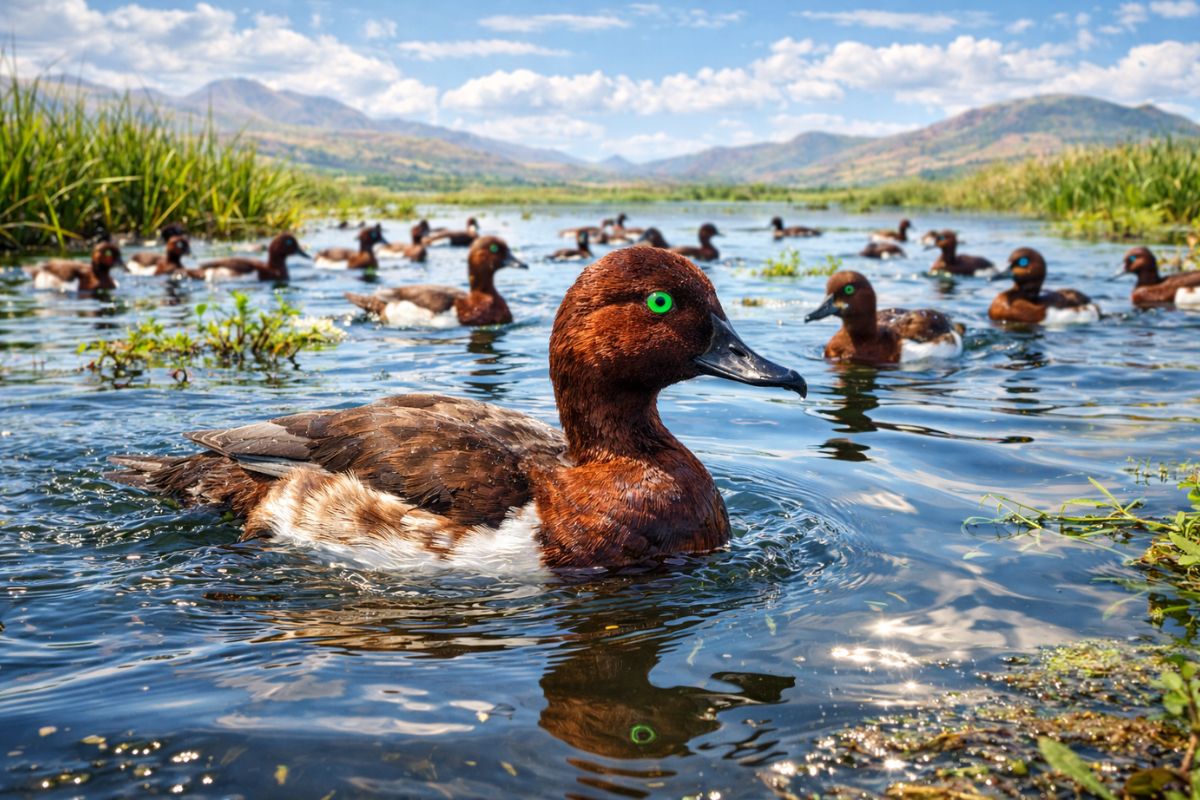
After 30 Years Away From Lake Alaotra, The Rarest Duck In The World, The Madagascar Diving Duck, Migrates From Lake Sofia Thanks To Conservation In Madagascar.
The rarest duck in the world seemed lost when it disappeared from Lake Alaotra, Madagascar, but the Madagascar diving duck was rediscovered, bred in captivity, and reintroduced to Lake Sofia in a conservation effort in Madagascar.
Rediscovered in 2006 in a remote lake, the Madagascar diving duck migrated about 300 kilometers from Lake Sofia to Lake Alaotra, and today the known population of the rarest duck in the world has reached approximately 119 birds, a direct result of captive breeding, well-planned reintroductions, and habitat recovery done in partnership with local communities.
The Return Of The Rarest Duck In The World To Lake Alaotra

The rarest duck in the world is the Madagascar diving duck, known locally as Fotsimaso.
-
He started running at 66 years old, broke records at 82, and is now a subject of study for having a metabolic age comparable to that of a 20-year-old, in a case that is intriguing scientists and inspiring the world.

-
Oldest tree on the planet reappears after 130 years of searches: Wattieza, 385 million years old, was 10 meters tall and had no leaves or seeds; Gilboa fossils in New York solved the mystery in 2007.

-
A 48-square-meter house assembled in hours with 4,000 bricks made of recycled plastic that does not absorb moisture, has natural thermal insulation, and costs less than 90,000 reais in a complete kit.

-
Luciano Hang revealed that Havan’s air fleet has already accumulated more than 20,000 landings, 10,000 flight hours, and 6 million kilometers traveled, and he says that without the planes, the company would never have grown so quickly.


It is endemic to the inland swamps of Madagascar and for years has been a symbol of an impending extinction.
The last individual was seen at Lake Alaotra in 1991, and in 2004, the species was officially considered “probably extinct.”
This story began to change in 2006 when a small population of only 26 Madagascar diving ducks was rediscovered in a remote volcanic lake, still struggling to survive. The discovery became a turning point.
From then on, the Durrell Wildlife Conservation Trust and its partners launched an intense conservation program, combining captive breeding, reintroduction to nature, and recovery of critical wetland areas for the species.
Today, for the first time in over 30 years, the rarest duck in the world has returned to its ancestral habitat at Lake Alaotra.
The Durrell team recorded four solitary females and one pair, totaling six individuals that naturally migrated from their reintroduction site at Lake Sofia to the species’ former cradle.
How The Rarest Duck In The World Almost Disappeared

The Madagascar diving duck has always been associated with shallow lakes and marshes with dense vegetation. However, these environments have suffered intense degradation over the past decades.
The loss of habitat, improper land use, and human pressure on wetlands led the species to a decline so abrupt that the rarest duck in the world was deemed lost in the wild.
The situation at Lake Alaotra is a good example of this process. Madagascar’s largest flooded plain has been impacted by deforestation, unplanned agricultural expansion, and degradation of the lake’s edges.
With less native vegetation, lower water quality, and more human pressure, there was little space left for a diving duck specialized in swamp environments. The last solitary male seen in 1991 became a silent symbol of this collapse.
It was in this scenario that the rediscovery in 2006 changed everything. By finding 26 individuals surviving in a remote lake, conservation teams understood there was still time to act.
From then on, the rarest duck in the world ceased to be just a warning of loss and became a real candidate for a recovery story.
Captive Breeding, Reintroduction, And The 300 Kilometer Migration
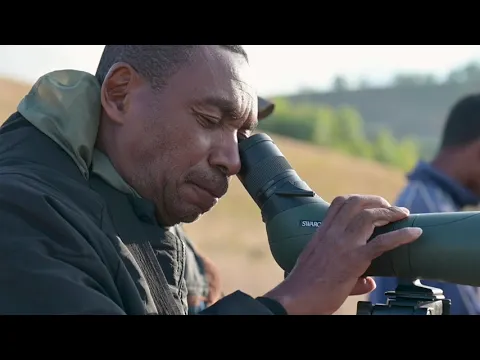

After the rediscovery, Durrell and its partners implemented a program for captive breeding and planned release, initiated in 2009.
The goal was simple yet ambitious: to increase the population, create a second safe area beyond the original volcanic lake, and, in the long term, recolonize the species’ former distribution area.
One of the central pieces of this strategy was Lake Sofia. The site has been undergoing ecological restoration and was chosen to host a new population of the rarest duck in the world.
Over the years, 83 birds have been reintroduced to the wild, always with extra care: before being released, the ducks spend a week in specially designed floating aviaries in the lake itself, to acclimatize to the environment.
The result is that today the known population of the rarest duck in the world has increased from 26 to approximately 119 birds, including 10 chicks already born in the wild.
In October, the program gained momentum with the release of 14 individuals at Lake Sofia, strengthening the foundation of the reintroduced population.
The most symbolic fact, however, is migration. The team discovered that some ducks reintroduced to Lake Sofia spontaneously migrated over 300 kilometers south to Lake Alaotra, the site where the species had disappeared.
This return on their own shows that the individuals still recognize the lake as part of their historical range and that habitat recovery efforts are starting to provide conditions for this to be possible.
Communities, Agriculture, And Habitat Recovery

No conservation program of the rarest duck in the world would succeed if it ignored those living around the lakes.
Therefore, Durrell and its partners work directly with local communities both at Lake Sofia and Lake Alaotra.
At Lake Sofia, the project involves about 10,000 people in 11 communities. The focus is on improving wetland management and sustainable use of natural resources, so that the conservation of the diving duck goes hand in hand with food security and the quality of life of those who depend on that environment.
Among the most significant results is an increase in agricultural productivity, combined with a nearly 100 percent reduction in pesticide use, benefiting both people’s health and aquatic fauna.
In the historical region of Lake Alaotra, efforts focus on reversing decades of degradation. This includes removing invasive plants that took over the lake, planting typical wetland vegetation, and reforesting the slopes around, reducing erosion and improving water quality.
At the same time, initiatives to strengthen livelihoods for communities help reduce direct pressure on wetlands.
In practice, every advance in agriculture, sustainable fishing, and vegetation restoration translates into more chances of survival for the rarest duck in the world and for all the fauna that depends on these ecosystems.
Durrell, Partners, And The Importance Of A Story Of Hope
The work with the rarest duck in the world involves a broad network of institutions. In addition to the Durrell Wildlife Conservation Trust, the program collaborates with the Wildfowl & Wetlands Trust (WWT), the Government of Madagascar, Asity Madagascar, and The Peregrine Fund, among others.
The local team is also a key player. Felix Razafindrajao, coordinator of the Madagascar Duck Project at Durrell, emphasizes that the return of the species to Lake Alaotra is proof of the success of reintroduction and a source of pride for those closely following the Fotsimaso.
It is the direct result of years of fieldwork, captivity management, monitoring in large lakes, and constant dialogue with the communities.
The CEO of Durrell, Dr. Lesley Dickie, emphasizes that in a world full of worrying news about biodiversity, stories like that of the rarest duck in the world are essential to maintain hope and show that investing in conservation truly makes a difference.
None of this would be possible without the financial support of organizations like Synchronicity Earth, Fota Wildlife Park, Réserve Zoologique de Calviac, Aviornis International, Biopama, Jersey Overseas Aid and WWT itself.
Together, these partners help to transform a scenario of “probably extinct” into a concrete case of recovery.
What The Rarest Duck In The World Teaches Us About Conservation
The journey of the rarest duck in the world encompasses, in a single species, several classic conservation challenges: habitat loss, human pressure, the need to involve communities, dependence on long-term resources, and the importance of science-based actions.
On one hand, this story shows the real risk that highly specialized species face when their environments are destroyed.
On the other hand, it proves that the combination of captive breeding, strategic reintroduction, ecological restoration, and community participation can reverse an apparently irreversible situation.
Seeing the Madagascar diving duck return to Lake Alaotra after 30 years is more than just a curious fact.
It is a reminder that when well-structured projects find support and persistence, it is possible to bring life back to places where it seemed to have been erased.
And you, after learning about the return of the rarest duck in the world to Lake Alaotra, believe that stories like this can inspire more people to support wildlife conservation projects?








-

-

-

-

8 pessoas reagiram a isso.