





 Portuguese
  English
  Spanish
  6 min of reading
  0 comments


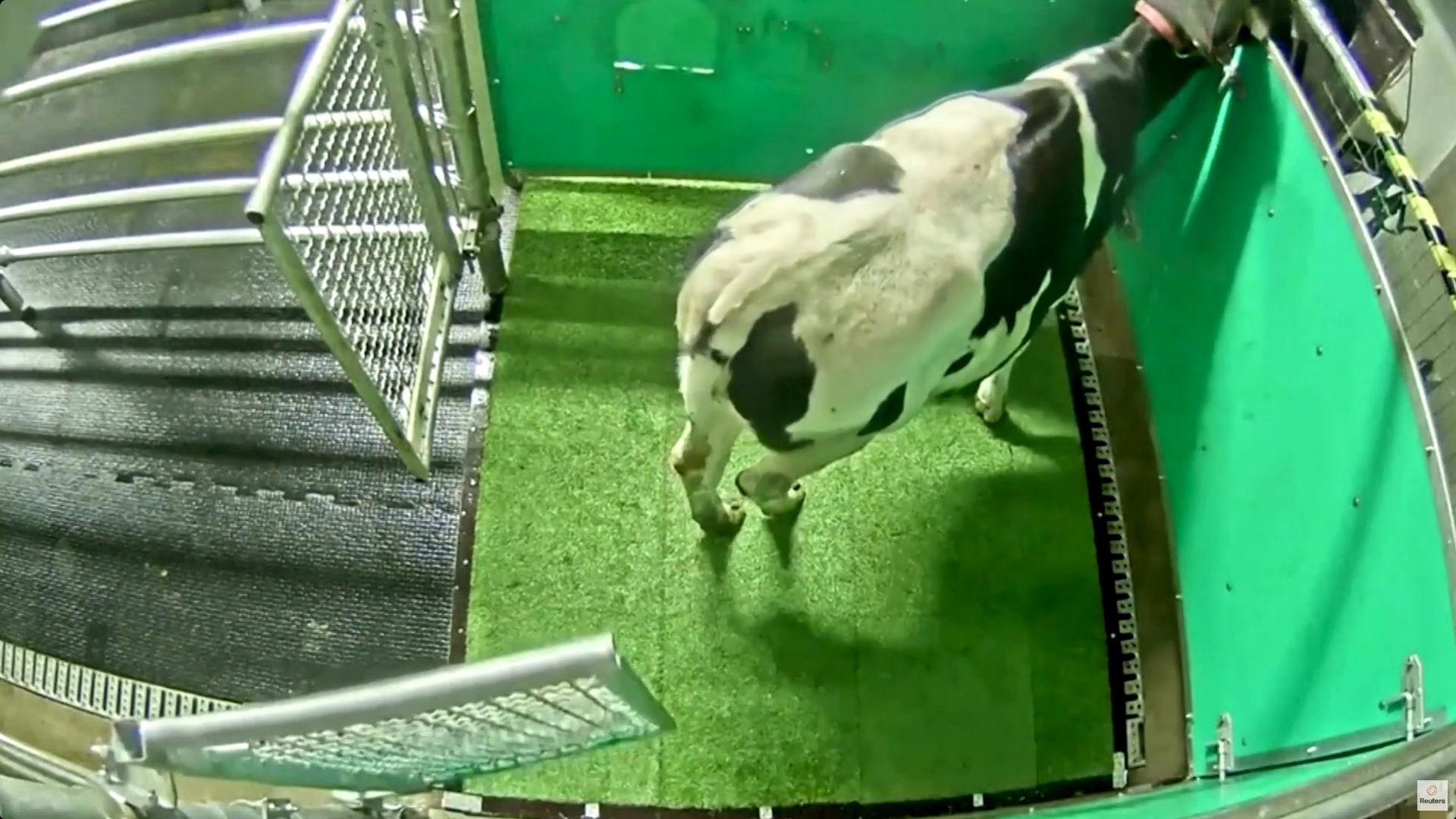
Experiment in Germany Tested “Latrine” for Calves and Registered Learning of Urination in Specific Location, with Immediate Reward and Correction Stimulation. Result Caught Attention When Linking Simple Management to Hygiene and Emissions.
An experiment conducted by researchers in Germany showed that calves can be trained to urinate in a designated area of the barn, in a system that functions as a “latrine” and has been nicknamed MooLoo.
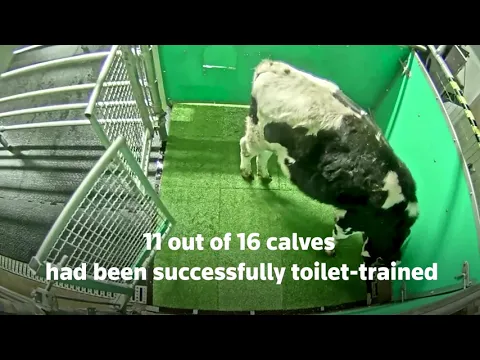
The central result reported by the authors is straightforward: 11 out of 16 calves began urinating in the designated spot by the end of the training period, in a study published as evidence that cattle can learn to control the act of urinating within a raising environment.
The study was published in the scientific journal Current Biology and prompted international coverage by associating an uncommon management routine with a practical problem in intensive livestock farming: the dispersion of urine on the floor of facilities and its effects on hygiene and emissions.
-
The eggshell that almost everyone throws away is made up of about 95% calcium carbonate and can help enrich the soil when crushed, slowly releasing nutrients and being reused in home gardens and vegetable patches.

-
This farm in the United States does not use sunlight, does not use soil, and produces 500 times more food per square meter than traditional agriculture: the secret lies in 42,000 LEDs, hydroponics, and a system that recycles even the heat from the lamps.

-
The water that almost everyone throws away after cooking potatoes carries nutrients released during the preparation and can be reused to help in the development of plants when used correctly at the base of gardens and pots, at no additional cost and without changing the routine.

-
The sea water temperature rose from 28 to 34 degrees in Santa Catarina and killed up to 90% of the oysters: producers who planted over 1 million seeds lost practically everything and say that if it happens again, production is doomed to end.


MooLoo and the Idea of Concentrating Urine in a Single Point
The team involved described the MooLoo as behavioral training, rather than an industrial equipment.
The goal was to teach the animals to seek a specific “bathroom” whenever they needed to urinate, allowing the urine to be concentrated in one spot of the barn instead of spreading across hallways and resting areas.

In confinement systems, where feces and urine tend to mix on the floor, this accumulation is cited by researchers as part of the scenario that favors the formation of ammonia in the environment and the contamination of soil and water around farms, depending on management conditions and waste disposal.
The proposal, according to public statements about the study, is that collecting in a designated area enables more targeted treatment and control.
Who Conducted the Research and Where It Was Done
The research involved scientists from the Research Institute for Farm Animal Biology (FBN) in Germany, with participation from researchers affiliated with the University of Auckland in New Zealand.
Public reports from the team indicate that the training was planned in stages, starting with the basics: associating the act of urinating in the correct area with an immediate reward.
In versions described in scientific outreach materials, calves were rewarded with food or sweet drink when they urinated in the indicated location, reinforcing the connection between behavior and positive feedback.
Step-by-Step Training and Immediate Reinforcement
The next phase sought to move from “accidental success” to transforming a trip to the MooLoo into the animal’s choice.
The strategy cited by the team was to work backward: first ensure that the calf urinated in the correct area and received the reward; then allow it to approach the “bathroom” from outside; and finally, make the search for the location part of the expected behavior when the urge to urinate arose.
In an interview with a radio outlet, one of the researchers involved described that the MooLoo space was visually marked to be recognized by the animals, including a color differentiation compared to other areas of the barn.

Correction When the Animal Was Wrong and What Was Tested
To reduce “off-target” visits, the protocol also included a slight discouragement element considered mild by the team.
According to the study’s outreach statement, the researchers initially tested an unpleasant sound as a way to punish urinating outside the designated area, but the method did not seem to have produced the desired effect.
Subsequently, the group began using a spray of water as an immediate consequence when the animal urinated in the wrong place.
The public description of the procedure emphasizes that it was a brief stimulus, used as a signal that urinating outside the MooLoo was not the rewarded behavior.
In another institutional material related to the research, the use of vibration collars was also mentioned as a type of alert when the calf began urinating outside the correct area, without the description of pain or prolonged physical punishment.
What the Result Does Not Say and How the Authors Treated the Differences Between Animals
The reported performance, with 11 out of 16 calves successfully trained in a few weeks, was not presented as a unanimous outcome nor as instantaneous automation.
The team itself highlighted that some of the animals did not reach the same learning level during the observed period and attributed this to individual differences.
In statements released in the media, researchers involved mentioned that cattle, like other livestock, have distinct learning profiles and react differently to new routines, which may influence the training success rate.

Ammonia, Nitrogen and Why This Became News
In addressing the “why” of MooLoo, the authors and public statements associate bovine urine with environmental and sanitary challenges.
The argument presented is that urine is high in nitrogen; when it disperses and interacts with the environment, it can contribute to air quality problems in closed facilities and, depending on its destination in the soil, participate in processes that culminate in the formation of nitrous oxide, a greenhouse gas mentioned by the researchers as relevant in the agricultural context.
The line defended by the group is that concentrating urine in one spot makes it easier to capture and treat some of that nitrogen before it spreads, as well as potentially reducing dirt on the floor of common areas of the barn.
The Appeal of the “Bathroom for Cows” and What Researchers Said to the Public
The repercussion of the experiment is also linked to the contrast between the simplicity of the gesture and the idea that cattle would not have enough control to “hold” their urine or choose a location for it.
The researchers themselves stated that this incapacity is often assumed, and that the study sought to test the premise that cattle can learn specific routines when the training is well-structured.
In comparisons made by study representatives in outreach materials, the performance of the calves was presented as similar, in terms of learning, to the process of potty training in children, an analogy used to communicate to the public that the method was based on reward and repetition, not sophisticated technology.

What the Authors Pointed Out as the Limit of the Experiment
Despite the immediate appeal, the authors themselves indicated that the result observed in the experiment is an initial step and not a fully standard implementation on farms.
In statements about upcoming moves, researchers stated that the intention is to test how this type of training performs in real housing systems and, eventually, in external conditions, where the dynamics of the herd, space, and feeding routine can interfere with trips to the “bathroom.”
The implicit challenge in this advancement is moving from a controlled environment to situations where many animals share larger areas and have more competing stimuli.
Simple Management, Global Curiosity and the Question That Remains
The MooLoo, therefore, was not described as a ready solution, but as an experimental demonstration that a behavior considered unlikely can be taught and repeated by part of the herd, with a relatively simple method.
For livestock farming, the interest sparked is not just in the curiosity of the “bathroom for cows,” but in what this suggests about the learning and adaptation of cattle to routines that, in theory, could reduce cleaning work, centralize waste, and facilitate treatments.
The question that remains for those following the topic is: in a real farm scenario, with many animals and an intense routine, does the idea of training cattle to use a specific “bathroom” seem feasible or sound like just another invention that only works in laboratory conditions?









-

-

-

-

8 pessoas reagiram a isso.