





 Portuguese
  English
  Spanish
  3 min of reading
  1 comment


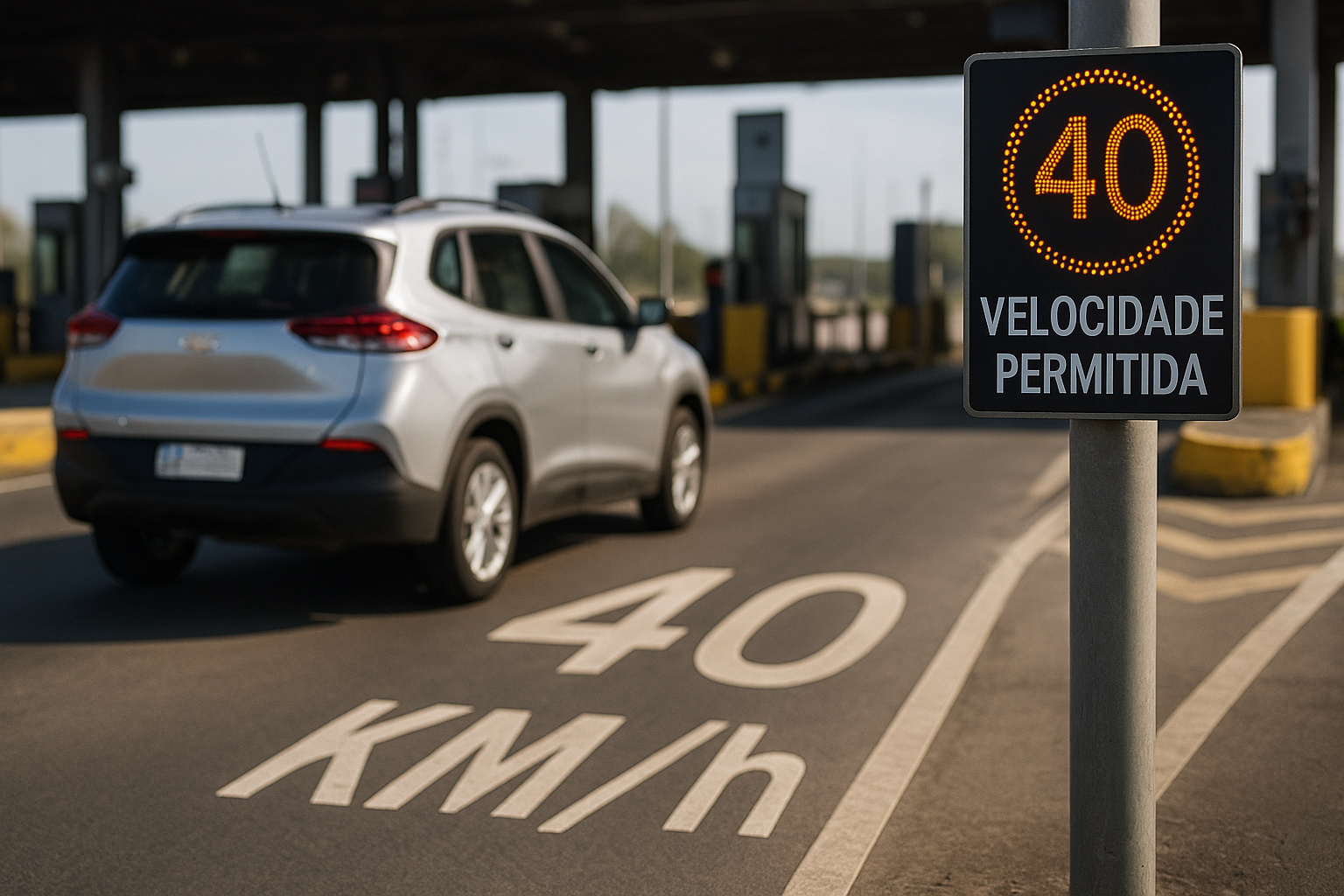


Speeding at Toll Plazas Increases Risk of Accidents and Is Targeted by Strict Enforcement in São Paulo and Other States
More than 20,000 fines for speeding at automatic tolls were issued in São Paulo alone in 2024, according to Artesp (São Paulo State Transportation Agency). The infraction, established in the Brazilian Traffic Code (CTB) since 1997, stipulates that drivers who exceed 40 km/h at toll plazas receive fines and lose points on their driver’s license.
Enforcement has intensified after the expansion of automatic electronic toll collection lanes, known as “free flow”, in 2019. The objective, according to the Department of Highways (DER), is to reduce rear-end collisions and also prevent failures in the collection system.
Rules Applied and Penalties Imposed
Speed control at tolls is conducted with radars and electronic sensors installed on the lanes. These devices send real-time information to the DER, allowing for immediate fines to be issued.
-
The noise law will no longer be in effect at 10 PM starting in June with a new rule valid during the 2026 World Cup.

-
The Chamber opens a debate on driver’s licenses at 16 years old as part of a reform that includes around 270 proposals to change the Brazilian Traffic Code and may redesign rules for licensing, enforcement, and circulation in the country.

-
The new Civil Code could revolutionize marriages in Brazil with “express divorce” and changes that could exclude spouses from inheritance.

-
Banco do Brasil sues famous influencer for million-dollar debt and intensifies debate on delinquency, risks of seizure, and direct impact on Gkay’s credibility.


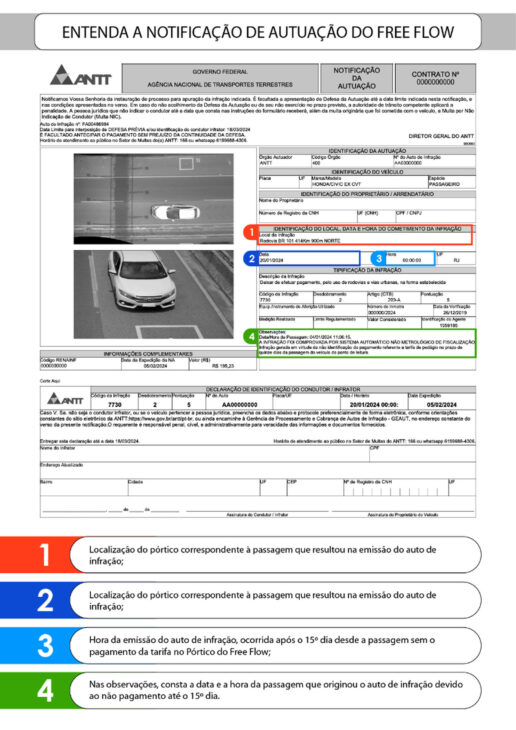
According to the CTB, updated by Law No. 14,071/2020, fines fall into three categories:
- Medium Infraction: up to 20% above the limit (up to 48 km/h) → 4 points on the driver’s license and a fine of R$ 130.16.
- Serious Infraction: from 20% to 50% above (up to 60 km/h) → 5 points and a fine of R$ 195.23.
- Very Serious Infraction: more than 50% (above 60 km/h) → 7 points and a fine of R$ 880.41.
According to Denatran (2022), approximately 15% of fines on concessioned highways resulted from infractions committed in toll areas.
Impacts and Risks of Speeding
Traffic at high speeds at automatic barriers greatly increases the risk of rear-end collisions. This occurs because heavy vehicles, such as trucks and buses, require greater stopping distances.
Moreover, reducing speed facilitates the reading of the electronic charging tag, preventing system failures and delays in flow. Therefore, accelerating beyond the limit poses not only the risk of fines but also a direct threat to the safety of everyone.
Guidelines for Drivers at Toll Plazas
To ensure safety and avoid fines, traffic experts recommend:
- Maintain at least 30 meters of distance from the vehicle ahead.
- Avoid sudden braking or acceleration when approaching the barrier.
- Activate hazard lights in case of system failure, waiting for assistance without reversing.
- Use manual booths when the electronic device is not active, avoiding fines for unauthorized advancement.
These guidelines were reinforced in 2020 by Resolution No. 798 of Contran, which established specific norms for automatic tolls.
Technological Integration Between Concessionaires and Enforcement
Tolls utilize systems that integrate radars, weight sensors, and cameras. This technology allows for real-time data crossover and immediate issuance of fines.
According to a report from the Brazilian Association of Highway Concessionaires (ABCR) in 2023, more than 90% of automated toll plazas in Brazil already have continuous electronic monitoring, which enhances safety and ensures compliance with the law.
Challenges and Perspectives for Road Safety
Speed control at tolls represents a fundamental step in reducing accidents. However, experts argue that traffic education should act as a complement to enforcement.
Thus, the application of fines serves not only to punish but also to ensure safer, more efficient, and more reliable traffic. Adhering to the limit of 40 km/h protects drivers, passengers, and workers who operate at toll plazas.
After all, speeding costs not only money but also lives.
And you, do you believe that electronic enforcement at tolls is sufficient to reduce accidents, or should there be even stronger educational campaigns to raise driver awareness?







Sim e suficiente , basta que motoristas sigam as regras, o motoristas BRASILEIROS São indisciplinados não gostN de obedecer regras