





 Portuguese
  English
  Spanish
  6 min of reading
  0 comments


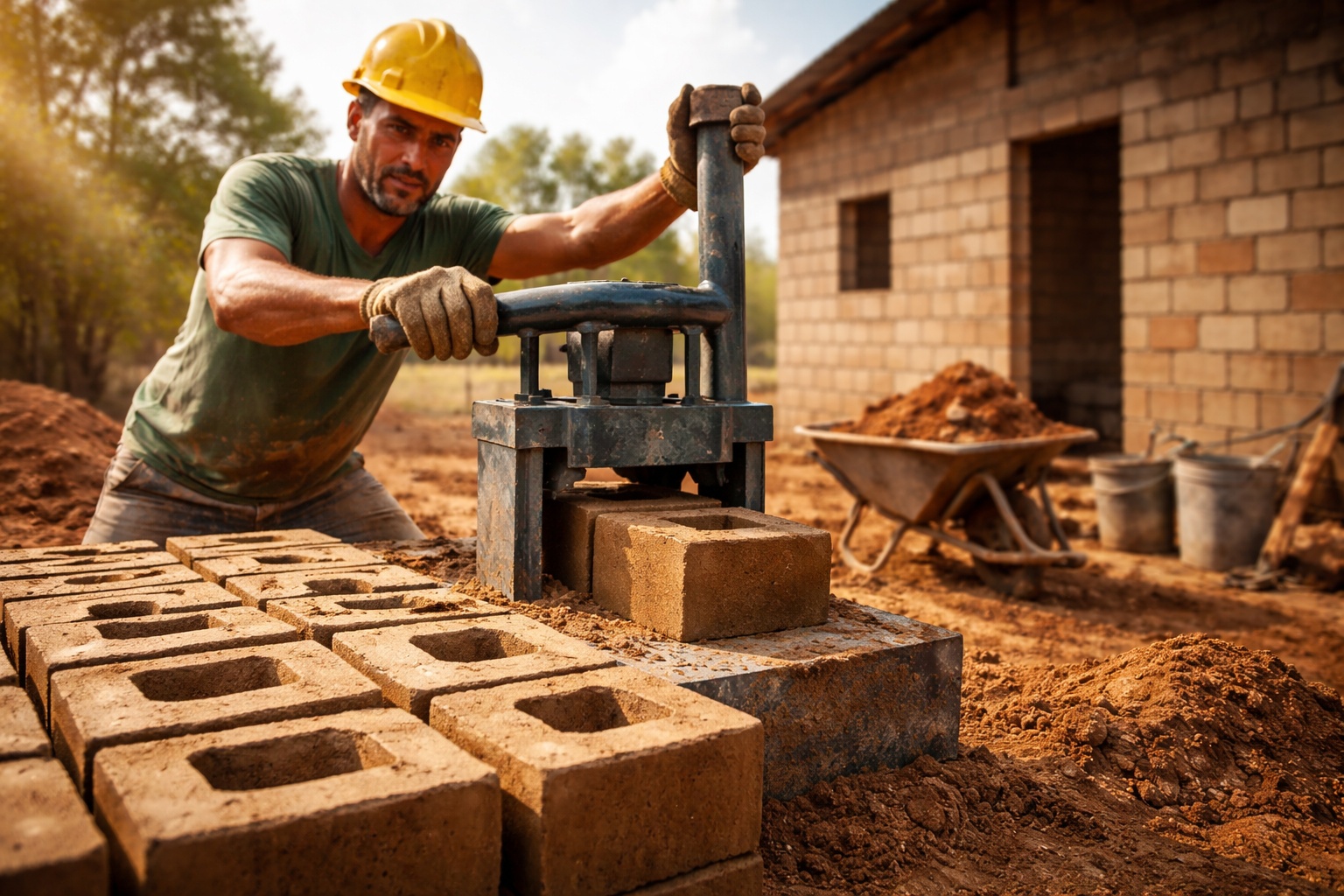
Ecological Soil-Cement Brick Can Be Produced With Manual Press Using Soil and Cement. The Technique Eliminates the Need for a Furnace, Reduces Costs, and Is Gaining Ground in Civil Construction.
The production of ecological soil-cement bricks is gaining traction in residential works, small constructions, and community projects in Brazil. The technique uses a simple mixture of soil, cement, and water compacted in a manual press to form structural blocks that do not need to be fired in a furnace. This construction method is considered a low-cost alternative to traditional masonry, mainly because it allows the blocks to be made directly on the construction site. In addition to reducing transportation and material purchasing costs, the system also decreases energy consumption in the manufacturing process.
According to technical studies on the subject, soil-cement is obtained by mixing soil, cement, and water, pressed into molds, and subsequently cured to gain structural strength. Unlike conventional ceramic bricks, it does not require firing in furnaces, which reduces costs and environmental impact in civil construction.
This model of pressed block is known as an ecological brick precisely because it eliminates the need for firing and allows production with local materials.
-
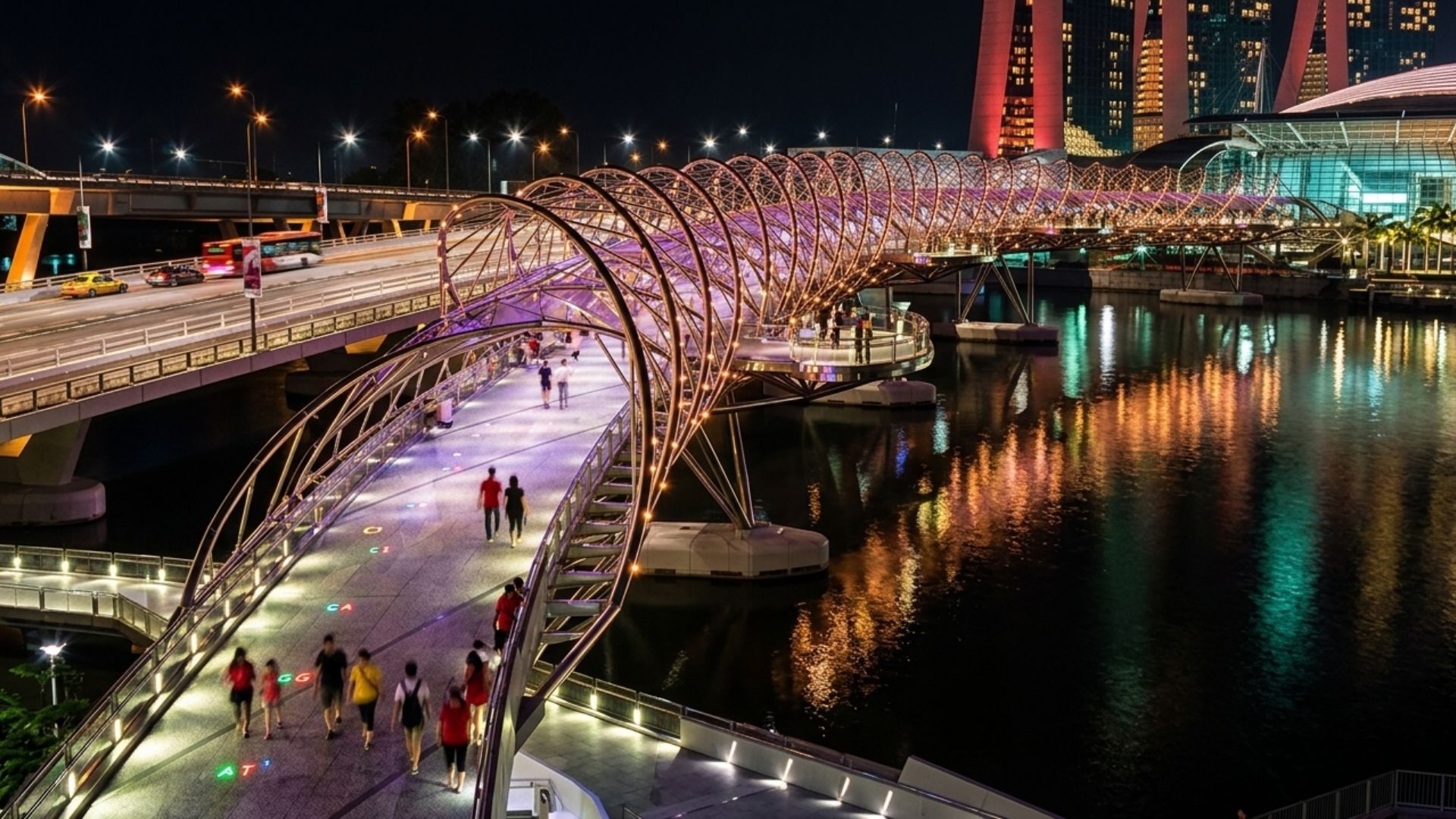
With a DNA shape, this bridge in Singapore draws attention in modern architecture and surprises tourists by transforming a simple crossing into an unforgettable visual experience in the urban heart.
-
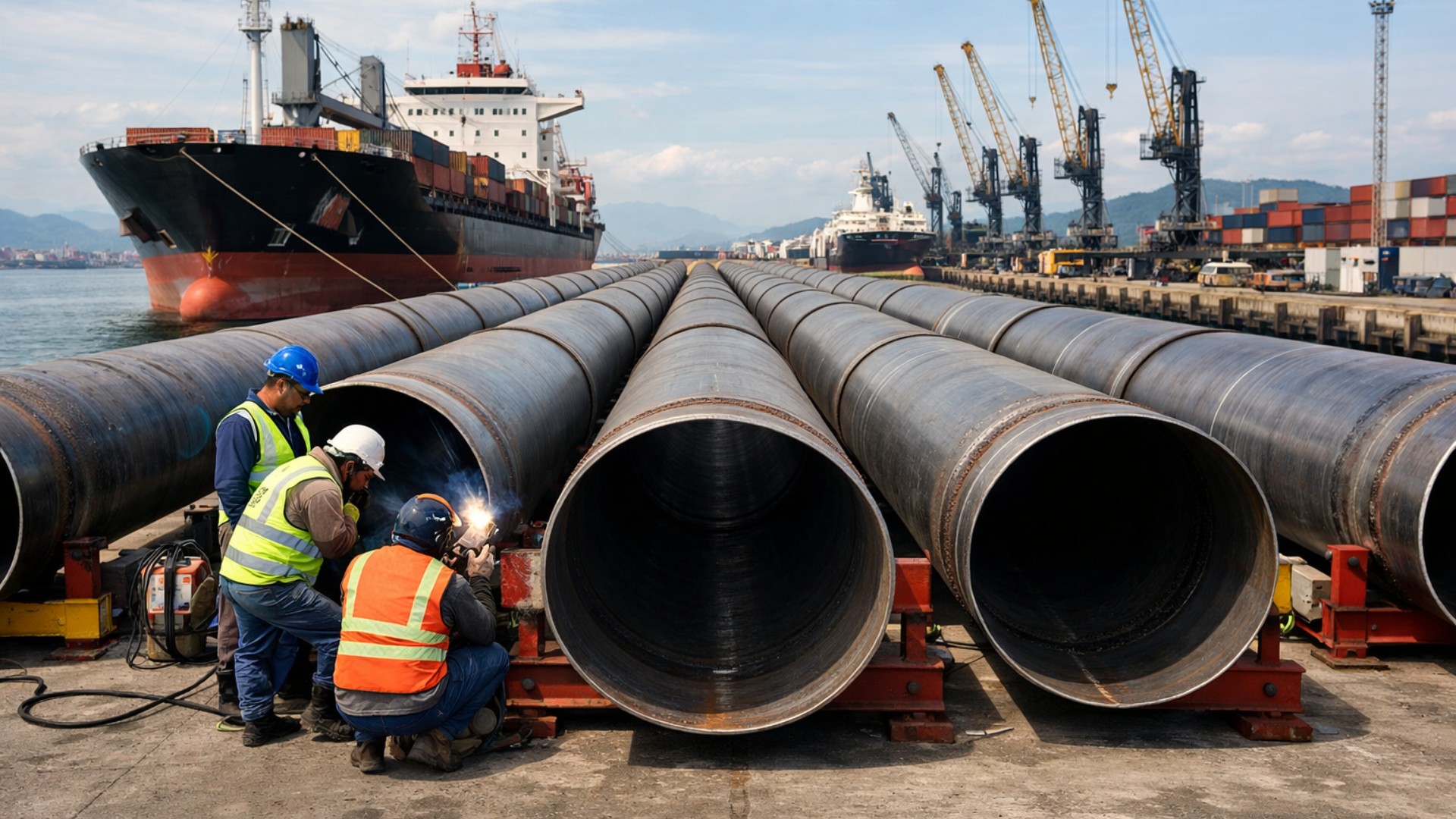
Giant underwater pipeline begins to take shape with a R$ 134.7 million project at the Port of Santos: the 1.7 km structure uses 12-meter and 700 mm pipes to supply water to 450,000 people in Guarujá.
-
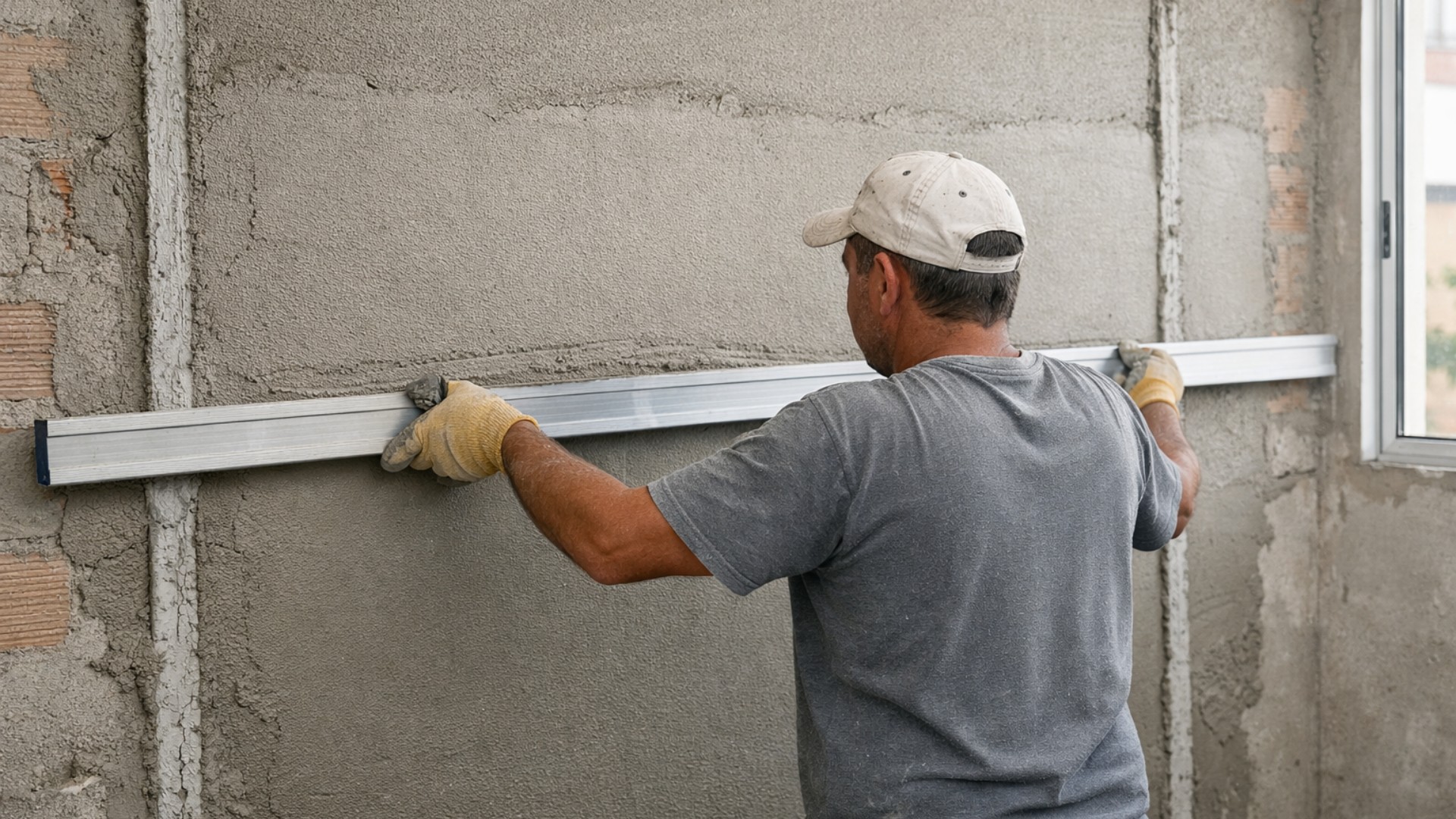
A mason reveals a professional plastering technique that uses aligned guides and a 3-meter ruler to plaster an entire wall in up to 3 hours, without visible seams, with uniform thickness, perfect plumb, and a finish ready for painting without rework.
-
The project that was supposed to be ready for the 2014 World Cup in Brazil debuted with a 12-year delay and nearly R$ 6 billion invested: the Line 17-Gold of the São Paulo monorail opened with reduced hours and is only expected to operate fully in October.


What Is the Ecological Soil-Cement Brick?
The soil-cement brick is a building block produced by compacting a mixture of soil, cement, and water in manual or hydraulic presses.
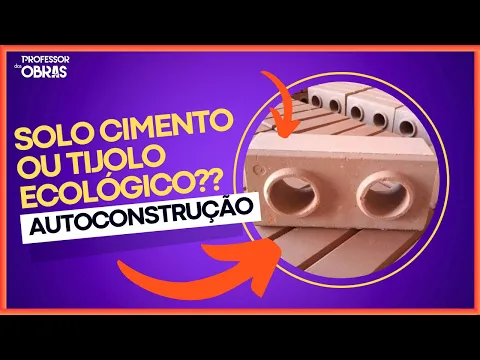

The basic composition typically involves:
- soil with a good proportion of sand and clay
- about 8% to 12% of cement
- a small amount of water to bind
After mixing, the material is placed in a metallic mold of the press and compacted by lever or hydraulic system. This pressure transforms the mixture into rigid blocks that, once cured, can be used in wall construction. According to technical materials on the subject, the manufacturing process involves mechanical compaction and curing of the cement, a stage responsible for providing strength to the block. This method allows for the production of bricks directly at the site or in small community factories.
How the Manual Press Works to Make Bricks
The manual press is a relatively simple device that uses levers to compress the soil-cement mixture inside a metallic mold.
The operation occurs basically in three main stages:
- preparation of the soil, cement, and water mixture
- placing the material inside the press mold
- compaction through a lever that applies pressure

After pressing, the block is removed from the mold and placed to dry. Unlike ceramic bricks, which must pass through furnaces that reach high temperatures, the ecological brick gains strength through the curing of the cement, a process in which the material hardens gradually after hydration.
This simple process allows for the production of large quantities of blocks without the need for complex industrial equipment.
Steps to Produce Soil-Cement Brick in Practice
The manufacture of these blocks follows a relatively simple sequence within the construction site. First, it is necessary to select the appropriate soil. The ideal soil usually has a good amount of sand, as this improves the final strength of the brick. In many cases, the soil is sieved to remove stones and debris.

After that, the mixture with cement and water occurs. The proportion may vary according to the type of soil, but it is usually around 10% cement in the composition. Next, the mixture is placed in the press and compacted to form the block.

After molding, the bricks need to undergo a curing period that can last from 7 to 14 days. During this time, the material gradually gains strength. Only after this period are the blocks ready for use in structural walls.
Why This Brick Eliminates the Need for Firing in a Furnace
The production of traditional ceramic bricks depends on industrial furnaces that reach temperatures above 900 °C to harden the clay. In the case of soil-cement bricks, the process is different.
The strength of the block does not come from firing but from the chemical reaction of cement with water, called hydration. This process causes the material to gradually harden. Therefore, the ecological brick:
- does not need to be fired
- consumes less energy to be produced
- can be manufactured on-site
This characteristic is one of the factors that make the system considered more sustainable within civil construction.
How the System Can Reduce Costs in a Construction
One of the reasons for the growing use of soil-cement bricks is the potential for cost reduction in certain works. This savings can occur at different stages of construction.
First, because the blocks can be manufactured on-site, reducing expenses with transportation and the purchase of industrial bricks. Second, because many models of ecological bricks have modular fittings that allow for less mortar during installation.
Furthermore, in some projects, the blocks are used exposed, reducing or eliminating the need for plaster in certain areas. In specific projects, these factors can significantly reduce the final cost of construction.
Applications of Ecological Brick in Civil Construction
Soil-cement blocks are used in different types of constructions. Among the most common applications are:
- single-story houses
- walls and partitions
- rural warehouses
- affordable housing projects
There are also cases of use in small commercial buildings and community works. The use of the system tends to be more common in small and medium-sized constructions, where the local production of blocks can generate logistical savings. The simplicity of the technique allows communities or small contractors to adopt the method with relative ease.
Structural and Environmental Advantages of the System
The soil-cement brick presents some characteristics that explain its popularity in alternative construction projects. Among the most cited advantages are:
- reduction of energy consumption in manufacturing
- use of soil available on-site
- lower need for material transportation
- possibility of local production
Moreover, the method falls under the techniques of stabilized earth construction, an approach used for centuries in different regions of the world. The principle of using soil as a structural material has accompanied the history of human architecture since ancient civilizations.
Limitations and Care When Using Ecological Bricks
Despite the advantages, the system also requires some technical care. The quality of the soil is one of the most important factors to ensure the strength of the brick. Inadequate soils can produce weak blocks or those with high water absorption.
Another point is the need for skilled labor to perform the correct mixing and proper installation. It is also essential to protect the walls against excessive moisture, especially in regions with heavy rainfall.
When these steps are respected, the system can demonstrate good structural performance in various applications.
Why Soil-Cement Brick Has Gained Interest Again
In recent years, the search for more economical and sustainable construction solutions has increased interest in alternative building methods. The ecological soil-cement brick appears in this context as an option that combines three important factors:
- simplicity of production
- reduction of environmental impact
- potential for savings in certain works
Additionally, the ease of fabrication with manual presses makes the method accessible to small builders and communities. This combination of low cost, simple technology, and use of local materials explains why the system has regained prominence in civil construction.








-

-

2 pessoas reagiram a isso.