





 Portuguese
  English
  Spanish
  5 min of reading
  0 comments


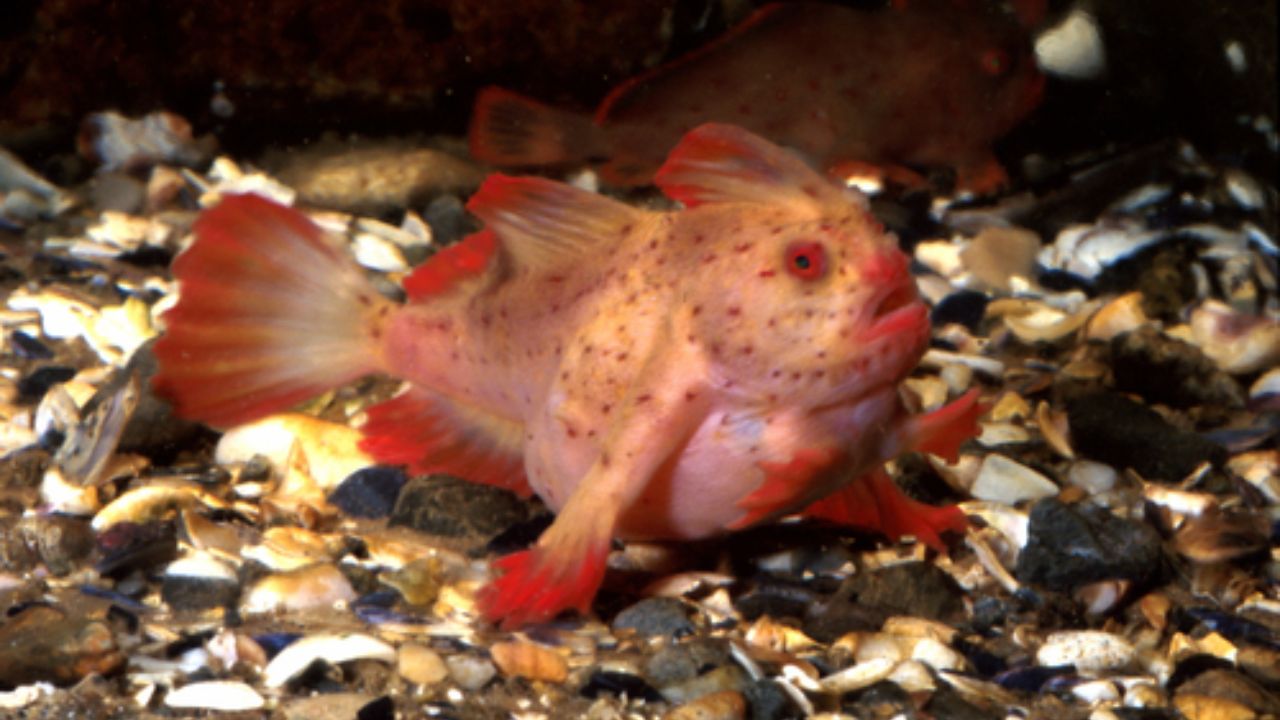
The Smooth Handfish (Sympterichthys unipennis) Was Officially Declared Extinct by the IUCN. Understand What Led to the Species Disappearance and the Environmental Impacts.
The smoother handfish, scientifically known as Sympterichthys unipennis, was officially declared extinct in May by the International Union for Conservation of Nature (IUCN).
This historic decision marks the first time, in the modern era, that a species of marine fish receives this classification.
The animal has not been seen since 1802, when it was last recorded near the coast of Tasmania, southern Australia. This finding came after decades of unsuccessful searches and detailed scientific analyses.
-
He started running at 66 years old, broke records at 82, and is now a subject of study for having a metabolic age comparable to that of a 20-year-old, in a case that is intriguing scientists and inspiring the world.

-
Oldest tree on the planet reappears after 130 years of searches: Wattieza, 385 million years old, was 10 meters tall and had no leaves or seeds; Gilboa fossils in New York solved the mystery in 2007.

-
A 48-square-meter house assembled in hours with 4,000 bricks made of recycled plastic that does not absorb moisture, has natural thermal insulation, and costs less than 90,000 reais in a complete kit.

-
Luciano Hang revealed that Havan’s air fleet has already accumulated more than 20,000 landings, 10,000 flight hours, and 6 million kilometers traveled, and he says that without the planes, the company would never have grown so quickly.


According to experts, the combination of climate change, environmental degradation, and biological characteristics of the species explains its disappearance.
Therefore, this case has become an urgent alert about the future of other vulnerable marine organisms.
Smooth Handfish Declared Extinct After More Than 200 Years Without Records
The smoother handfish was part of a rare group of fish known as handfish. They are named so because they use adapted fins, resembling small hands, to “walk” along the seabed instead of swimming long distances.
Moreover, Sympterichthys unipennis had an unusual appearance. It measured about 15 centimeters, had pointed fins, and a bump on its forehead that resembled a small beard.
This combination led to the fish being described, almost poetically, as a peculiar and charismatic animal, despite being little known.
The only known specimen of the smoother handfish was collected in 1802 by the French biologist François Péron. At the time, he was part of a scientific expedition exploring the marine fauna of the Tasmania region. The specimen was taken to the Natural History Museum in Paris, where it remains to this day.
Since then, no other individuals have been found. Even with modern expeditions, the use of scientific diving, and advanced technologies, the smoother handfish has never been sighted again.
This led researchers to conclude that the species has indeed disappeared from nature.
Why Was the Smooth Handfish Considered Extinct?
The classification of extinct does not happen easily. For this to occur, a scientific consensus based on long periods without reliable records, even after intensive searches, is necessary.
In the case of the smoother handfish, more than two centuries passed without any evidence of its existence. The IUCN evaluated historical data, scientific reports, and recent surveys before making the decision. Thus, the disappearance was considered definitive.
Biological Characteristics Increased the Species Vulnerability
One of the main factors that contributed to the extinction of the smoother handfish was its highly sedentary behavior. Unlike other fish, it did not move over large areas and lived restricted to specific shallow regions along the coast of Tasmania.

In addition, its offspring did not go through a widely dispersed larval phase, common in many marine fish. This means that if a local population were eliminated, it would be difficult to naturally replenish. Therefore, any environmental impact had devastating and lasting effects.
Pollution and Habitat Destruction Aggravated the Situation
With the advance of human occupation in Tasmania, coastal environments began to undergo profound changes. The dumping of industrial waste, including heavy metals, compromised the water quality in estuaries and shallow areas — the preferred habitats of the handfish.
Moreover, activities like scallop fishing and the destruction of oyster reefs modified the seabed. These changes directly affected sensitive species, such as the smoother handfish, which depended on stable environments to survive.
Ocean Warming Is Regarded As the Biggest Threat
Among all factors, the warming of ocean waters is considered the most concerning. Since 1900, sea temperature in Tasmania has risen by almost two degrees Celsius. Though this number seems small, it is sufficient to drastically alter cold marine ecosystems.
The smoother handfish was adapted to cooler waters. With the advance of warm currents coming from northern Australia, its territory has been progressively shrinking. Without the ability to migrate to cooler regions, the species ended up trapped until it disappeared.
Other Handfish Species Are Also At Risk
The disappearance of the smoother handfish is not an isolated case. Currently, there are thirteen other known species of handfish, most restricted to Tasmania. However, almost all are considered threatened, critically endangered, or classified as “data deficient.”
Seven of these species have not been sighted since 2000 or before, which raises concerns among researchers. According to experts, the smoother handfish serves as a warning signal for what could happen if urgent measures are not taken.
Conservation Projects Aim to Prevent New Extinctions
Currently, only three species of handfish have structured conservation plans: the red handfish, the spotted handfish, and the Ziebell’s handfish. Among them, the red handfish is the most threatened, with fewer than a hundred known adult individuals.
The strategies include constant monitoring, habitat protection, and even the installation of artificial substrates on the seabed. These materials help the fish lay their eggs, replacing algae and natural organisms that were destroyed by invasive species.
Lack of Data Hinders Marine Species Protection
Despite efforts, scientists face significant challenges. Many handfish species are rare, elusive, and difficult to locate. This makes data collection slow and costly. Without sufficient information, it becomes challenging to create effective preservation policies.
To overcome this issue, researchers have been investing in new technologies, such as detecting environmental DNA in seawater. This technique allows identifying the presence of species without the need to sight them directly.


Extinction of the Smooth Handfish Leaves Important Lessons
The extinction of the smoother handfish (Sympterichthys unipennis) represents more than the loss of a single species.
It symbolizes the silent impacts of environmental changes in the oceans and the fragility of ecosystems little visible to the human eye. Moreover, the case reinforces the urgency of investing in science, monitoring, and conservation.
As many of these animals live out of sight of society, their declines may go unnoticed until it is too late.
The disappearance of the smoother handfish is, therefore, a clear reminder that protecting marine biodiversity is not an option but an immediate necessity.
With information from National Geographic Brasil.








-

-

-

-

-

15 pessoas reagiram a isso.