





 Portuguese
  English
  Spanish
  5 min of reading
  0 comments


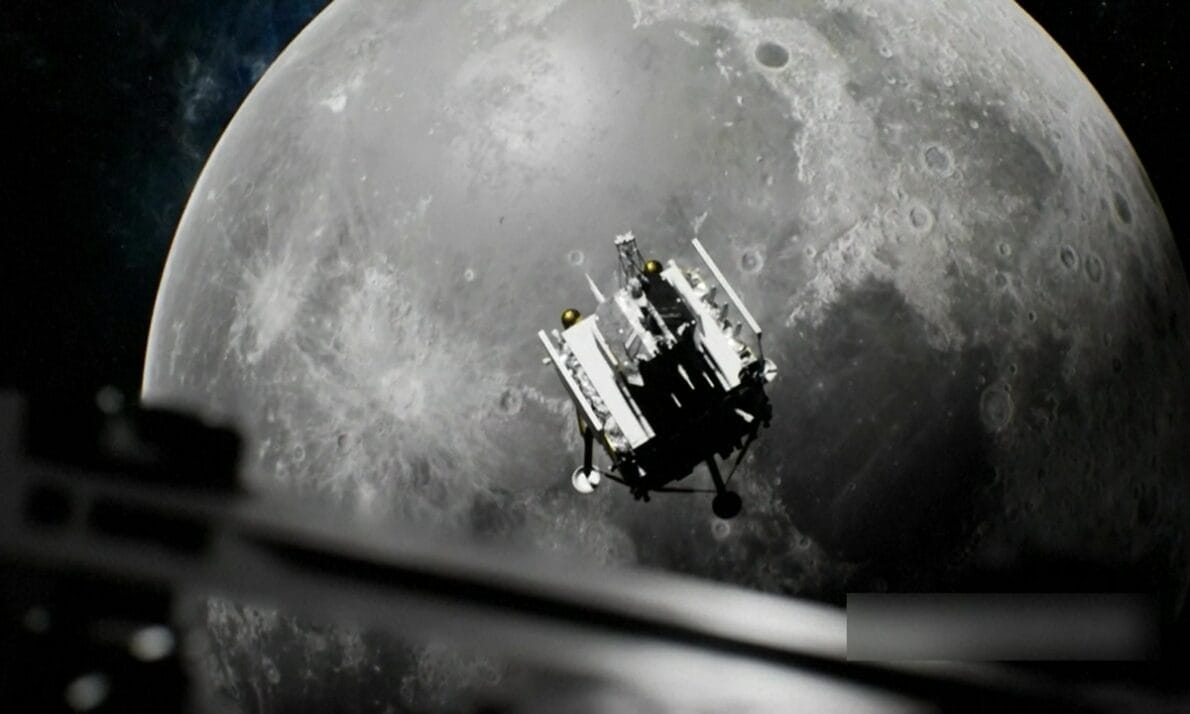
The Chang’e-6 Probe From China Lands on the Far Side of the Moon for the First Time in History, Collecting Samples From the South Pole-Aitken Basin. Learn More About This Historic Mission
The recent mission of the Chang’e-6 probe from China marks a historic milestone in space exploration. For the first time in human history, a probe landed on the far side of the Moon with the aim of collecting lunar soil samples.
This article details the key aspects of this groundbreaking mission, its objectives, and the impact on space science.


The Arrival of Chang’e-6 on the Far Side of the Moon
On the dawn of a historic Sunday, the Chang’e-6 probe successfully landed on the far side of the Moon. This event was announced by the China National Space Administration (CNSA), marking an unprecedented achievement in lunar exploration. The probe landed in the South Pole-Aitken Basin (SPA), a region that had remained virtually unexplored until then. This landing was made possible thanks to the support of the Queqiao-2 relay satellite, which ensured communication between Earth and the probe during its journey.
-
Archaeologists find an intact tomb over 2,500 years old, with more than 100 preserved objects, weapons, jewelry, and human remains never touched.

-
Volcanic lava transforms into threads as fine as human hair that travel over 30 kilometers by wind and fall like cutting rain on roofs and backyards in Hawaii and Iceland.

-
NASA issues a warning for the feared Godzilla El Niño that could change the planet’s climate in 2026 with extreme warming of the Pacific capable of causing devastating droughts in some regions and historic floods in others simultaneously.

-
Archaeologists discover a 100-meter ship graveyard in a submerged Greek city, and what has appeared on the seabed of Libya could change what was known about this ancient port.


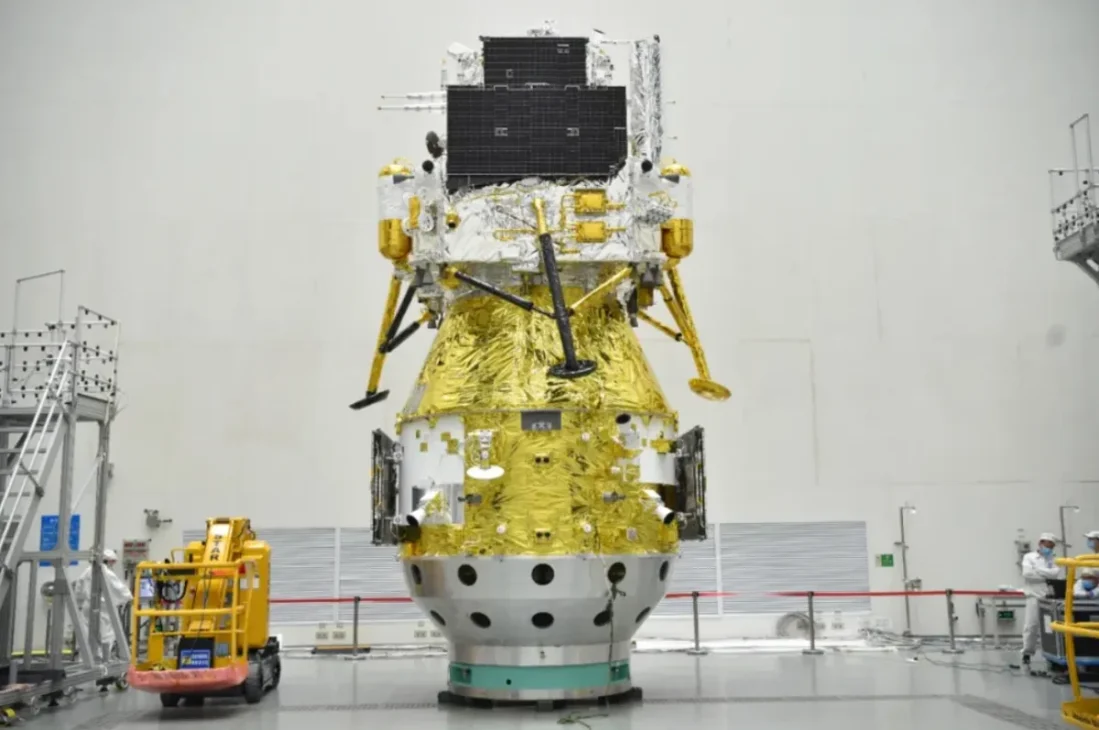
The Chang’e-6 consists of a combination of modules: an orbiter, a return module, a landing module, and an ascender. Since its launch on May 3, 2024, the probe has undergone several crucial phases, including the Earth-Moon transfer, lunar braking, lunar orbiting, and descent for landing. On May 30, the combination of the landing module and ascender separated from the orbiter and return modules, preparing for the landing on the Moon.
The Importance of the South Pole-Aitken Basin
The selection of the South Pole-Aitken Basin as the landing site was not by chance. This region, also known as SPA, is one of the largest impact craters in the solar system, with a diameter of approximately 2,500 km and a depth of 13 km. The Apollo Basin, located within the SPA, was the specific site chosen for the landing. Huang Hao, a specialist from the China Aerospace Science and Technology Corporation (CASC), highlighted that this choice was motivated by the enormous potential for scientific exploration of this region, along with favorable communication and telemetry conditions, and the relative flatness of the terrain.
The samples collected from this region may provide valuable information about lunar geology and the history of the solar system. The South Pole-Aitken Basin is rich in minerals that can reveal details about the geological processes that shaped the Moon and, by extension, the Earth. Furthermore, studying these samples may offer insights into the presence of water and other essential resources that could be utilized in future space missions and even in potential lunar bases.
The Chang’e-6 Mission: Stages and Technologies
The Chang’e-6 mission is one of the most complex and technologically advanced ever carried out by China. The probe was launched on May 3, 2024, and after a period of travel and orbital maneuvers, the landing module and ascender finally landed on the Moon on June 2. This process involved several crucial stages:
- Earth-Moon Transfer: After launch, the probe entered a transfer trajectory that took it from Earth orbit to lunar orbit.
- Lunar Braking: As it approached the Moon, the probe performed a braking maneuver to reduce its speed and enter a stable lunar orbit.
- Lunar Orbiting: In lunar orbit, the probe underwent several maneuvers to adjust its trajectory and prepare for descent.
- Descent and Landing: Finally, the landing module and ascender separated from the orbiter and return modules and descended to the lunar surface, landing in the South Pole-Aitken Basin.
The Queqiao-2 relay satellite played a crucial role in this mission, ensuring continuous communication between Earth and the probe during all phases of the mission. This satellite is essential because the far side of the Moon is not visible from Earth, making direct communication impossible without the assistance of a relay satellite.
Future Implications and China’s Role in Space Exploration
The Chang’e-6 mission represents a significant advance in space exploration and places China at the forefront of lunar missions. Collecting samples from the far side of the Moon opens new possibilities for science and space exploration. These samples could help uncover mysteries about the formation and evolution of the Moon and provide crucial data for future crewed missions.
China has ambitious plans for the future of space exploration. With the Chang’e-6 mission, the country demonstrates its technical capability and commitment to scientific exploration. Future lunar missions, including the construction of a lunar base, are on CNSA’s agenda, reflecting China’s growing importance in the global space arena.
Beyond the scientific implications, this mission strengthens China’s position as a leader in space technology. The success of Chang’e-6 could pave the way for international collaborations and inspire other nations to intensify their own space exploration missions.
Chang’e-6 is a Milestone in Lunar Exploration
The Chang’e-6 mission is a milestone in lunar exploration and a testament to China’s technological and scientific advancement. The successful landing on the far side of the Moon and the collection of samples from the South Pole-Aitken Basin are remarkable achievements that will provide new insights into lunar geology and the future of space exploration. As we continue to explore the universe, missions like Chang’e-6 bring us closer to unraveling the secrets of the cosmos and expanding the frontiers of human knowledge.
With careful planning, advanced technology, and an ambitious vision, China is poised to continue leading space exploration in the coming decades, inspiring a new era of discoveries and innovations.








Seja o primeiro a reagir!