





 Portuguese
  English
  Spanish
  6 min of reading
  2 comments


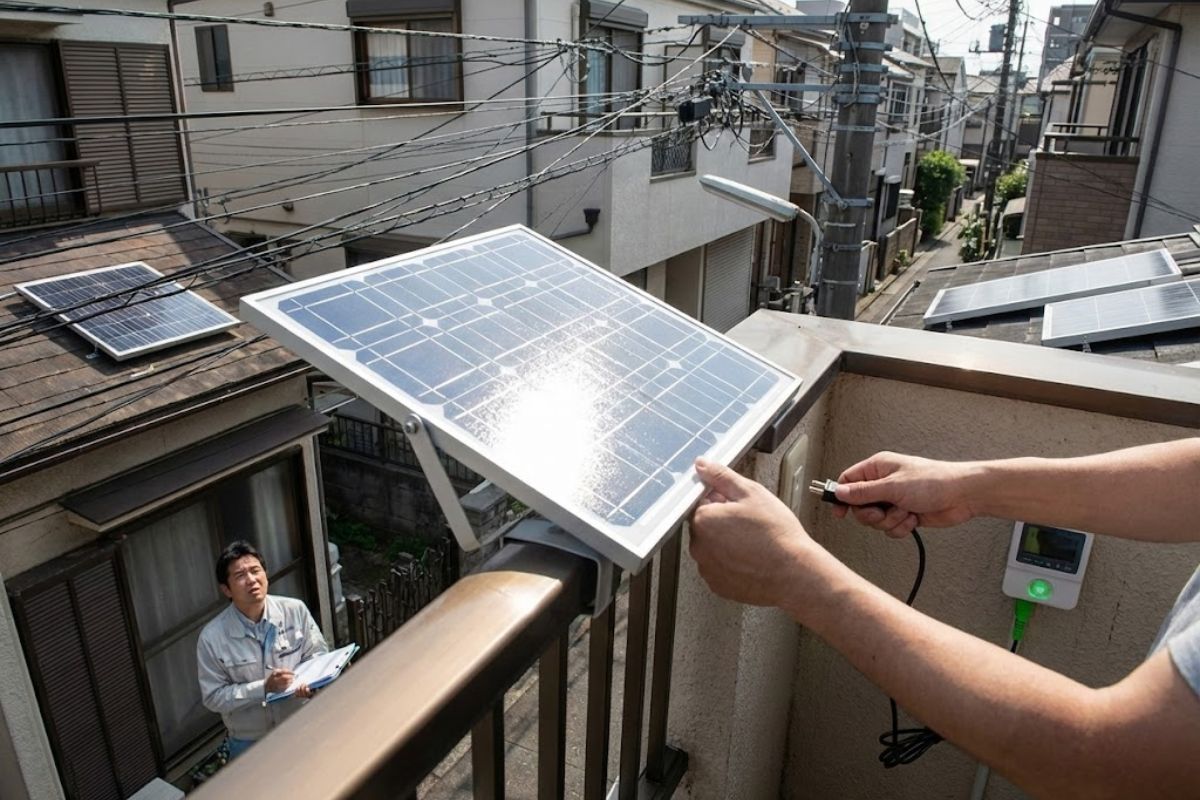


In 2026, Small Plug-in Solar Panels Advance as an Alternative for Home Generation by Combining Installation and Lower Cost, Promising to Reduce Electricity Bills. However, Expansion Depends on Clear Rules, Safety Testing, and Acceptance by Utilities that Resist the Model and Impose Barriers in Practice Still in 2026
The discussion about small plug-in solar panels has moved out of the niche and into the radar of those looking to reduce their electricity bill without construction and with simple installation. The proposal is pushed by an access argument: lower cost, modularity, and an installation that seems immediate.
At the same time, adoption runs into rules, safety doubts, and resistance from utilities that see operational risk and defend registration and billing processes similar to those for larger systems. The result is a market that is growing, but it still depends on standardization and regulatory decision-making to consolidate.
What Are Small Plug-in Solar Panels and Why Have They Become a Topic in 2026

Small plug-in solar panels are compact home generation systems that rely on the idea of quick installation and lower entry cost, in contrast to rooftop projects that require high investment and construction.
-
A new Brazilian shopping center worth R$ 400 million will be built in an area equivalent to more than 4 football fields, featuring 90 stores, 5 cinemas, a supermarket, a college, and parking for 1,700 cars, potentially generating 3,000 jobs.

-
Larger than entire cities in Brazil: BYD is building a 4.6 km² complex in Bahia with a capacity for 600,000 vehicles per year, but the discovery of 163 workers in conditions analogous to slavery has shaken the entire project.

-
With an investment of R$ 612 million, a capacity to process 1.2 million liters of milk per day, Piracanjuba inaugurates a mega cheese factory that increases national production, reduces dependence on imports, and repositions Brazil on the global dairy map.

-
Brazilian city gains industrial hub for 85 companies that is equivalent to 55 football fields.


Instead of one large package, the logic is to use modules that can be added over time as the user tests performance and adjusts the electricity savings strategy.
The technology appears as an entry point for traditionally excluded audiences in residential solar, such as those with limited budgets, renters, and families in multi-family housing.
In these scenarios, the promise is to reduce installation barriers and allow flexibility without turning the house into a construction site.
The Promise: Reduce Electricity Bills with Simple Installation and Lower Cost

The appeal of small plug-in solar panels is straightforward: reduce electricity bills through simple installation, at a lower cost than traditional systems.
In cited reports, a user describes equipment that cost US$ 400 and took less than an hour to install, with an expected return of two to three years instead of a decade typically assigned to more expensive rooftop systems.
Another mentioned case is of a DIY kit of 800 watts for US$ 1,600, purchased by a family that did not own the property and did not see feasibility in investing tens of thousands of dollars in a rooftop system.
The reported expectation was to save 5% to 10% on the monthly electricity bill, with the added benefit of portability in case of moving.
Even in these examples, the technical message is about limits.
The report itself points out that the panels do not power an entire house, but can keep a refrigerator and small appliances running, which helps frame the system’s role as a complement to home generation, not as total replacement.
The Main Brake: Rules That Do Not Keep Up with Plug-in Installation
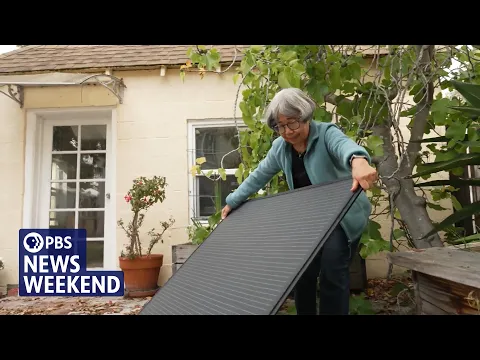

The expansion of small plug-in solar panels does not depend solely on price and installation.
The biggest obstacle described is regulatory: in much of the United States, it is not legal to simply install the systems and connect them as intended, despite advocates arguing that the registration process could be simpler.
In forums with regulators, utility representatives argue that customers should comply with standards and pay fees as if they had a rooftop system, justifying that the requirement helps manage supply and demand for energy on the grid.
The criticism from the other side is that bureaucracy and registration costs end up negating part of the benefit of a simple installation.
The tension point, in 2026, is that technology is advancing faster than the rules.
While the product reaches consumers as an immediate solution, the regulatory framework tends to require steps and processes designed for larger systems.
Safety: What Weighs in the Discussion and Why Certification Becomes a Key Word
The safety doubt is treated as a systemic risk, not just as a detail.
An independent expert consulted in the report describes that, without adequate certifications, there could be a possibility of someone energizing a fallen power cable, risking injury to a maintenance worker.
In the same context, the expert points out that safeguards already exist when the equipment has a certified microinverter and follows electrical codes, and that with these mechanisms, there would be no need for a long or costly registration process.
The discussion, therefore, is not whether safety matters, but what minimum requirements make the installation acceptable and how that should appear in the rules.
For the consumer, the practical implication is clear: simple installation cannot mean installation without criteria.
In a plug-in model, safety depends on standardization, documentation, and clarity of responsibility in case of failure.
Resistance from Utilities: Grid Management, Fees, and Narrative Dispute
The resistance from utilities appears as a recurring component.
From the companies’ perspective, registration and billing are control tools to maintain grid stability, especially when generation becomes distributed and fragmented.
From advocates’ perspective, requiring the same process as a large system can undermine the small plug-in solar panels proposal, which is precisely intended to reduce entry friction.
This clash explains why the discussion is not just technological.
It is regulatory and economic: who pays for managing the flow, who assumes the risk, and what level of control utilities should exert over home generation entering the system’s fringes, with simple installation and potentially high scale.
How Far the Solution Goes: Partial Savings, Modularity, and Realistic Expectations
The cited cases reinforce that small plug-in solar panels tend to act as a complement.
They may help reduce electricity bills in limited ranges and maintain specific loads, but do not meet an entire household’s demand.
Even so, the aggregate effect may exist: experts mention that the technology would cover only a fraction of national energy demand, but every renewable slice added counts.
Modularity is the differential that sustains expansion.
By allowing the user to start small and grow over time, the model reduces the requirement for a large initial investment and makes installation an incremental decision that can be adjusted according to results and local rules.
Why 2026 Could Be a Turning Point for Home Generation
In 2026, the debate over small plug-in solar panels centers on three variables that need to move together. The first is the promise of reducing electricity bills with simple installation and lower cost.
The second is the need for clearer rules, proportional to small and modular systems.
The third is the consolidation of safety safeguards that provide predictability for consumers and utilities.
The final equation is political and technical.
If regulators create processes compatible with the risk and if utilities accept a registration model consistent with the scale of the product, home generation could change through cumulative adoption.
If that does not happen, small plug-in solar panels are likely to remain confined to locations where rules and safety are already resolved.
Small plug-in solar panels have gained traction because they combine simple installation and lower costs with the expectation of reducing electricity bills, but widespread adoption depends on rules and verifiable safety, along with a less conflictual relationship with utilities.
In 2026, the dispute focuses on how to frame a solution sold as immediate within a power system that demands predictability and accountability.
For those following the topic, the most straightforward step is to observe three things before investing: what connection rules are currently in effect, what safety evidence the equipment presents, and how utilities handle registration and fees for small-scale home generation.
In your region, would small plug-in solar panels be accepted by utilities with clear safety rules, or would resistance still speak louder?








Seria lindo se o desgoverno nao estivesse taxando a energia de painéis solares tornando inviável.
Eles estão afirmando que a energia produzida pelos painéis solares esta afetando o sistema ou seja o contrario de qualquer pais desenvolvido
A Lei 14.300, o Marco Legal da Geração Distribuída no Brasil, foi sancionada pelo então Presidente
Jair Bolsonaro em janeiro de 2022, após aprovação pelo Congresso Nacional (Câmara e Senado). Ela regulamenta a micro e minigeração de energia, principalmente solar, e estabelece as regras para os créditos de energia e encargos, garantindo segurança jurídica ao setor. Partes vetadas foram