





 Portuguese
  English
  Spanish
  4 min of reading
  0 comments


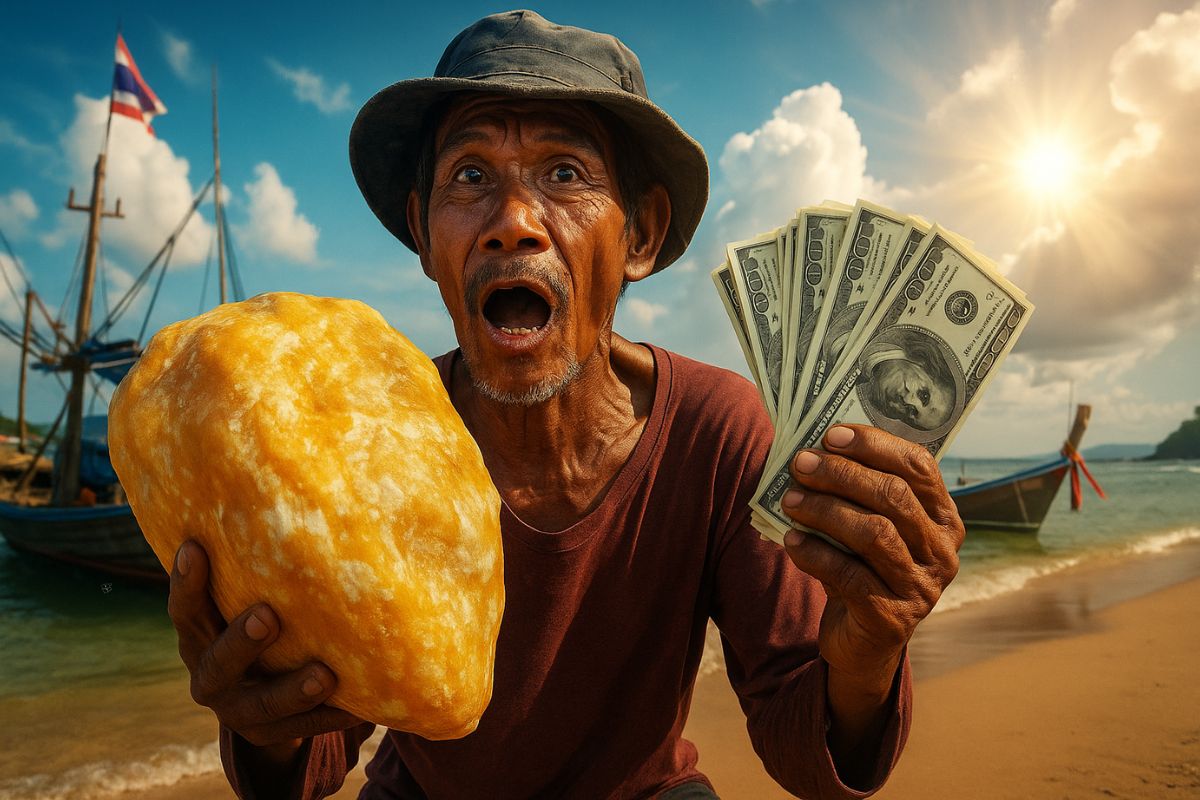
Discovery in 2021: Thai Fisherman’s Find Was Valued at Over US$ 1.25 Million and Revived Global Interest in Rare Ambergris
The Thai fisherman Narong Phetcharaj was returning from the sea when he saw, adrift, a waxy block pushed by the waves to the beach of Surat Thani, in southern Thailand. What seemed like just another ocean residue turned out to be a 30-kilo piece of ambergris, popularly known as “whale vomit”, valued at over US$ 1.25 million depending on its purity and maturity.
Before the find, the Thai fisherman lived off daily fish catches and reported an income of about US$ 625 per month. The confirmation came after analysis at Prince of Songkla University: it was authentic ambergris, a rare substance used by the luxury perfume industry as a fixative. The encounter transformed the fisherman’s life trajectory and reignited debates about conservation, market, and legality.
Who, Where, and How Much: The Find That Made Headlines

Narong Phetcharaj is the Thai fisherman who stars in the story. Upon reaching the sandy shore, he identified a clear, waxy, and floating block, with a distinct appearance from common stones.
-
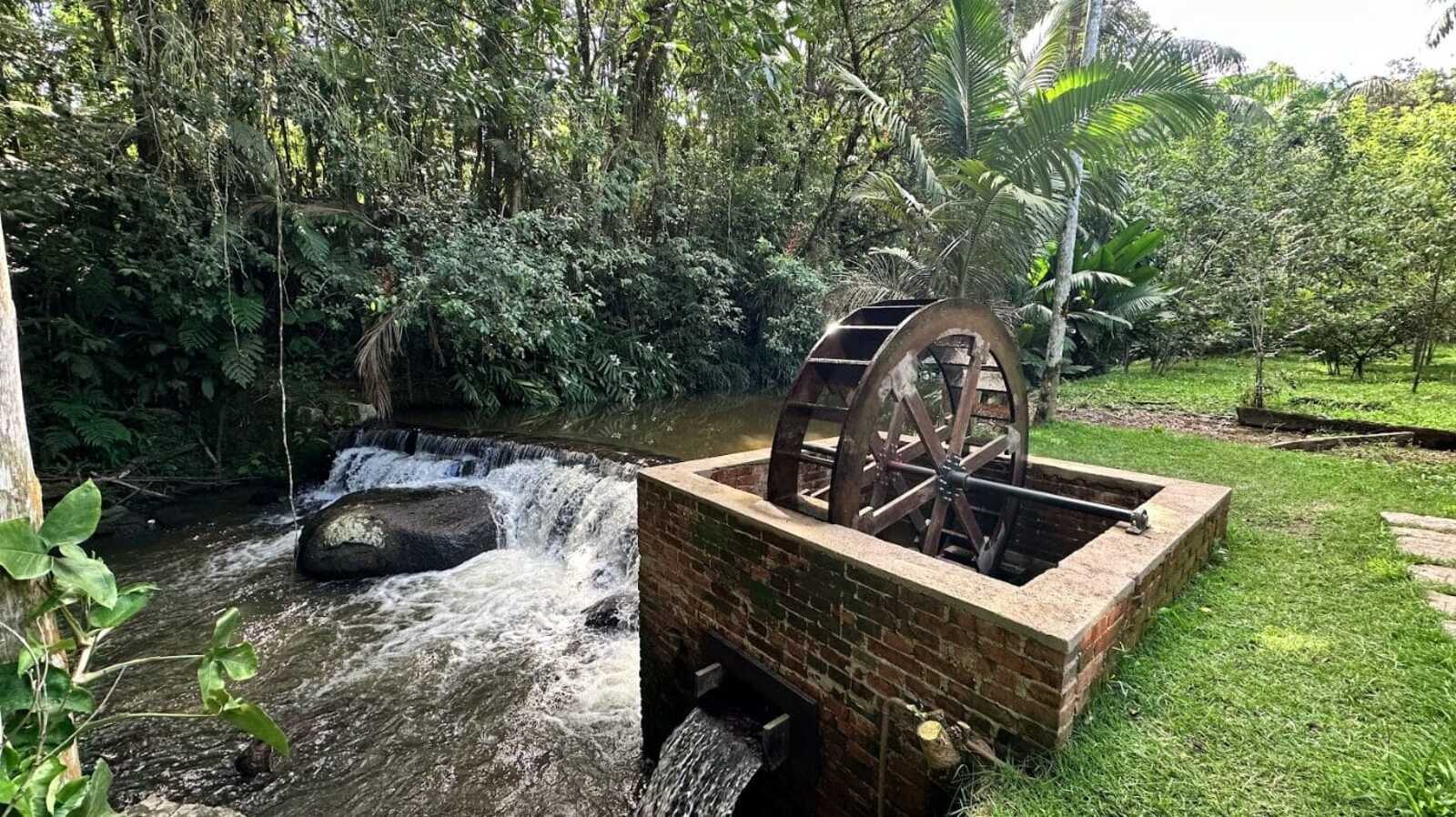
While restoring a historic mansion from 1910, a brick structure with an old turbine that generated energy from the Rio do Testo emerged, along with a hidden door and a rare floor concealed under layers of wax.
-
Italian researchers have detected what appears to be a second Sphinx buried under the sands of Egypt, and satellite scans reveal a gigantic underground megastructure hidden beneath the Giza Plateau for over 3,000 years.

-
There are 4,223 drums and 1,343 metal boxes concreted with 50-centimeter walls that store the radioactive waste from Cesium-137 in the worst radiological accident in Brazil, just 23 kilometers from Goiânia, with environmental monitoring every three months.

-
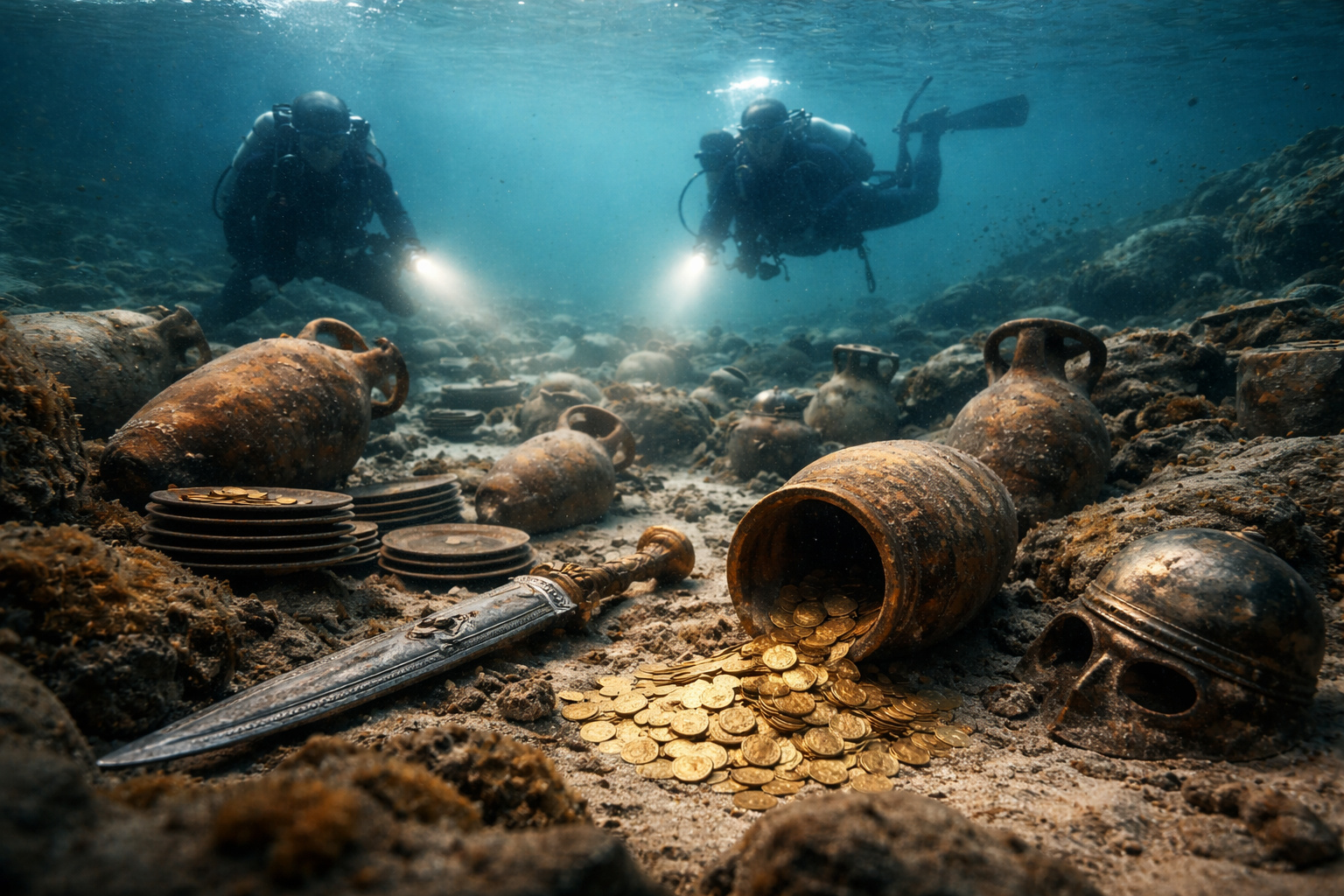
Giant Roman treasure found at the bottom of Lake Neuchâtel in Switzerland reveals an advanced trade system, circulation of goods, and armed escort in the Roman Empire about two thousand years ago.

The scene took place in Surat Thani, a region where currents and tides frequently bring ocean materials to the beaches.
The material weighed about 30 kg and was submitted to specialists, who confirmed it as ambergris.
Evaluations from the perfume market indicate that large and mature pieces can exceed US$ 1.25 million, depending on the degree of oxidation, color, aroma, and absence of impurities.
For someone who lived off artisanal fishing, the “floating gold” became a turning point.
What Is Ambergris, and Why Is It Not Exactly “Vomit”
Ambergris is a rare secretion produced in the intestines of sperm whales, associated with protecting the intestinal walls from undigested squid beaks.
Despite the popular nickname, it is not always expelled from the mouth: it can travel through the digestive tract and be eliminated into the sea, where it floats for years.
During this time, the sun and saltwater “cure” the material, which darkens, hardens, and changes smell.
When fresh, it has a fecal odor; when mature, it develops a musky, warm, and slightly sweet fragrance. This natural metamorphosis is central to its value.
Why It Is Worth So Much: A Rare and Desired Fixative in Luxury Perfumery
The jewel of ambergris lies in ambrox (the basis of the synthetic Ambroxan), a molecule that fixes and prolongs fragrances, as well as adding amber, marine, and velvety nuances.
High-end perfumes have historically turned to natural ambergris for performance and olfactory complexity.
However, it is rare: very few sperm whales produce the substance, and not all expelled material matures well.
Adding to this are the legal risks and limitations, creating a scenario of high and variable prices, where size, age, color, and aroma determine the value.
How to Recognize It: Appearance, Texture, and Signs of Authenticity
Visually, ambergris looks like hardened wax: it can be gray, yellowish, or dark, with a opaque and irregular surface.
It floats in water, is brittle at the edges, and melts slightly with heat, releasing a savoury-musky aroma when mature. Very “new” blocks smell strong and unpleasant.
In the case of the Thai fisherman, laboratory confirmation was decisive.
Simple tests can be misleading; therefore, technical assessment is the way to differentiate ambergris from paraffin, tallow, rosin, or resins that the sea also returns to the beaches.
Market and Legality: What Can (or Cannot) Be Done
The commercialization of ambergris has distinct rules depending on the country. In some places, it is considered whale-derived and its sale is prohibited; in others, it is permitted as long as it is collected naturally (without harming the fauna).
Before trading, it is crucial to know the local legislation.
Even with the advancement of synthetic substitutes, the demand for natural ambergris persists in luxury niches.
Origin transparency and certifications have become indispensable for buyers and intermediaries, which reduces fraud and protects the ecosystem.
Precedents of “Luck” and the Risk of Euphoria
The case of the Thai fisherman echoed stories like that of 35 fishermen from Yemen, who sold 127 kg of ambergris found in a sperm whale carcass and changed their financial reality.
These are exceptions, valuable but rare, that can encourage risky searches or parallel markets.
Experts warn: the quality of the block is what defines the price. Not all ambergris is worth fortunes, and opportunistic intermediaries try to overvalue immature pieces.
Certification and secure negotiation are the antidote to frustration and scams.
Social Impact: When the Sea Becomes an Opportunity
On the Thai coast, where artisanal fishing faces high costs and tight margins, a find of this magnitude changes a family’s life.
It means income, education, housing, and credit, a rare and legitimate socioeconomic leap. Still, public policy needs to protect the ocean and its species, so that chance does not stimulate predatory practices.
Balancing opportunity and conservation is key: the sea can generate wealth without environmental violence, as long as collecting remains passive (material that gives to the coast) and oversight works.
Unlikely stories happen, and ambergris explains why: science, nature, and market intersect in an object that changes smell, color, and price over time and sunlight.
The Thai fisherman found a rare treasure, but the path between beach and luxury perfume goes through certifications, laws, and caution.
In the end, ambergris is less about luck and more about responsibility: recognizing its value without forgetting its origin, a living cetacean, a pillar of the ocean.








-

-

-

-

-

-

175 pessoas reagiram a isso.