





 Portuguese
  English
  Spanish
  3 min of reading
  1 comment


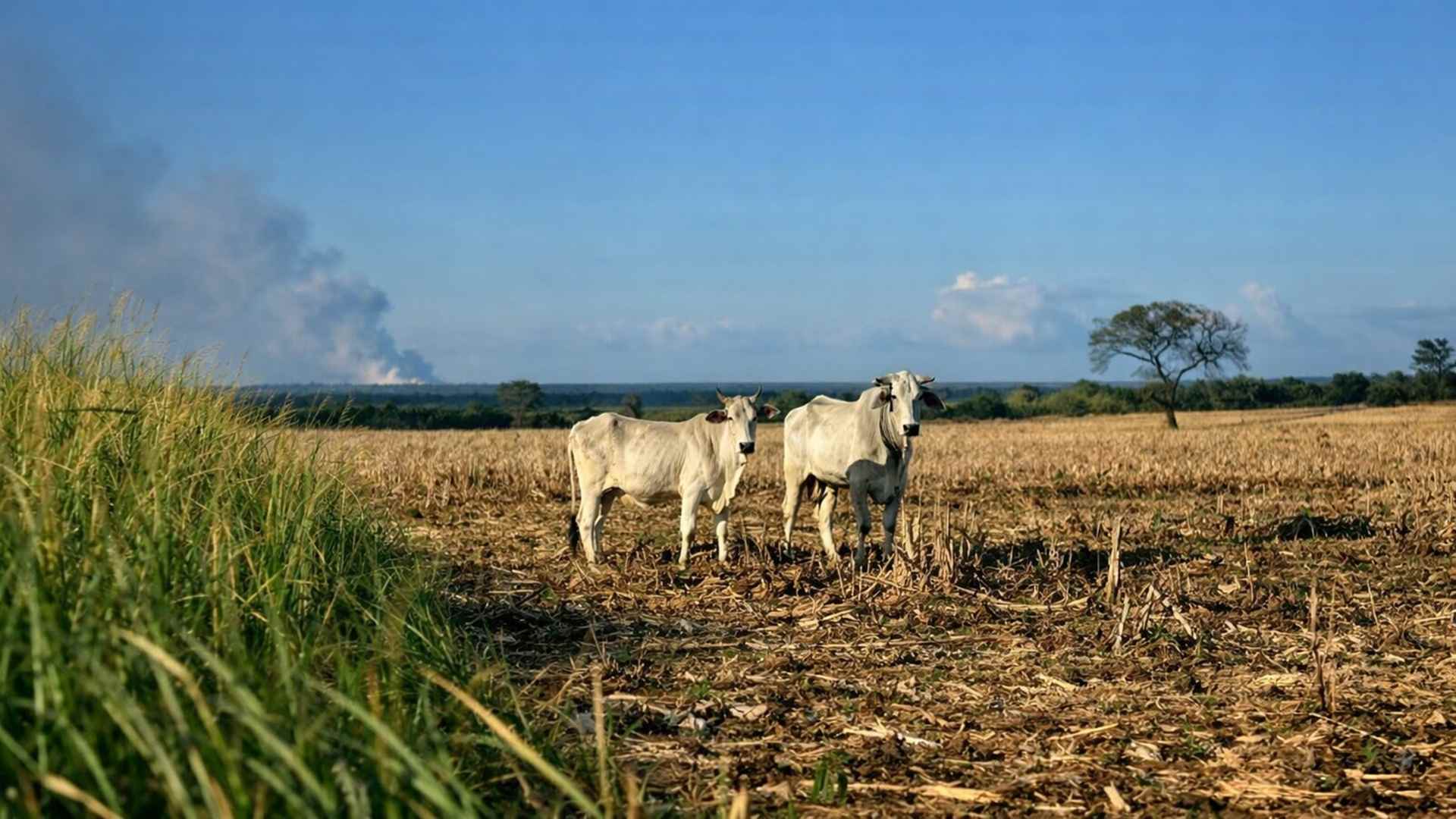


International Survey Based on Data Collected Between 2005 and 2020 Shows That Natural Fields Are Being Converted Into Agricultural Lands and Pastures at a Rate Almost Four Times Higher Than That of Forests, With Direct Impacts on Global Carbon Storage, Biodiversity and the Production Chains Linked to Global Food Demand
An international study reveals that fields are disappearing at an accelerated pace worldwide, being converted into agricultural areas between 2005 and 2020 at a rate almost four times higher than that observed in forests, according to a global analysis conducted by researchers from different institutions.
Conversion of Fields Occurs at a Rate Higher Than Global Forest Deforestation
The research analyzed for the first time where, for what purpose, and at what speed non-forested natural ecosystems are being transformed into agricultural lands on a global scale. The survey included natural pastures and wetlands converted mainly for agricultural production.
The results show that fields and other natural ecosystems are being converted into agricultural areas and pastures at an increasing pace. This process often occurs for cattle raising and for production intended for international agricultural exports.
-
Scientists restore seagrass meadows in the open sea.

-
Scientists find about 1 million giant live eggs hatching in an active underwater volcano, discover a natural furnace on the ocean floor, and reveal one of the most unlikely nurseries ever seen in the ocean.
-
Scientists launched a bait camera to the bottom of the Pacific Ocean and saw something that no one expected.

-
Is a smart plug worth it in a regular home? What does it offer: turns on and off via smartphone, creates routines by schedule, prevents forgotten devices, sometimes monitors consumption, and improves habits without renovation or miracles.


According to the study published in the Proceedings of the National Academy of Sciences, the conversion of these areas happened almost four times faster than the loss of forested areas over a 15-year period analyzed by researchers.
Fields Concentrate Carbon and Biodiversity on a Global Scale
The researchers emphasize that fields play significant and often neglected environmental roles. Between 20% and 35% of the carbon sequestered globally is stored in these non-forested natural ecosystems.
In addition to carbon storage, about 33% of the global biodiversity hotspots are located in regions dominated by fields. These environments also play a direct role in protecting against soil erosion and in water storage.
According to Dr. Siyi Kan from the Senckenberg Research Center for Biodiversity and Climate, these ecosystems provide environmental services that benefit both local communities and the global climate balance.
The researcher states that, despite the extensive scientific production on deforestation, the conversion of non-forested ecosystems linked to livestock and global agricultural demand has remained little studied until now.
Agricultural Expansion in Fields Advances in Large Global Economies
Professor Martin Persson from Chalmers University of Science explains that the results highlight the need to broaden the focus of environmental strategies beyond tropical forests.
While agricultural deforestation predominantly occurs in tropical regions, much of the agricultural expansion over fields and natural pastures happens in countries like Russia, China, the United States, and European Union members.
The global analysis indicates that Brazil leads the total volume of affected areas, accounting for 13% of the recorded conversion. Russia, India, China, and the United States follow, each with approximately 6% of the impacted area.
Demand for Meat, Grains, Nuts, and Oilseeds Drives Conversion
The team investigated which agricultural products were associated with the transformation of these ecosystems between 2005 and 2020. The data shows that the expansion is directly linked to domestic and international demand for food and agricultural commodities.
Among the main products related to the conversion of fields are meat, grains, nuts, and oilseeds. These items drive the expansion of pastures and crops over previously preserved natural areas.
The researchers also identified the productive destinations of these areas and the supply chains involved, allowing the mapping of regional risks associated with the ongoing conversion of non-forested natural ecosystems.
Study Points to the Need for Policies and Changes in Global Chains
The results highlight which ecosystems need priority protection and indicate possible points of intervention along the global agricultural production and consumption chains.
According to the authors, conservation strategies need to consider not only forest preservation but also international consumption patterns and demand structures that directly influence the agricultural advance over fields and natural pastures.
The study advocates for greater coordination between public policies and shared responsibility among producers and consumers involved in globally interconnected supply chains, given the increasing rate of conversion recorded over the analyzed period.






Conversa fiada. Já vem mimi.