





 Portuguese
  English
  Spanish
  4 min of reading
  0 comments


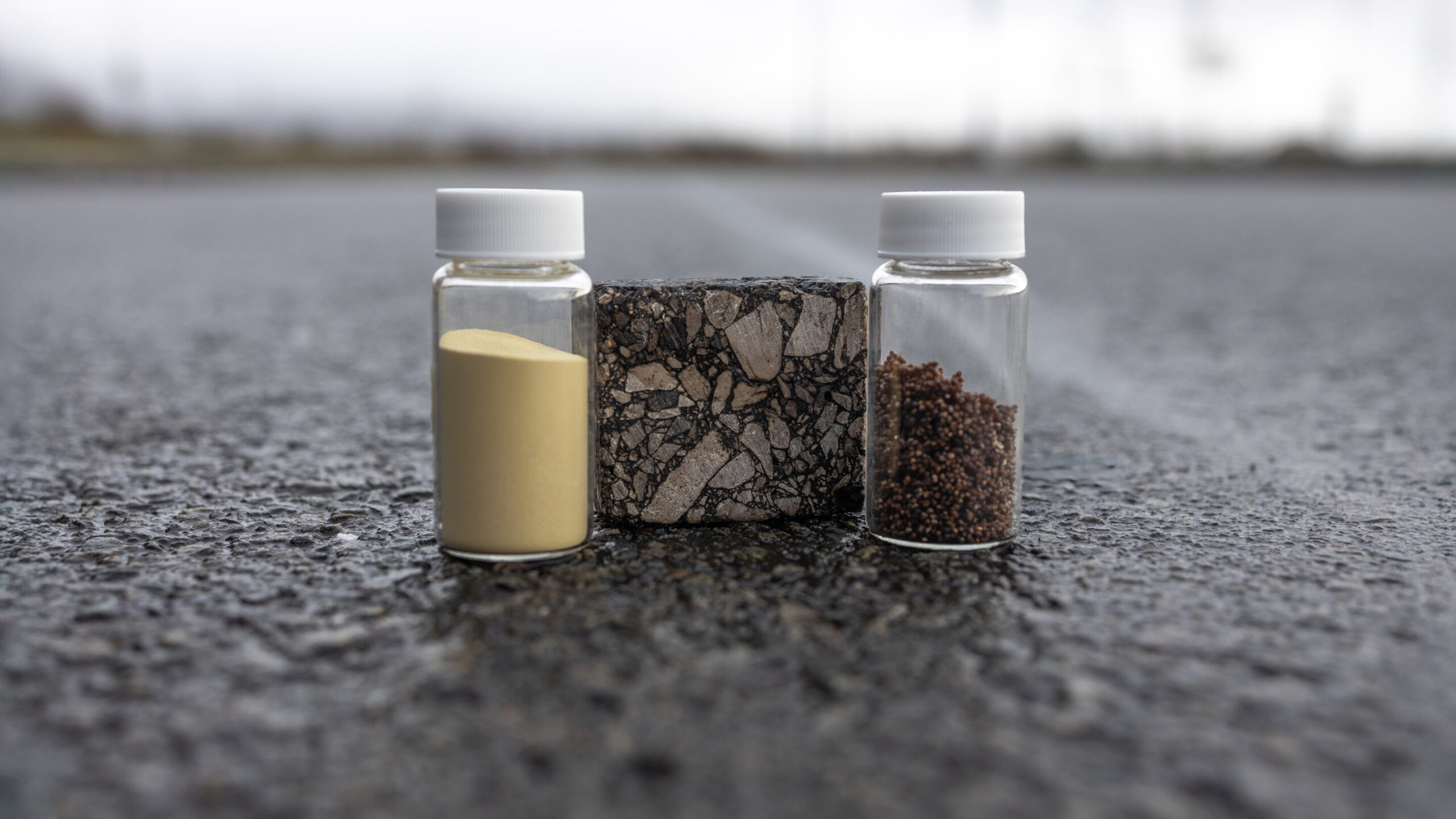
Researchers Developed An Innovative Asphalt Capable Of Self-Repairing With The Help Of Artificial Intelligence
The deterioration of roads is a global problem that generates high maintenance costs and directly impacts safety and mobility. Besides the economic impact this issue causes, such as the costs of asphalt repair, poorly maintained roads can increase accident rates and hinder the flow of transportation, resulting in logistical losses for companies and consumers.
To mitigate this problem, scientists from the University of Swansea and King’s College London, in partnership with researchers from Chile, are developing self-repairing asphalt designed using artificial intelligence (AI) and sustainable materials.
This innovation could transform global road infrastructure, reducing costs and carbon emissions while increasing the durability of highways.
-
The lack of welders, electricians, and operators becomes a structural threat in 2025, with the construction industry and manufacturing already suffering from delays, cost pressures, and labor shortages in Brazil.
-
Brazil and Paraguay are just 46 meters away from a historic union on the bioceanic bridge that promises to revolutionize trade between the Atlantic and the Pacific.

-
With 55 km over the sea, a cost of US$ 20 billion, and enough steel to build 60 Eiffel Towers, China’s largest project has connected Hong Kong, Zhuhai, and Macau in a colossal bridge that defies the logic of engineering.

-
A trick with joint compound transforms a Styrofoam ceiling into a plaster-like ceiling: leveled panels, wires and mesh at the joints, sand, paint, and change the environment while spending little today.


How Self-Repairing Asphalt Works
The main factor that leads to cracks in asphalt is the oxidation of bitumen, the material that makes up the asphalt mixture.
Over time, this degradation compromises the adhesion and resistance of the pavement, making frequent asphalt repairs necessary.
The new asphalt developed by the team incorporates an innovative mechanism: microcapsules of porous spores filled with recycled oils.
When microcracks arise, these oils are released and restore the integrity of the material, preventing the cracks from expanding and resulting in larger holes.
Moreover, the research employs an advanced type of AI called machine learning to analyze and predict patterns of bitumen degradation.
With the support of Google Cloud, scientists simulate the behavior of the asphalt under different weather and traffic conditions, allowing adjustments in composition before large-scale production. These simulations help optimize the structure of the asphalt, ensuring greater efficiency in crack regeneration and prolonging its lifespan.

Benefits For Sustainability And Infrastructure
The production and maintenance of roads represent a significant portion of global carbon emissions.
The asphalt industry, which traditionally depends on petroleum-derived products, faces increasing pressure to reduce its environmental impact.
With the UK’s goal of zero emissions by 2050, the use of sustainable materials has become a priority. The new self-repairing asphalt contributes to this transition for various reasons:
- Less Material Waste: The ability to regenerate asphalt reduces the need for frequent replacement, preventing premature disposal of deteriorated pavement.
- Lower CO₂ Emissions: The use of recycled oils and biomass minimizes reliance on petroleum derivatives, decreasing the carbon footprint in production.
- Cost Reduction: The reduced need for maintenance results in significant savings for governments and businesses, allowing them to redirect these resources to other improvements in road infrastructure.
- Increased Road Safety: Well-maintained surfaces reduce the risk of accidents by providing better grip and avoiding issues like aquaplaning and loss of vehicle control.
The Future Of Asphalt
Despite the enormous potential, there are still challenges to be overcome before large-scale implementation.
The durability of the material needs to be tested under real conditions and different climates, and the initial production costs may be high. However, advancements in research and involvement from public and private sectors can accelerate its adoption.
Dr. Francisco Martin-Martinez from King’s College London highlights that the inspiration for this project came from nature itself, where organisms have natural healing mechanisms.
The goal is to apply these principles to asphalt, making highways more durable and reducing the need for constant maintenance. The research also seeks new ways to incorporate biodegradable materials into the asphalt mixture, further increasing the environmental benefits.
Additionally, the development of complementary technologies, such as embedded sensors in the asphalt for real-time monitoring, could further expand the possibilities of this innovation.
Sensors could detect areas more prone to cracking and provide data to optimize the regeneration of the pavement, making the process even more efficient and reducing the need for emergency interventions.
The development of self-repairing asphalt is an important step towards sustainable, zero-emission roads.
By combining AI and recycled materials, this innovation could revolutionize global road infrastructure, bringing economic and environmental benefits.
In the future, it is expected that the technology will be enhanced and widely adopted, contributing to a more efficient and eco-friendly transportation system.
Study published in Publishing.










-

Uma pessoa reagiu a isso.