





 Portuguese
  English
  Spanish
  3 min of reading
  0 comments


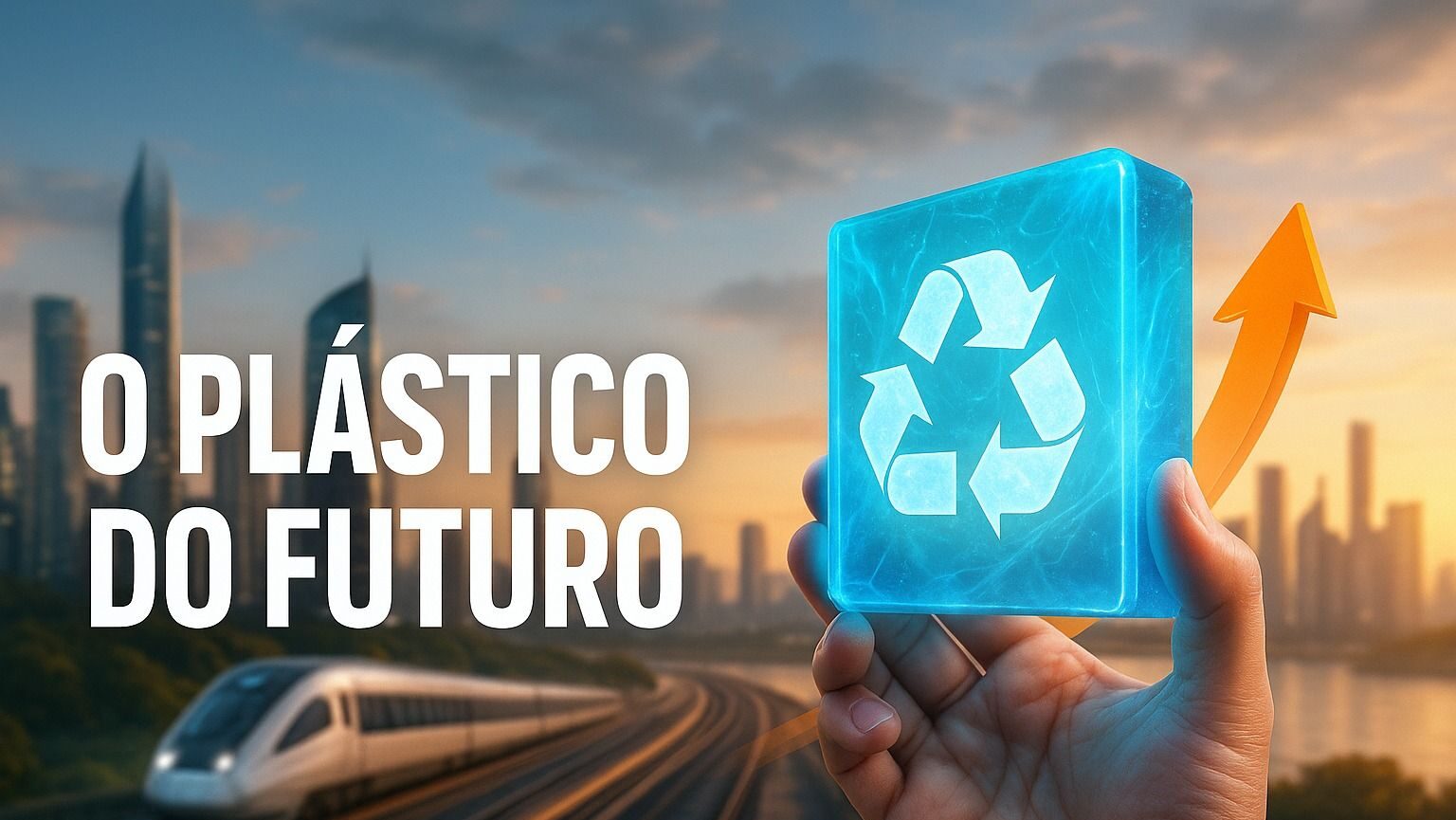
Researchers Advance In The Development Of Materials Capable Of Combining Lightweight, High Strength And Total Recycling. A New Plastic Technology Could Change Industrial And Environmental Standards.
Modern engineering demands materials that do more than maintain their shape. They need to be lightweight, stronger than steel, and withstand extreme heat.
Furthermore, they must recover from damage without losing performance. In sectors such as aerospace, defense, and automotive, these characteristics mean safer vehicles, longer lifespans, and less environmental waste.
Researchers from Texas A&M University have made progress toward this goal.
-
The Himalayas continue to grow to this day, with tectonic plates advancing 5 cm per year, mountains rising up to 10 mm annually, and the 2015 earthquake that killed 9,000 people may have increased the risk of an even larger seismic mega-event.

-
At an altitude of 400 km by astronauts from the International Space Station, Paris transforms at night into a golden mesh so precise that it reveals the outline of the Seine River, avenues, and entire neighborhoods like a luminous map drawn over the Earth.

-
iPhone 17 reaches historic low price with 256 GB, 120 Hz display, and drops to R$ 5,703 on Shopee, featuring A19 chip, dual 48 MP cameras, battery life of up to 30 hours, and advanced AI features.

-
Trip to Mars getting closer: Pulsar Fusion, from the UK, advances with plasma ignition in fusion engine and could drastically reduce space travel time, making crewed missions faster, safer, and economically viable.

They discovered new capabilities in Aromatic Thermoset Copolymer (ATSP), an ultra-durable and recyclable plastic that can self-regenerate, recover its shape, and maintain strength after repeated use.
This discovery could set new standards for reliability and sustainability in high-performance manufacturing.
The project was supported by the U.S. Department of Defense and brought together aerospace engineering and materials science experts from Texas A&M and the University of Tulsa.
Built For Extreme Conditions
Aerospace engineering professor Dr. Mohammad Naraghi led the work, along with Dr. Andreas Polycarpou from the University of Tulsa. The team studied the performance of ATSP under stress, heat, and repeated damage.
Naraghi emphasized that aerospace materials need to withstand high temperatures and impacts without compromising safety. In the case of ATSP, bond exchanges allow it to “self-heal on demand” when damaged.
The material could also benefit the automotive industry. Its ability to recover shape after collisions could enhance passenger safety and reduce part replacement. Unlike traditional plastics, ATSP can be recycled repeatedly, without loss of chemistry or durability.
Reinforced, ATSP can be ground, remolded, and reused in various cycles.
When combined with carbon fibers, it becomes several times stronger than steel and lighter than aluminum. This combination is ideal for high-performance applications, where every kilogram matters.
Durability And Recovery Tests
To evaluate the material, the team used cyclic creep tests. The objective was to understand how ATSP stores and releases strain energy during repeated stretching.
Two key temperature points were identified: the glass transition temperature, when the polymer chains move more freely, and the vitrification temperature, when bonds are activated to allow remolding and healing.
In deep cycle bending fatigue tests, samples were heated to 160 °C to initiate repairs.
ATSP withstood hundreds of heating cycles under stress and even improved its durability after healing. Naraghi compared the process to human skin, capable of stretching, healing, and returning to its original shape.
In a more rigorous test, the material underwent five severe heating cycles at 280 °C, which caused damage.
After two cycles, it recovered nearly all its strength. By the fifth, the efficiency dropped to about 80% due to mechanical fatigue, but the chemical stability remained intact.
The obtained images showed that the healed composite maintained its original structure, with only minor wear caused by manufacturing defects.
Advancement With Industrial Potential
The research received funding from the Air Force Office of Scientific Research (AFOSR) and partnered with ATSP Innovations.
For Naraghi, these collaborations were essential in guiding the project and translating scientific curiosity into practical applications.
Most importantly, the findings indicate a future where high-performance plastics not only endure adverse conditions but also adapt and recover from damage.
This could reshape expectations regarding strength, safety, and sustainability in critical sectors.
The study was published in Macromolecules and in the Journal of Composite Materials.









Seja o primeiro a reagir!