





 Portuguese
  English
  Spanish
  5 min of reading
  0 comments


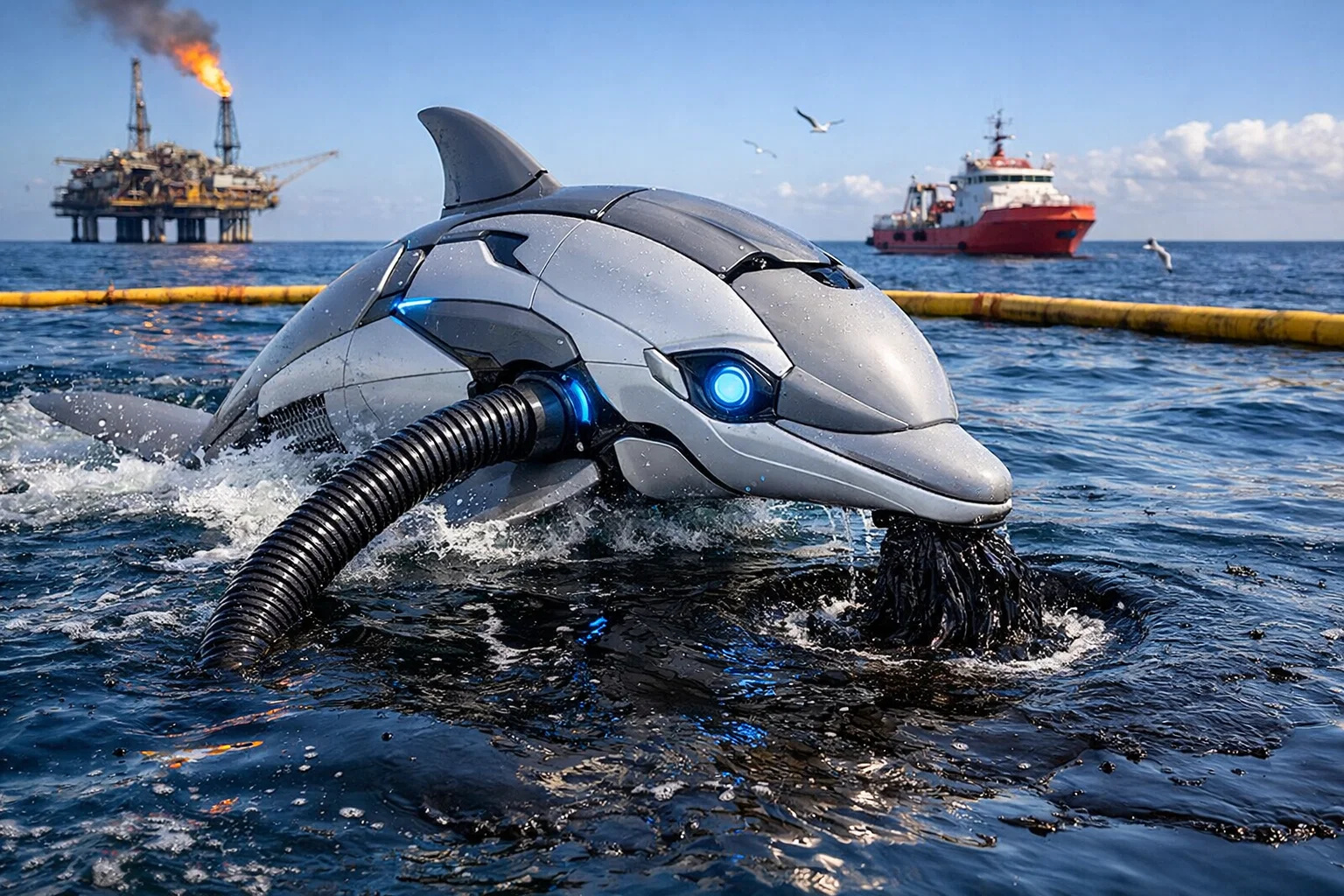
Technology Created by Scientists at RMIT University in Australia Uses Inspiration from Dolphins and Sea Urchins to Capture Oil from Water with High Purity and May Open a New Path for Rapid Responses to Environmental Accidents in the Offshore Sector
An experimental small robot may change one of the biggest headaches of the offshore oil industry. Instead of waiting for oil to reach containment systems, this machine moves across the ocean surface and captures the fuel directly from the water.
The idea was born within RMIT University in Australia. Researchers developed a prototype inspired by the body of a dolphin and a natural mechanism present in sea urchins.
The goal is to tackle an old problem in offshore environmental engineering. Most current technologies rely on the movement of ocean currents to collect oil. This new system aims to invert that logic.
-
Something is happening around the Earth: Inside the huge explosion of fireballs in 2026

-
A hot air bubble coming from Argentina expands over Brazil, causing thermometers to exceed 38 degrees with a thermal sensation of 40 degrees in late March, affecting 6 states at once.

-
The radish leaf that almost everyone throws away has more polyphenols, flavonoids, and fiber than the consumed root, and a 2025 study showed that the leaf contains compounds that protect the intestine, combat inflammation, and may inhibit the growth of cancer cells.

-
A planet that seemed to defy the laws of physics has intrigued scientists for decades, until the James Webb revealed what is really affecting Saturn’s rotation.
Instead of waiting for the spill to spread, the robot goes to it.
Oil Spills Remain One of the Biggest Environmental Challenges in the Offshore Industry
When a spill occurs at sea, time becomes the biggest enemy. Oil spreads quickly across the surface, creating patches that can cover large areas.
A significant portion of the technologies used today relies on floating barriers and equipment that remain stationary in the water. These systems work as passive collectors, waiting for the oil to drift to them.
According to industry experts, this model can delay response in critical situations, especially when ocean currents rapidly disperse the fuel.
It is in this scenario that the so-called Electronic Dolphin draws attention.
The robot is designed to move directly across the water’s surface, entering oil patches and capturing the material as it moves.
The Secret of the Technology Lies in a Filter Inspired by Sea Urchins
The heart of the system is not just in the movement of the robot. The real differential appears inside it.
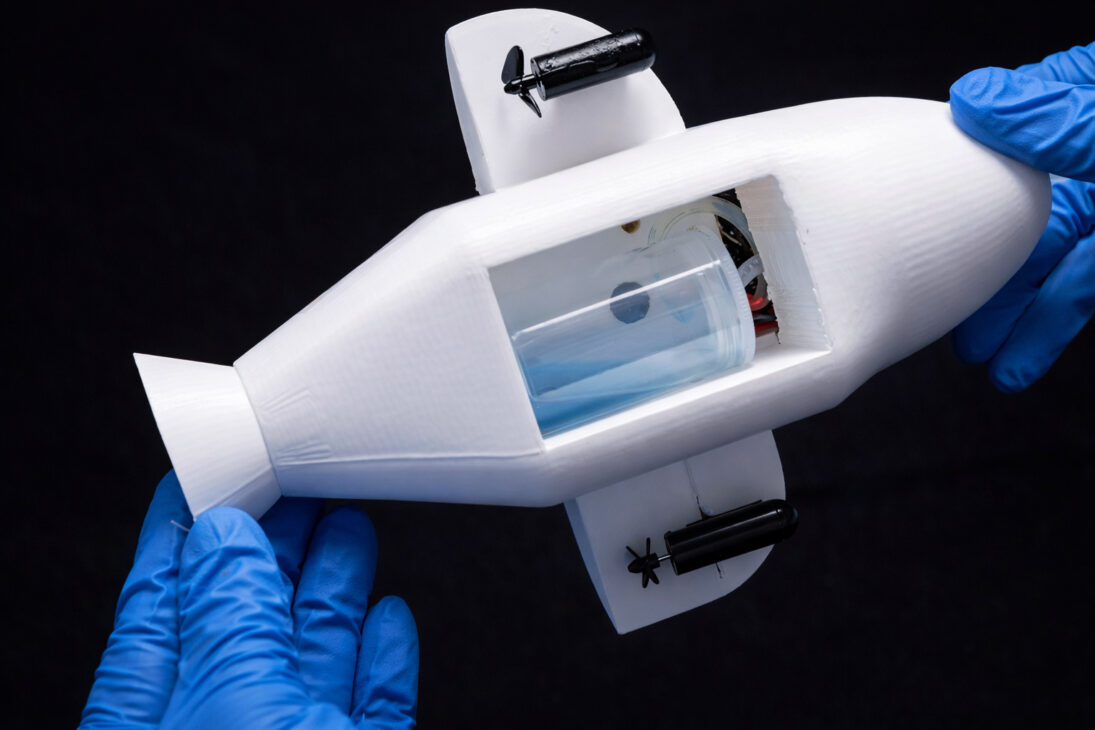
While moving through the oil patch, an internal pump draws the mixture of water and oil into a special filter. This filter works like an advanced sponge.
The surface of the material has microscopic structures that trap small pockets of air. This detail completely changes the behavior of the liquid.
Water drains through the filter while the oil remains trapped in the structure.
This material utilizes compounds that include barium carbonate treated with oleic acid and reduced graphene oxide nanosheets. The combination creates an environment where oil easily adheres while water is repelled.
In practice, the system absorbs only oil.
When the filter reaches its maximum capacity, the material can be discharged and reused multiple times. The collected oil is stored within the robot itself.
Initial Tests Reveal High Efficiency in Oil Separation
The first experiments were conducted in a laboratory environment.
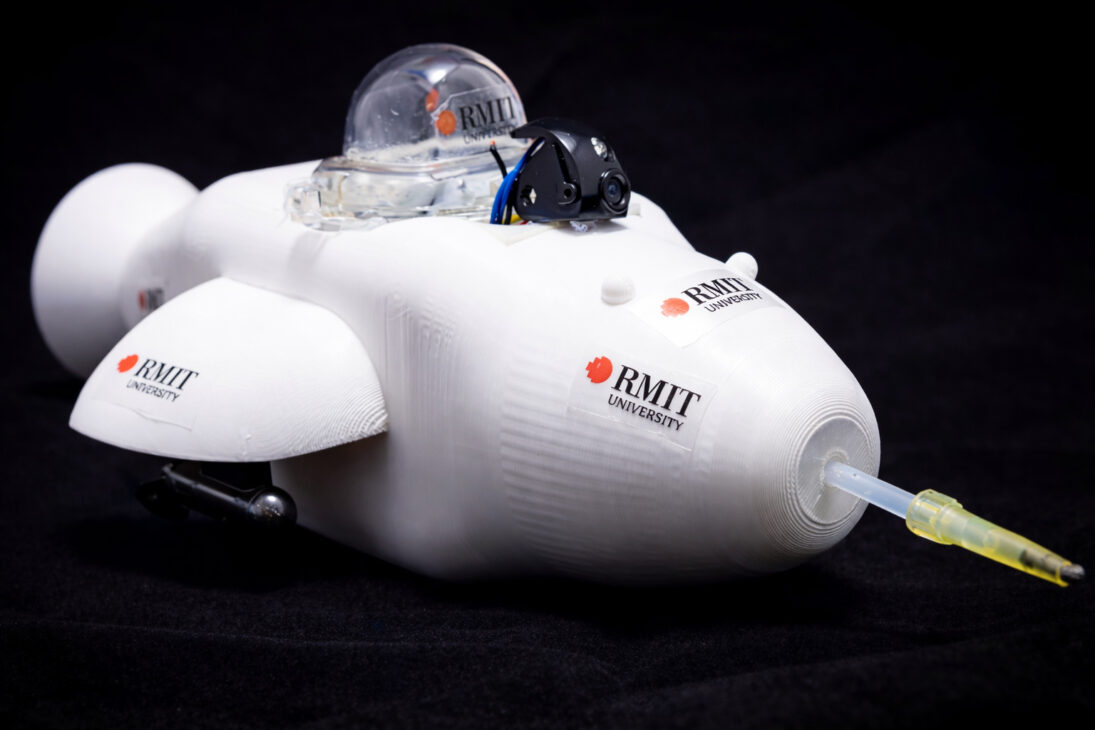
The current prototype is small, approximately the size of a tennis shoe. Nevertheless, the results caught the attention of the research team.
During tests, the robot was able to extract oil from the water at an approximate rate of 2 milliliters per minute.
The collected fuel showed purity greater than 95 percent.
The system operates for about 15 minutes on a single battery charge, according to initial tests released by the researchers.
Although the numbers are still modest, the team’s goal is not to keep the robot at this size.
Scientists Plan to Scale Up the Robot to the Size of a Dolphin
The next step involves transforming the small prototype into a much larger machine.
According to the chief scientist of the research, Dr. Ataur Rahman, the plan is to scale the robot up to reach dimensions similar to those of a real dolphin.
The final size has yet to be defined.
The dimensions will depend on the capacity of the pump used and the reservoir responsible for storing the recovered oil.
The team’s vision is to build a system that operates completely autonomously.
In this model, the robot would move to the contaminated area, collect the oil, and automatically return to a base to discharge the collected material.
After that, it could return to the spill site and repeat the cycle several times.
New Generation of Robots May Change the Industry’s Response to Environmental Accidents at Sea
If the technology advances to real-scale applications, experts point out that the impact could directly affect the containment strategies used by the offshore industry.
Today, spill cleanup operations rely on large floating structures, specialized vessels, and collection systems that require complex logistics.
A robot capable of navigating the surface while selectively capturing oil may accelerate the initial stages of response to spills.
This becomes even more relevant in remote offshore areas, where the movement of heavy equipment may take hours or even days.
The research describing how the robot works was recently published in the scientific journal Small, indicating that the project is still in the experimental phase.
Nevertheless, the proposal already raises an important question within environmental engineering related to oil. In a sector pressured to reduce environmental impacts, new rapid response technologies could become decisive.
The emergence of machines inspired by nature shows that the next generation of solutions for spills may come from unexpected places.
Now tell us in the comments. Do you believe that robots like this can become a real tool in combating oil spills at sea?






-

-

2 pessoas reagiram a isso.