





 Portuguese
  English
  Spanish
  3 min of reading


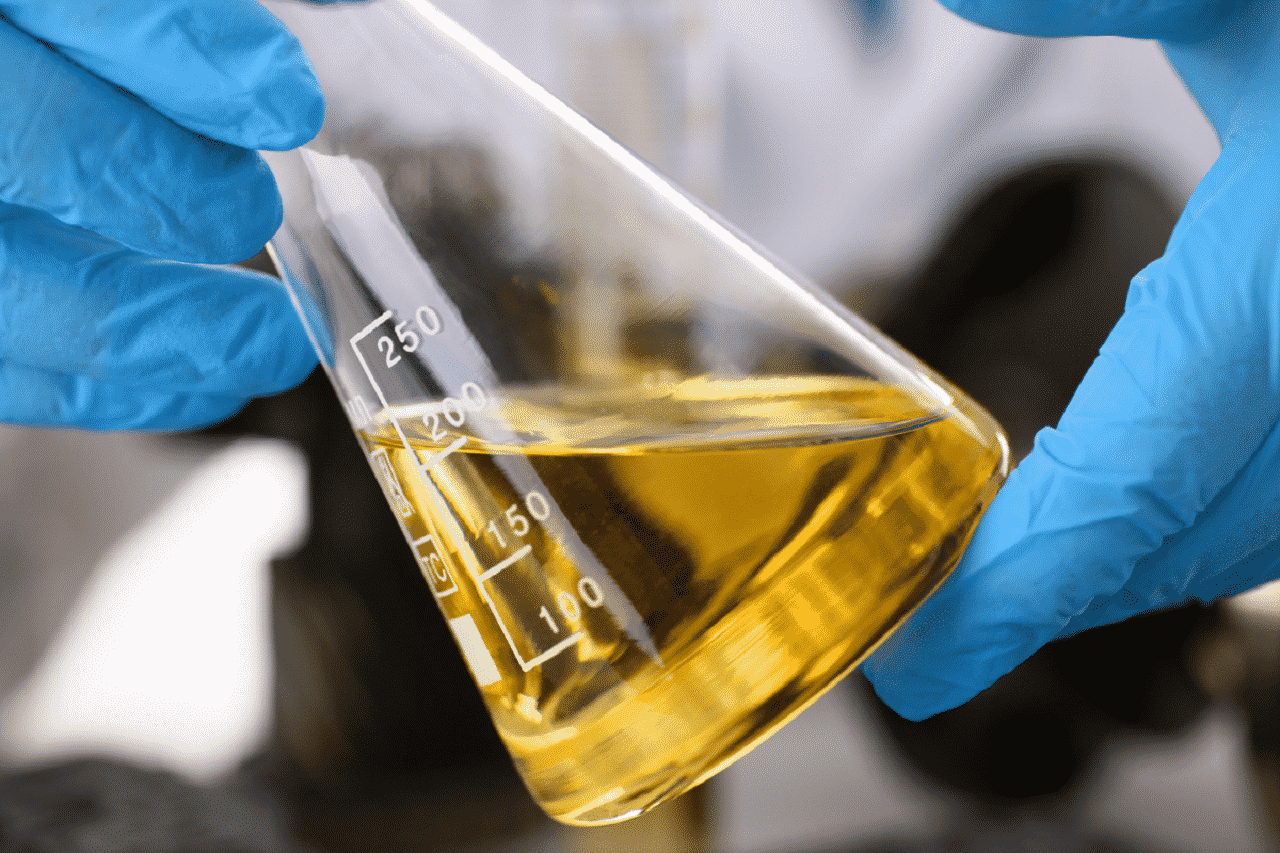
Researches Conducted in Two Labs at USP Are Working Hard on a Nickel Catalyst to Obtain Results That Can Be Applied Directly to the Renewable Industry by Transforming CO2 into Fuel or Even into Plastic
Researchers at the University of São Paulo (USP) are working on the transformation of carbon dioxide (CO2) into fuel or plastics. Even when subjected to high pressure, a new catalyst made from nickel, zinc, and carbon transformed CO2, one of the main greenhouse gases (GHG), into carbon monoxide (CO). The lead researcher of the project, Liane Rossi, is pleased with the progress of the work and spoke about the results from her research, which showed that she and her team are getting closer to concretely producing, through catalysis, petroleum derivatives, such as plastics and fuels. Liane is a professor at the Institute of Chemistry at USP and coordinator of the study at the Fapesp Shell Research Centre for Gas Innovation (RCGI).
Articles Related to USP
- End of Air Conditioning: USP Engineers Study Superficial Geothermal Energy Capable of Extracting Air from the Subsoil and Reducing Up to 40% on Electricity Bills
- Owner of the Brands Copagaz and Liquigás Partners with USP to Develop BioGLP Project, Emitting Up to 80% Less Carbon in Combustion Than Fossil-Based
- UFMG and UFV Will Receive Solar Power Plants with 1,600 Collection Modules to Supply Their Campuses
- USP, the Largest Public University in Brazil, Opens Enrollment for Free Online and Distance Learning Courses with Certificates
- USP, the Best Higher Education Institution in Brazil, Is Open for Enrollment for Free Courses with Distance Learning Classes
Nickel Catalyst Already a Topic in International Scientific Journal, as the Future of the Renewable Industry
Research by USP scientists was highlighted in two foreign publications, one of which is the scientific journal European Journal of Inorganic Chemistry. In the November 2021 issue, the cover of the magazine featured the article authored by USP researchers.
The website ChemistryViews also covered the work of Professor Liane. After various studies, researchers found that the nickel-based catalyst performed excellently after being subjected to high temperatures, at exactly 800 degrees Celsius, in a CO2 and H2 (hydrogen) atmosphere or in a methane or propane atmosphere.
-
Renewable energy advances over protected areas in Brazil, and a survey by the Energy Transition Observatory reveals silent impacts that challenge environmental conservation and pressure sensitive traditional territories.

-
Rio Grande do Sul accelerates energy transition: State invests in renewable technologies and consolidates decarbonization strategies and pathways to attract billions in new industrial investments.

-
With 160,000 m² of collectors, an area larger than 20 football fields, Silkeborg, in Denmark, hosts a solar thermal plant that heats 19,500 homes and could become the largest solar heating plant in the world.

-
A study reveals the expansion of renewable energy procurement in Brazil and shows how companies are taking advantage of opportunities to reduce expenses, ensure energy efficiency, and strengthen strategic environmental commitments.

However, the research is not over, as unfortunately, USP researchers have not yet succeeded in testing the catalyst under high-pressure conditions, between 20 and 100 bar, so that it can try to adapt to the reaction conditions required for the process after the transformation of CO into liquid products.
Experiments and Tests
According to Liane, the combination in the catalyst changes the way molecules interact, which can be directly compared to pure nickel. The nickel, zinc, and carbon-based catalyst was a solution initially developed by Nágila Maluf, a PhD student at IQ-USP, who is part of the research team led by Liane.
The experiments are taking place in two separate research groups at IQ-USP, one in the Laboratory of Nanomaterials and Catalysis and the other in the Sustainable Carbon Laboratory, which is being monitored by Professor Pedro Vidinha, a co-author of the research.
The Institute of Physics at USP in São Carlos and the Pacific Northwest National Laboratory (PNNL) in the United States are also monitoring the testing phase in USP laboratories. All these processes are being developed for the renewable industry.
Next Phase of Research
Liane’s research team is now preparing to continue the study, already considering the use of two different catalysts in the same reactor. One will be based on nickel, zinc, and carbon, and the other, based on iron or copper.
The second catalyst will function to facilitate the reaction between CO and H2 molecules, aiming to produce alcohols or hydrocarbons (high-value-added products).









Seja o primeiro a reagir!