





 Portuguese
  English
  Spanish
  3 min of reading
  7 comments


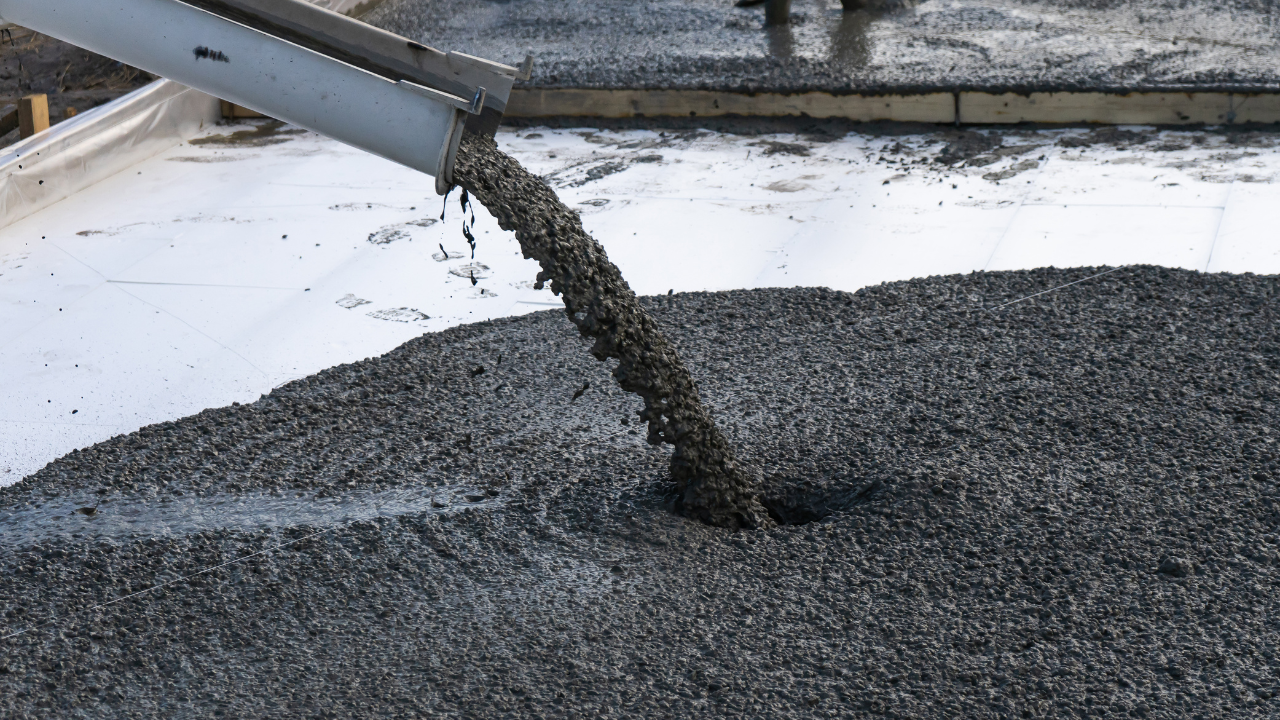


Green Concrete: Learn How This Innovation Using Coal Ashes Increases Strength and Reduces Carbon Emissions!
Researchers in Australia have developed an important innovation for the construction industry: green concrete. This new material uses coal ashes as a substitute for cement, which not only improves the strength of the concrete but also significantly contributes to the reduction of carbon emissions. The use of green concrete increases the durability of constructions and minimizes environmental impact, making it a more sustainable solution for the future of construction.
The Innovation of Green Concrete
The innovation of green concrete comes from replacing cement with coal ashes.
Cement, responsible for about 8% of global carbon emissions, is the environmental villain of traditional construction.
-
Something is happening around the Earth: Inside the huge explosion of fireballs in 2026

-
A hot air bubble coming from Argentina expands over Brazil, causing thermometers to exceed 38 degrees with a thermal sensation of 40 degrees in late March, affecting 6 states at once.

-
The radish leaf that almost everyone throws away has more polyphenols, flavonoids, and fiber than the consumed root, and a 2025 study showed that the leaf contains compounds that protect the intestine, combat inflammation, and may inhibit the growth of cancer cells.

-
A planet that seemed to defy the laws of physics has intrigued scientists for decades, until the James Webb revealed what is really affecting Saturn’s rotation.

Green concrete, by reducing the amount of cement, offers a more eco-friendly alternative.
The production of coal ashes worldwide is abundant, with over 1.2 billion tons generated annually, ensuring a constant supply for the manufacturing of the material.
By using more coal ashes in its composition, green concrete becomes not only sustainable but also stronger and more durable.
Increased Strength and Durability
Tests with green concrete have shown that it is stronger than conventional concrete.
It exhibited increased compressive strength, higher flexural strength, and greater elastic resistance, enhancing its durability.
When exposed to adverse conditions, such as acids and sulfates, green concrete proved superior, with resistance that surpasses that of traditional concrete over time.
These results reinforce the potential of concrete to be used in a variety of constructions, ensuring that structures are more resilient and durable.
The innovation in using nano additives also plays a key role.
These additives alter the chemistry of green concrete, allowing more coal ashes to be used without compromising the strength and durability of the material.
This chemical modification not only enhances the strength of the concrete but also makes the manufacturing process more sustainable by reducing the use of cement and, consequently, carbon emissions.
Environmental Impact and Reuse of Ashes
The reuse of coal ashes in green concrete provides an environmentally responsible solution to a problematic waste.
Ash ponds, often found in dams around the world, pose a risk to the environment.
By utilizing these ashes for the manufacture of the material, researchers propose a way to reduce the environmental impacts associated with the disposal of this material while also contributing to the reduction of carbon emissions.
Moreover, substituting cement with coal ashes in green concrete has the potential to transform the construction industry, making it more sustainable and resilient.
Dr. Chamila Gunasekara, the project leader, emphasizes that concrete can be a significant advantage for the industry by providing a more eco-friendly and resistant alternative to traditional cement while contributing to the reuse of resources that would otherwise be discarded.
Green Concrete as a Viable Alternative for the Future
Green concrete represents a significant innovation for the construction industry.
It combines strength, durability, and sustainability while reducing carbon emissions.
This innovative approach opens new possibilities for constructing more resilient structures while contributing to environmental preservation.
The use of coal ashes in green concrete offers a viable and scalable solution for building a more sustainable future with less carbon in the environment.







Temos um cimento patenteado que não tem clinquer. Esse reduz em torno de 70% a emissão de CO2. Segue meu perfil que eu mostro lá. @prof.eduardo.cabral
Contribui para redução de carbono?
Só pode estar de brincadeira!?!?!
E para produzir a cinza de carva não precisa dedmatar nem queimar nada?!?!
Por favor…..
O Cimento CP IV já faz isso a anos. Pelo menos a 25anos quando eu comecei a trabalhar com concreto. Chega a ser **** esta reportagem.