





 Portuguese
  English
  Spanish
  3 min of reading


South Korean Researchers Develop A New Membrane That Can Be 3 Thousand Times Cheaper And More Efficient For The Production Of Green Hydrogen Using Solar Energy
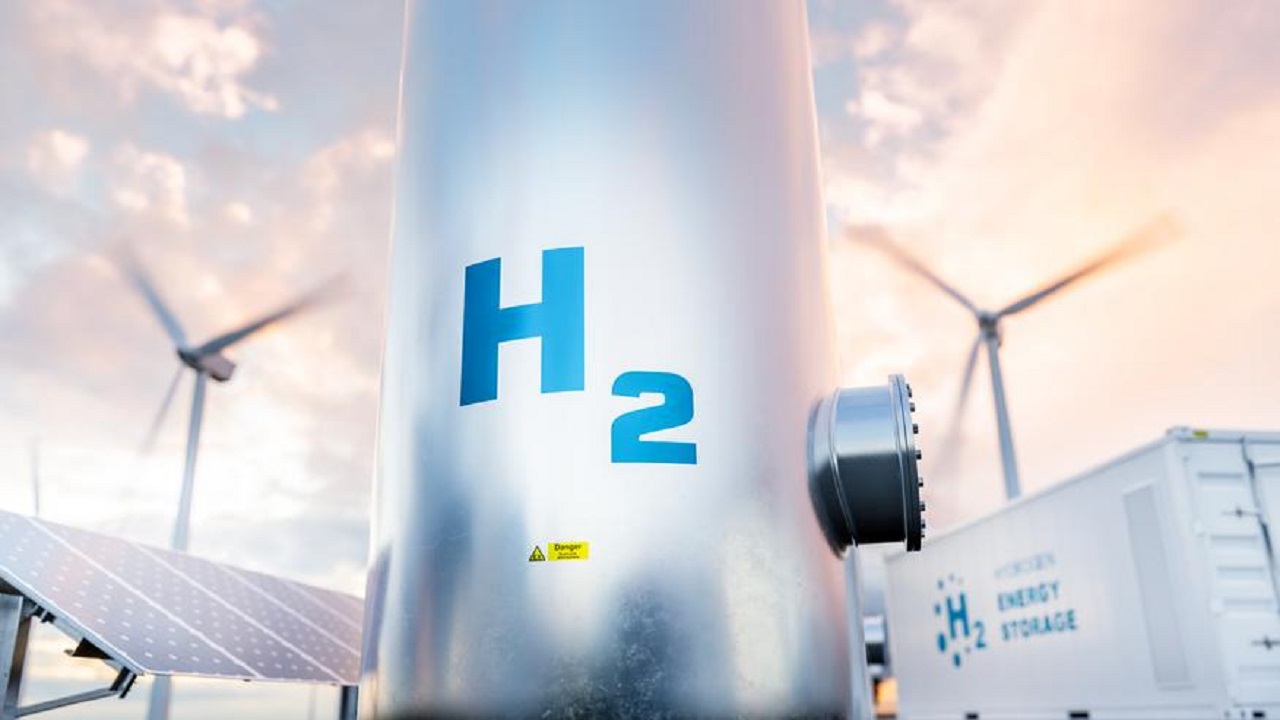
South Korean researchers have developed a new type of membrane that can revolutionize water electrolysis for the production of green hydrogen using solar energy. Fuel cells use hydrogen for direct electricity generation, releasing only water as a byproduct, making them quite revolutionary for use in electric cars and even as a source of energy for residential use or large power plants. Additionally, green hydrogen gas can be burned as a fuel that emits no smoke or greenhouse gases.
Read Other Related News
Researchers Create Technology That Does Not Use Noble Materials
Currently, the vast majority of green hydrogen is produced from natural gas reforming, which has a heavy carbon footprint. Therefore, many researchers are focused on developing new water electrolysis technologies, focusing on renewable energies, such as solar energy, to extract green hydrogen while avoiding greenhouse gas emissions.
One of the greatest challenges to making the sale of these cells or reactors viable is a membrane that allows the passage of hydrogen nuclei. These membranes are expensive because they use noble platinum metal in their electrodes and titanium in the separator plate.
-
The Sol do Agreste Photovoltaic Complex begins operations in Pernambuco and accelerates the expansion of solar energy in Brazil, directly impacting the reduction of emissions and strengthening the sustainable energy matrix.
-
Renewable energy advances over protected areas in Brazil, and a survey by the Energy Transition Observatory reveals silent impacts that challenge environmental conservation and pressure sensitive traditional territories.

-
Rio Grande do Sul accelerates energy transition: State invests in renewable technologies and consolidates decarbonization strategies and pathways to attract billions in new industrial investments.

-
With 160,000 m² of collectors, an area larger than 20 football fields, Silkeborg, in Denmark, hosts a solar thermal plant that heats 19,500 homes and could become the largest solar heating plant in the world.


Nanjun Chen and his fellow researchers at the Korea Institute of Science and Technology (KIST) have developed a membrane that does not require platinum and instead substitutes titanium with iron, making the designs much cheaper. Considering the price of the catalyst and the separator material, the production cost of the membrane for producing green hydrogen, which is the most important for electrolysis, is reduced by 3,000 times compared to current costs.
Researchers Set Performance Record Using Solar Energy
-
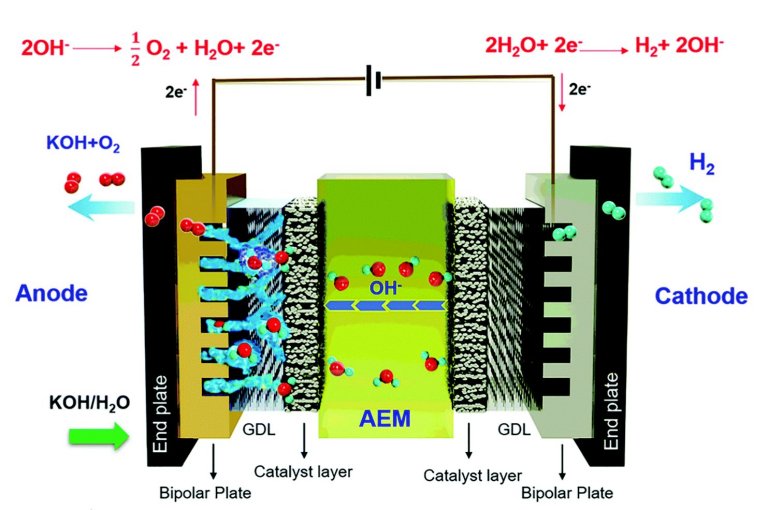
The unit can produce green hydrogen using renewable electricity. [Image: Nanjun Chen et al. – 10.1039/D1EE02642A]
The researchers achieved a high level of ionic conductivity and great durability of the material under alkaline conditions, expanding the internal specific surface area of the membrane.
The prototype achieved a durability that exceeds 1,000 hours of operation and also 7.68 A/cm², a new record for a water electrolysis unit. The new record, compared to existing anion exchange materials, is approximately six times greater. Compared to current titanium and platinum technology, which is very expensive, it is also 20% greater.
New Technology From Researchers Can Be Used In Other Applications
Another important factor of the researchers’ prototype is that it can also function reversibly, acting inside fuel cells that capture hydrogen and produce electricity in a completely clean manner.
According to Professor Young Lee, head of the research team, the produced material has a high potential for application as a core material, not only to be used in the production of green hydrogen using solar energy but also for hydrogen fuel cells, direct ammonia fuel cells, and carbon capture, which can be considered the next generation of the green hydrogen segment.






Seja o primeiro a reagir!