





 Portuguese
  English
  Spanish
  3 min of reading
  0 comments


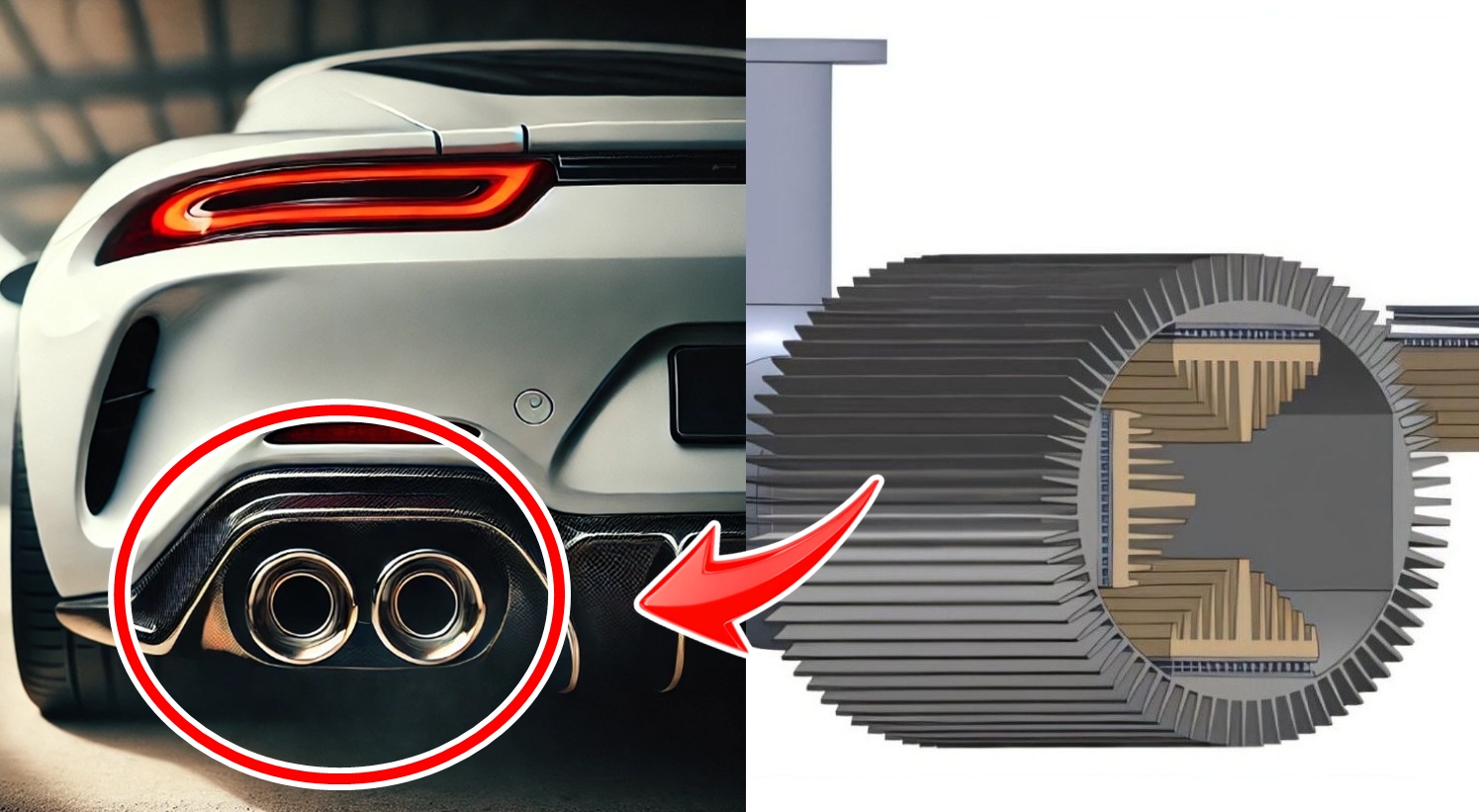
Researchers Developed An Innovative Thermoelectric Generator That Captures The Heat From Vehicle And Aircraft Exhaust Gases, Converting It Into Electricity
The recovery of wasted energy is one of the central challenges of the energy transition. For this reason, finding solutions to this problem is one of the focuses of scientists around the world. Researchers from PennState have developed an innovative thermoelectric generator capable of converting the heat from the exhaust gases of cars and helicopters into electricity.
This technology promises to reduce fuel consumption and carbon dioxide (CO₂) emissions, being a promising solution to make transportation systems more efficient and sustainable.
The Problem Of Energy Inefficiency
Currently, internal combustion engines are widely used in gasoline-powered vehicles.
-
600 km with three Chinese plug-in SUVs, same mode and air conditioning on: Jaecoo 7, BYD Song Plus, and Haval H6 hit the road, and the pump reveals who was truly the most economical.

-
With a price almost R$ 100 thousand lower, the Haval H9 surpasses the SW4 for the first time in March, but Toyota still leads in the accumulated total for 2026; the Chinese SUV bets on technology and premium finishing to compete at the top.

-
6 used cars that cost less than a new Honda CG 160 Titan and still provide trunk space, four seats, and comfort that many new motorcycles cannot offer.
-
Caoa Chery Tiggo 5X skyrockets in sales in Brazil: a 2,318% increase and waiting lists of up to 4 months to acquire the model.


However, only a quarter of the energy from the fuel is actually used for propulsion, while the rest is wasted in the form of heat through the exhaust system.
This inefficiency directly contributes to the increase in greenhouse gas emissions, highlighting the need for innovative solutions for recovering this waste heat.
How The New Thermoelectric Generator Works In The Exhaust
Thermoelectric systems use semiconductor materials to convert temperature differences into electricity.
However, conventional models present challenges such as excess weight and the need for additional cooling systems, hindering their adoption in high-speed vehicles.
To overcome these limitations, the team of researchers, led by Wenjie Li and Bed Poudel, developed a compact thermoelectric generator that can be directly integrated into the exhaust system of cars, helicopters, and unmanned aircraft.
The device uses a bismuth telluride semiconductor combined with a heat exchanger similar to those used in air conditioning systems, maximizing waste heat capture.
Additionally, a heat sink increases the temperature difference, optimizing electricity generation.
Promising Results
The initial tests demonstrated that the prototype can generate up to 40 watts (W) of power, enough energy to power a low-consumption light bulb.
Additionally, simulations under real conditions indicate that the system can achieve a generation of up to 56 W in cars and 146 W in helicopters, values equivalent to the energy stored in several lithium-ion batteries.
One of the main advantages of the new generator is its compatibility with existing exhaust systems, eliminating the need for significant structural changes and avoiding the need for additional cooling systems.
This expands its applications in different types of vehicles, from passenger cars to high-performance aircraft.
Implications For The Energy Transition
The development of this technology represents an important advance in the search for sustainable solutions for the transportation sector.
By allowing the conversion of wasted heat into electricity, the thermoelectric generator can contribute to reducing the environmental impact of fossil fuels, increasing the efficiency of internal combustion engines and decreasing dependence on conventional energy sources.
The study received funding from the Army Rapid Innovation Fund Program, the National Science Foundation Industry-University Cooperative Research Centers Program, through the Center for Energy Harvesting Materials and Systems, and the Office of Naval Research.
These investments reinforce the relevance of the research and its potential to impact the automotive and aerospace sectors.
The researchers believe that their discovery could pave the way for the large-scale adoption of thermoelectric devices in high-speed vehicles.
In the future, the technology could become a key component in the decarbonization of the transportation sector, providing an effective solution for energy recovery and reducing polluting emissions.
For more information, visit acs.










Seja o primeiro a reagir!