





 Portuguese
  English
  Spanish
  3 min of reading
  0 comments


An Impressive Scientific Feat Has Been Recorded: Researchers Have Managed to Wake Up a Microscopic Organism That Had Been Asleep for 7,000 Years.
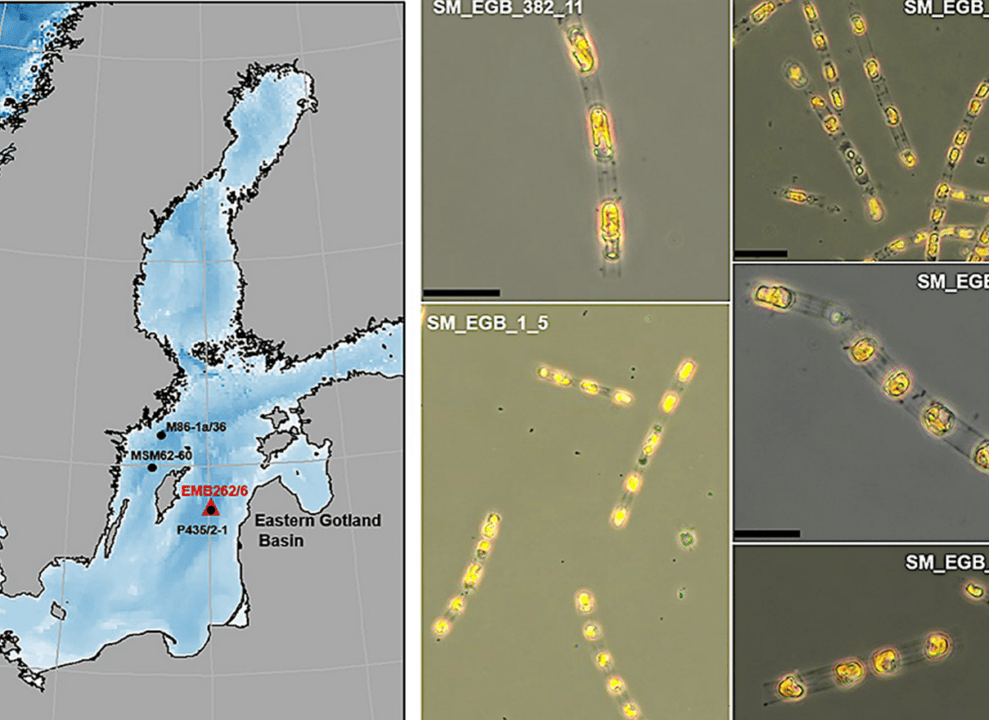
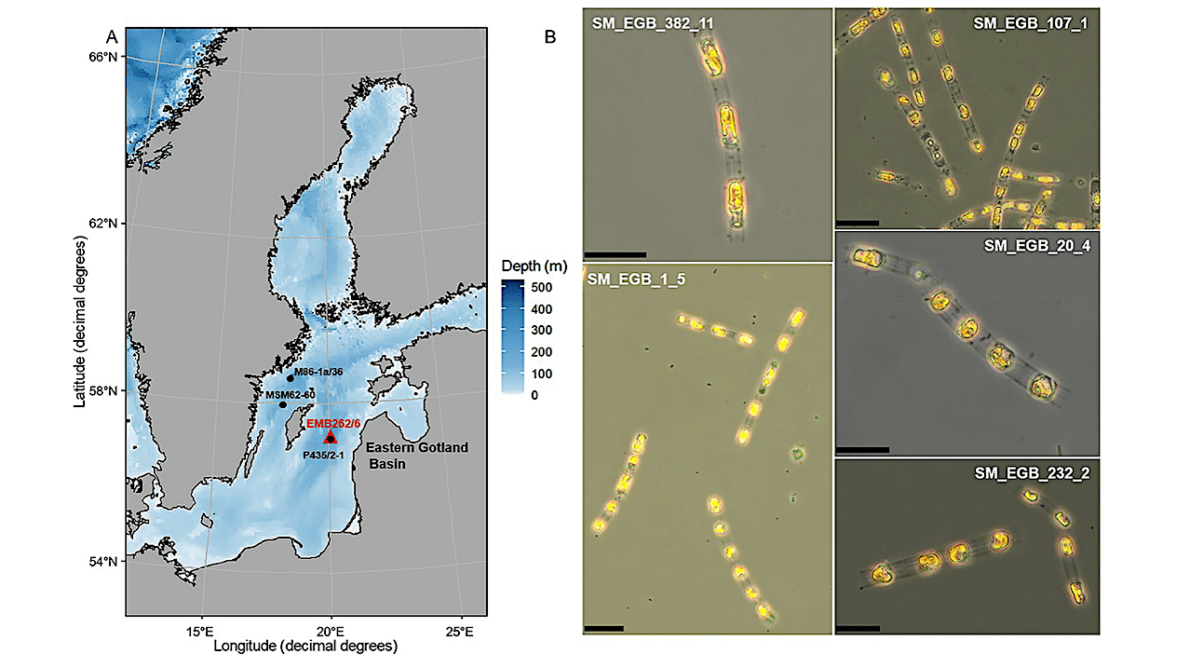
An unusual scientific experiment brought back to life microalgae that had been dormant for nearly 7,000 years. The discovery was published in The ISME Journal by an international team led by the Leibniz Institute.
The algae were preserved in deep sediments of the Baltic Sea, without light and oxygen.
Even so, they managed to survive for millennia in a dormant state.
-
Something is happening around the Earth: Inside the huge explosion of fireballs in 2026

-
A hot air bubble coming from Argentina expands over Brazil, causing thermometers to exceed 38 degrees with a thermal sensation of 40 degrees in late March, affecting 6 states at once.

-
The radish leaf that almost everyone throws away has more polyphenols, flavonoids, and fiber than the consumed root, and a 2025 study showed that the leaf contains compounds that protect the intestine, combat inflammation, and may inhibit the growth of cancer cells.

-
A planet that seemed to defy the laws of physics has intrigued scientists for decades, until the James Webb revealed what is really affecting Saturn’s rotation.

This feat opens a new window for the study of marine evolution and adaptation to climate change.
Dormancy: A Long and Resilient Pause
The reactivated organism belongs to the species Skeletonema marinoi, a common type of diatom. These microalgae can enter dormancy — a type of deep pause in metabolism — to withstand extreme environmental conditions.
In the sediments, they create special cells, with thick walls and energy reserves. This structure allows them to survive without light, oxygen, and even under very low temperatures.
Over time, these cells form true natural archives, storing information from past ecosystems.
For this reason, scientists view this type of study as a form of resurrection ecology.
Algae Wake Up in Full Force
When removing samples from the sediments, researchers managed to reactivate microalgae that were up to 6,871 years old.
After this “awakening,” the organisms resumed photosynthesis normally. Growth was also stable, with oxygen production comparable to that of their modern counterparts.
Additionally, genetic analyses showed differences between ancient and current organisms. This indicates that adaptation occurred over time.
Thus, scientists can observe evolution directly, comparing ancient and modern lineages.
The method avoids relying solely on fossils or simulations.
The sediments act as time capsules, and studying these microalgae can reveal how marine ecosystems have changed over the centuries.
Tool to Predict the Future of the Oceans
The next step for researchers will be to subject the resurrected algae to different climate scenarios. The idea is to understand how these species reacted to environmental changes in the past.
This could help predict how phytoplankton, the base of the marine food chain, will behave in response to current global warming.
The study also shows how marine sediments are useful for tracing the genetic history of species. The expectation is that more layers of sediment will reveal new ancient organisms with valuable information.
The Awakening of a Mystery
The dormancy of microalgae like Skeletonema marinoi is not simple. It involves the production of protective proteins and other complex cellular adaptations.
Unlike hibernation, this process is linked to seasonal cycles. Some cells sink in the winter and return to the surface in the spring. Others, as discovered now, can wait thousands of years.
This feat also raises a question that remains unanswered: how do these organisms manage to maintain their structure for so long?
The mystery remains, but science has gained a powerful tool to investigate the limits of life.
Study published in The ISME Journal.







Seja o primeiro a reagir!