





 Portuguese
  English
  Spanish
  3 min of reading
  37 comments


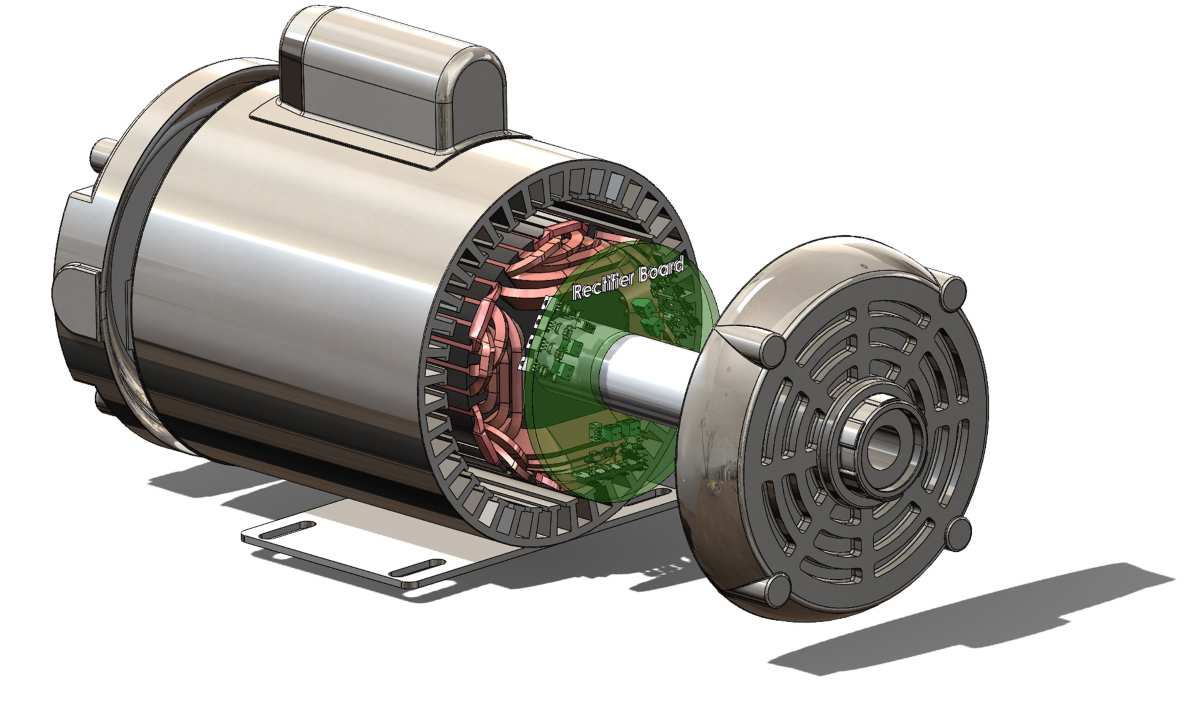


Researchers from Texas Developed an Electric Motor That Dispenses with Rare Earth Elements, Adopting More Sustainable Alternatives Like Copper to Revolutionize the Automotive Industry
The electric motor, an essential component in vehicles, ships, airplanes, and wind turbines, faces a critical challenge: the dependence on rare earth materials.
These elements, while essential for advanced performance, come with high economic costs, devastating environmental impacts, and geopolitical vulnerability. Now, researchers from Texas A&M University present an innovative and sustainable solution.
“If this happens, gasoline will cost R$ 40 reais,” warns Sergio Sacani about oil production
ARTICLE CONTINUES BELOWSee also
How the terraforming of Mars can transform the planet: artificial aerosols can increase the temperature by up to 35°C in 15 years, creating conditions for liquid water.

Scientists drilled nearly 8,000 meters into the ocean floor above the fault that caused the 2011 tsunami in Japan and discovered that a layer of clay 130 million years old was responsible for making the wave much worse than any model had predicted.
Thousands of years after causing the largest eruption of the Holocene, one of the world’s largest supervolcanoes is rebuilding itself beneath the sea south of Japan, receiving new magma and alarming scientists with its transformation.

China has activated a magnet 700,000 times more powerful than the Earth’s magnetic field that operates for over 200 consecutive hours while consuming little energy, and now the world wants to know what Beijing plans to do with this technology in 2026.
What Are Rare Earth Elements
Rare earth elements are chemical elements used in the manufacturing of essential components due to their exceptional magnetic properties. These elements are crucial for increasing efficiency, reducing weight, and improving the performance of electric motors and other devices related to sustainable mobility.

The New Electric Motor Without Rare Earth Elements
Scientists have developed an electric motor that completely eliminates the need for rare earth elements. The project, titled “Advancements in Electric Vehicle Propulsion: Development of High-Power Electric Motors Without Rare Earth Elements,” uses copper instead of neodymium magnets and other similar materials.
“These materials not only cause environmental damage during their degradation but also create dependency on external markets. Our motor addresses this issue by offering an efficient and sustainable alternative,” said Talebi.
Practical Solutions and Economic Benefits
The choice of copper, an abundant and less harmful material to the environment, brings numerous advantages:
- Sustainability: With lower environmental impact, copper significantly reduces the damage caused by mining.
- Cost-effectiveness: The elimination of permanent magnets and expensive materials lowers production costs.
- Geopolitical Independence: Breaking the dependency on countries that control the rare earth market ensures greater stability in the supply chain.
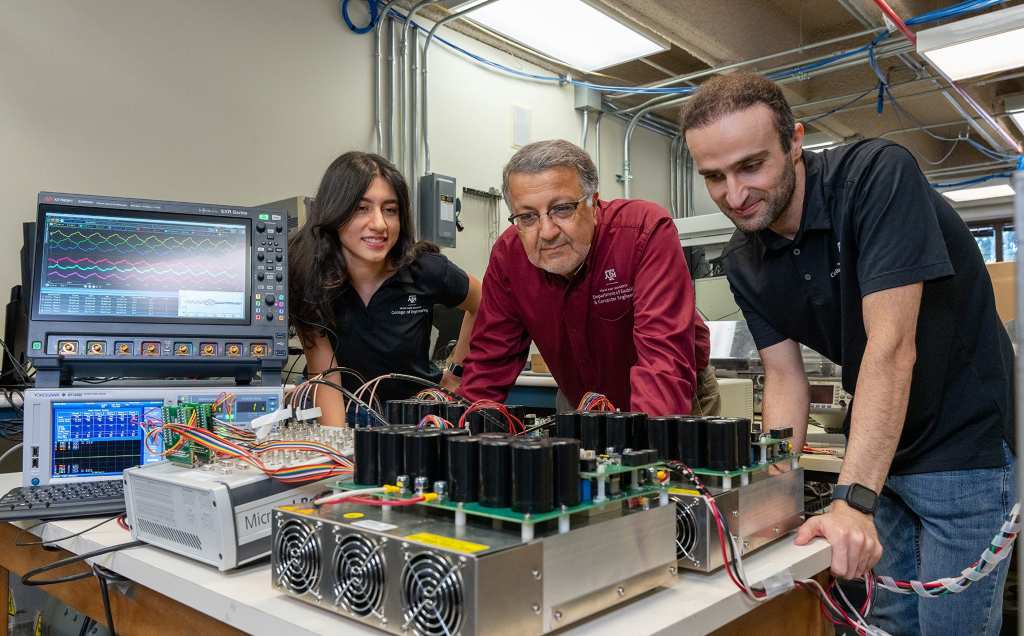
The development conducted by the team has already shown promising results in simulations, achieving performance equivalent to traditional motors. Toliyat emphasized: “Our technology achieves the same power-to-weight ratio as motors with rare earth elements.”
Overcoming the Limitations of Current Alternatives
Although some automakers are already exploring motors without rare earth elements, the available options face limitations such as lower efficiency and high costs. Seyedi emphasized: “Our approach seeks to solve these problems, offering an efficient and economical alternative.”
Moreover, the project is not limited to electric vehicles. The technology has potential applications in wind turbines, public transportation systems, and even in the renewable energy sector.
Investment and Commercial Expansion
With nearly $500,000 in funding from Texas A&M University’s ADM (Advancing Discovery to Market) program, the team has already registered patents in the United States and plans to commercialize the electric motor. The establishment of a company reinforces the commitment to bring this innovation to the global market.
“We are focused on expanding the reach of the technology to maximize its impact. We believe it will transform not only the automotive industry but the entire energy sector,” highlighted Talebi.
Why Eliminating Rare Earth Elements Is So Important?
Rare earth elements are a group of 17 chemical elements used in the manufacturing of permanent items, rechargeable batteries, and technological components.
Despite their name, they are not rare, but the necessary concentration for efficiency is limited. Furthermore, 70% of global production comes from China, concentrating economic and strategic power in one country.
The issues associated with rare earth elements include:
- Environmental Impacts: Mining and processing generate toxic waste, environmental pollutants, and consume large amounts of energy.
- Social Risks: In some regions, unregulated mining practices cause environmental manipulation and expose workers to precarious conditions.
- High Costs: Protection and refining are costly processes, raising the final prices of products like electric vehicles and wind turbines.
The electric motor without rare earth elements could represent a step towards sustainability. By eliminating dependence on finite and polluting materials, the technology promotes a more ethical and viable production model. In addition to reducing costs, it strengthens supply chains and minimizes environmental impacts.










Voltando a idades normativa: ou estaca o; O cobre é matéria prima encontrado em escala industrial!Terras raras são raras.So vão dividir os mercados? Quem for maís eficiente leva a melhor parte.
Só falta eles dizerem que usaram barras ou fios de cobre no rotor tipo gaiola. Ou então que vão usar rotores bobinadios alimentados por indução seguida de retificação em substituição ao sistema de anéis e escovas. Isso um meninos do SENAI já fizeram rsrs
Agora se eles disserem que usaram cobre pra criar um ímã eu vou achar interessante.
Gostei do conteúdo