





 Portuguese
  English
  Spanish
  3 min of reading
  0 comments


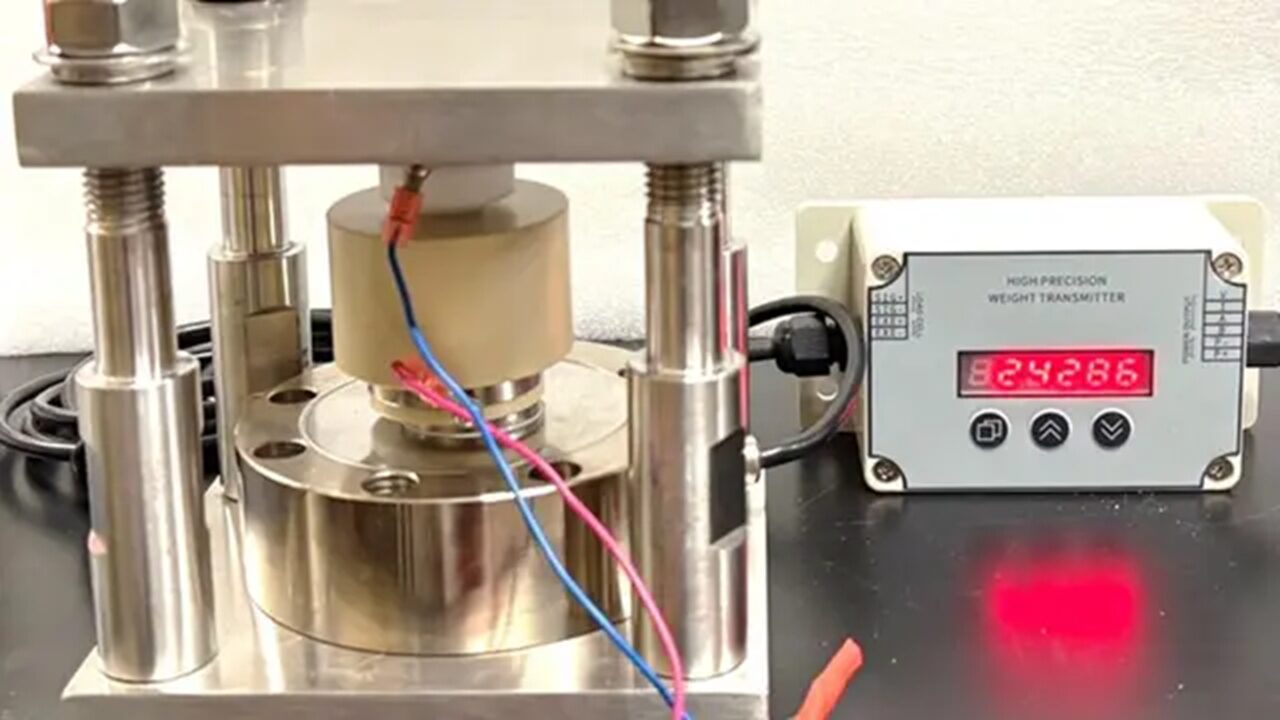
Researchers Applied Cold Sintering Technique to Address High-Temperature Challenges and Develop Solid-State Electrolytes with High Conductivity, Improving the Performance of Electric Vehicle Batteries
For years, lithium-ion batteries have powered everything from smartphones to electric vehicles. However, their reliance on liquid electrolytes has always raised safety concerns.
The instability of liquids can lead to fire risks, which has motivated the search for safer alternatives.
Now, researchers at Penn State are betting on a solution: solid-state electrolytes (SSEs).
-
BYD Dolphin 2027 gains more power, increases in size, changes interior, and abandons controversial feature to face new competition in Brazil.

-
The German economist Wolf-Peter Schill has no doubts: “Electric cars are already far superior to cars with internal combustion engines.”

-
Largest public charging network in Brazil: BYD reaches 125 fast chargers and accelerates national expansion of electric mobility.
-
Goodbye expensive popular car: electric vehicle for less than R$ 70,000 starts being sold in Brazil with a range of 200 km and targets those looking to escape gasoline.

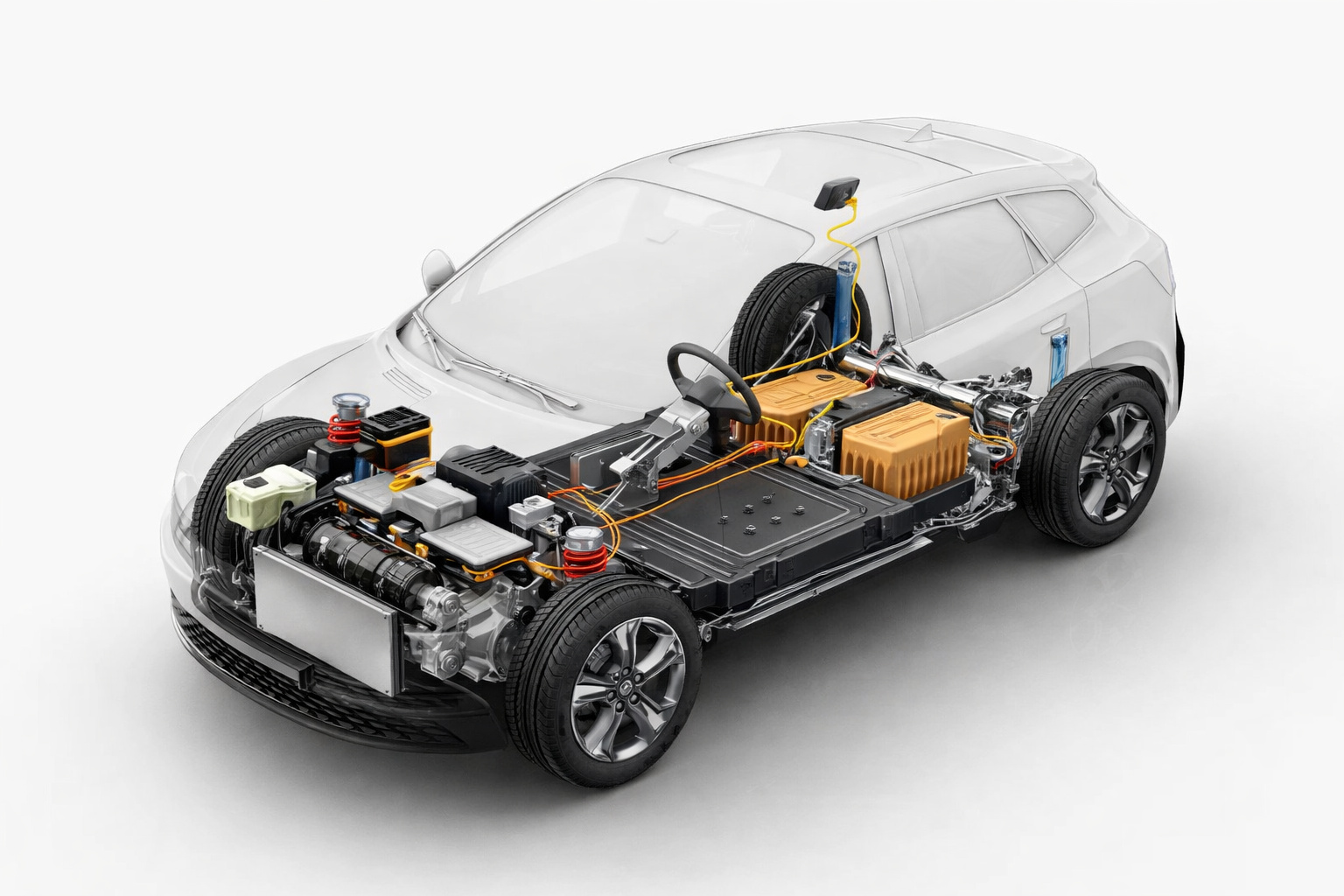
These new materials could revolutionize the consumer electronics market and the electric vehicle industry, bringing greater safety and reliability.
Solid-State Batteries: How Do They Work?
Solid-state batteries differ from traditional lithium-ion batteries by using solid electrolytes instead of liquids.
According to Hongtao Sun, assistant professor of industrial and manufacturing engineering at Penn State, the change is simple, yet essential.
“Rechargeable batteries contain two internal electrodes: an anode on one side and a cathode on the other,” explained Sun. “The electrolytes serve as a bridge between these two electrodes, providing rapid transport for conductivity. Lithium-ion batteries use liquid electrolytes, while solid-state batteries use SSEs.”
These new electrolytes bring significant advantages. Their stability and safety are superior to traditional solutions.
Even so, there are barriers that still prevent large-scale commercial application. The main challenge is ensuring that solid electrolytes are produced efficiently with high conductivity.
Overcoming Barriers with Cold Sintering
A major difficulty in manufacturing SSEs lies in the high temperatures required to process ceramic materials. This requirement hampers efficiency and can jeopardize mass production.
To circumvent this problem, the Penn State team has turned to an innovative technique: cold sintering.
The method combines pressure and a small amount of liquid solvent to form ceramic-polymer composites at much lower temperatures than traditional methods.
“The process is called ‘cold’ because it operates at much lower temperatures than traditional sintering,” explained Sun. “We use pressure and a small amount of liquid solvent to complete the process, making it much more energy-efficient.”
This approach enables the creation of highly conductive composites, such as LATP-PILG, improving battery efficiency without compromising the material.
LATP-PILG: An Innovation in Ion Transport
Traditional solid electrolytes, made up of polycrystalline grains, face challenges in transporting ions. This limitation reduces battery performance.
Sun’s team overcame this barrier by combining LATP ceramic with a polyionic liquid gel (PILG). This new composite enhances ion conduction by utilizing designed boundaries and avoiding common failures at natural interfaces.
“One of the manufacturing challenges of LATP-based SSE composites is that the sintering temperature of the ceramic is so high that it burns any additives, such as the polymer compound, before the ceramic can be densified,” explained Sun. “That’s why we had to implement cold sintering to keep the temperatures much lower.”
With this advance, it was possible to create a solid electrolyte that functions efficiently at room temperature, offering superior ionic conductivity.
Greater Stability and More Energy
In addition to improving ion conduction, the newly developed SSE features a wide voltage window, which is critical for increasing battery performance.
“In addition to the enhanced conductivity, our polymer-ceramic composite SSE exhibited a very wide voltage window, between 0 and 5.5 volts,” highlighted Sun. “The large voltage window allows the use of high-voltage cathodes, enabling the battery to generate more energy overall.”
This gain in efficiency and energy positions solid-state batteries as strong candidates to replace current technologies in smartphones, electric vehicles, and other applications.
Applications Beyond Batteries
The impact of the cold sintering technique could extend far beyond the battery sector. Sun believes the method could be used in other fields, such as semiconductor production, where high-quality ceramic composite materials are highly valued.
However, the team remains focused on one main goal: to make the process sustainable and scalable.
“Our next objective is to develop a sustainable manufacturing system that supports large-scale production and recyclability, as this will be key for the industrial applications of this technology,” stated Sun. “This is the grand vision we hope to achieve in the coming years.”
The research was published in the journal Materials Today Energy.









Seja o primeiro a reagir!