





 Portuguese
  English
  Spanish
  5 min of reading
  0 comments


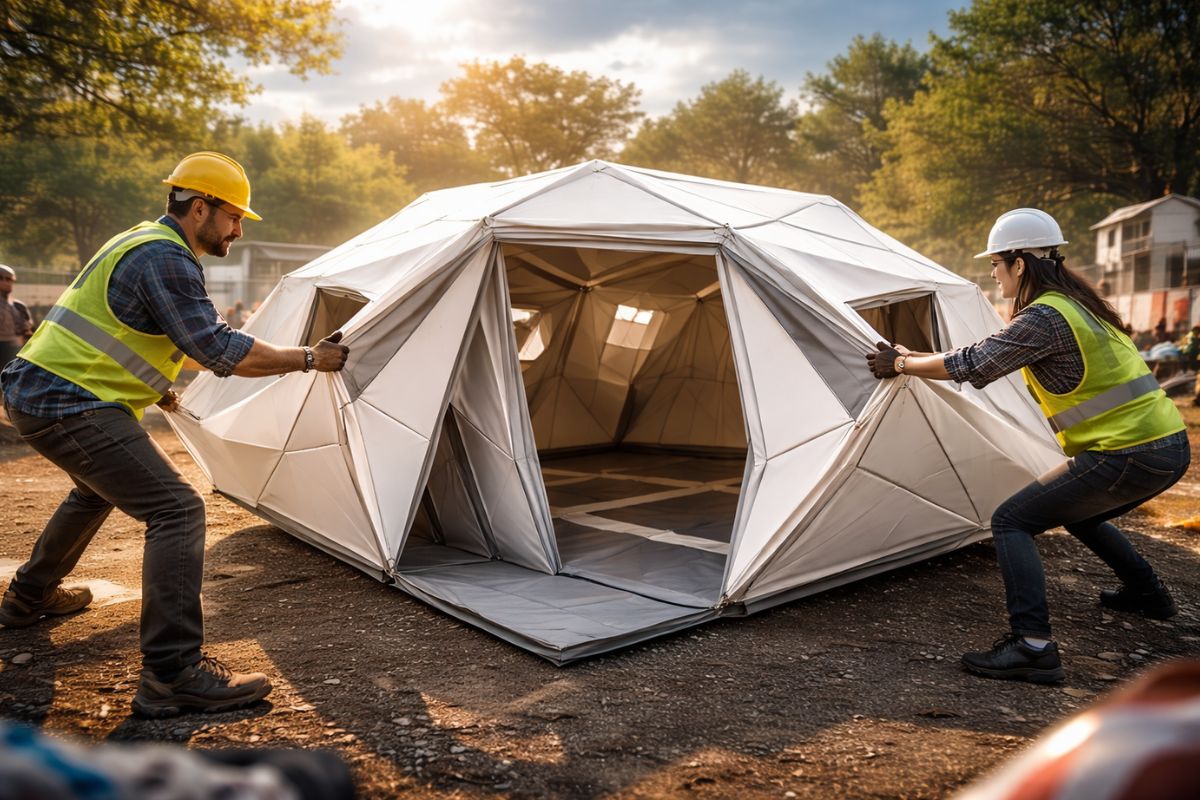
Developed By Researchers At The University Of Maine, The Origami-Inspired Shelter Combines Mathematical Modeling, Thick Panels, And Fold Lines Studied To Leave A Compact Shape And Reach Sufficient Volume To Accommodate Several People, With A Focus On Quick Assembly, Simple Transport, And Safe Emergency Or Temporary Use.
The origami-inspired shelter developed by researchers at the University of Maine seeks to bring to engineering an ancient and delicate principle of folding: moving from a compact and nearly flat shape to a functional structure in just minutes. The proposal targets a very concrete, recurring, and costly problem in humanitarian crises, displacements, and disaster responses.
Instead of treating origami merely as an aesthetic reference, the project uses the logic of folds as a structural base. The ambition is to transform a mechanism of opening into temporary housing, with walls, roof, and internal volume sufficient to accommodate several people without requiring a slow, heavy, or complex assembly.
When Folding Stops Being Art And Becomes Structure

The logic of the origami-inspired shelter is based on a simple observation: foldable structures need to be easy to transport, quick to assemble, and stable after being opened.
-
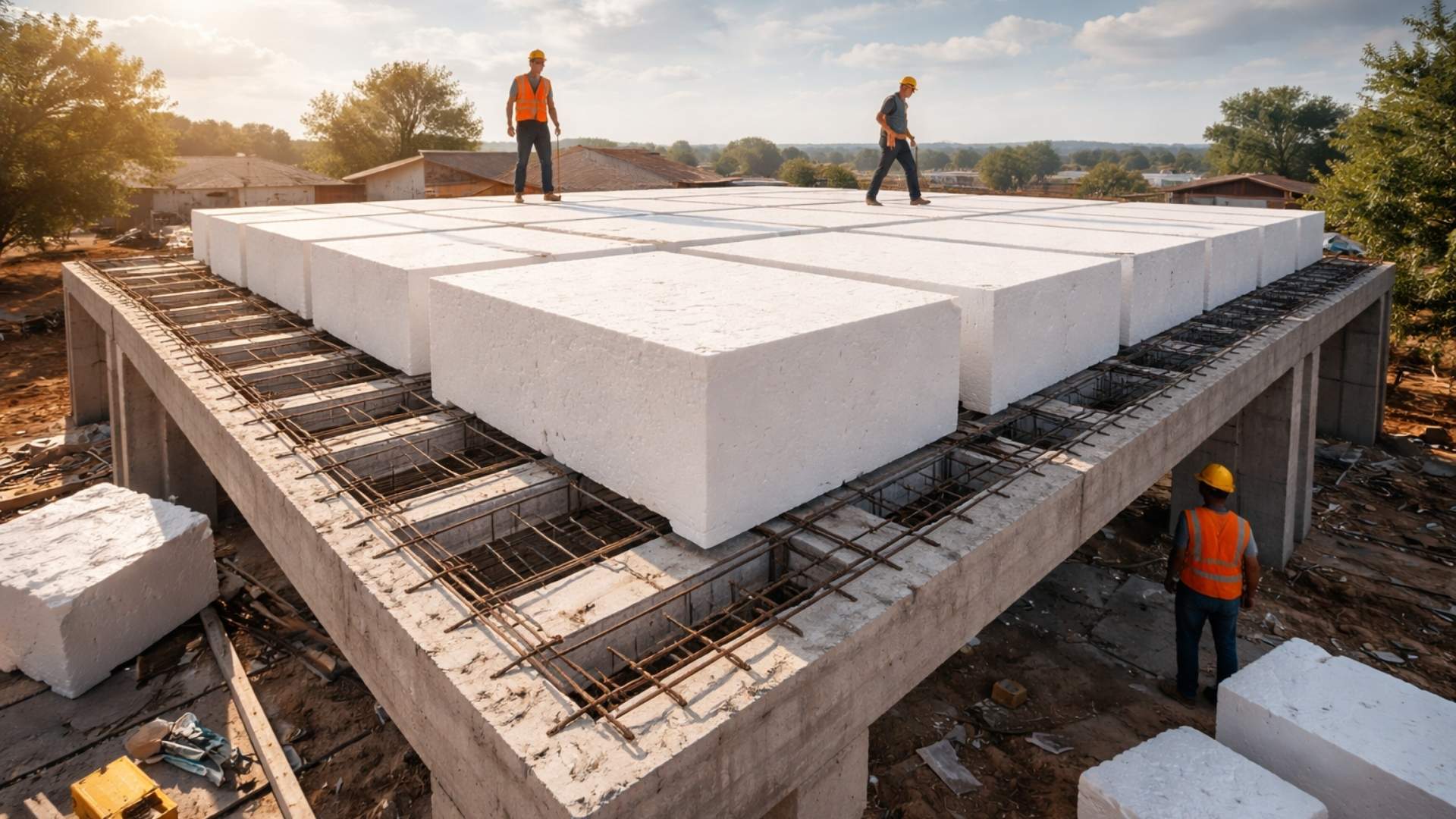
Forget concrete: architects are replacing tons of concrete with giant blocks of expanded polystyrene to build the roofs of houses and reduce structural weight by up to 50%, cut costs, improve thermal insulation, and speed up construction.
-
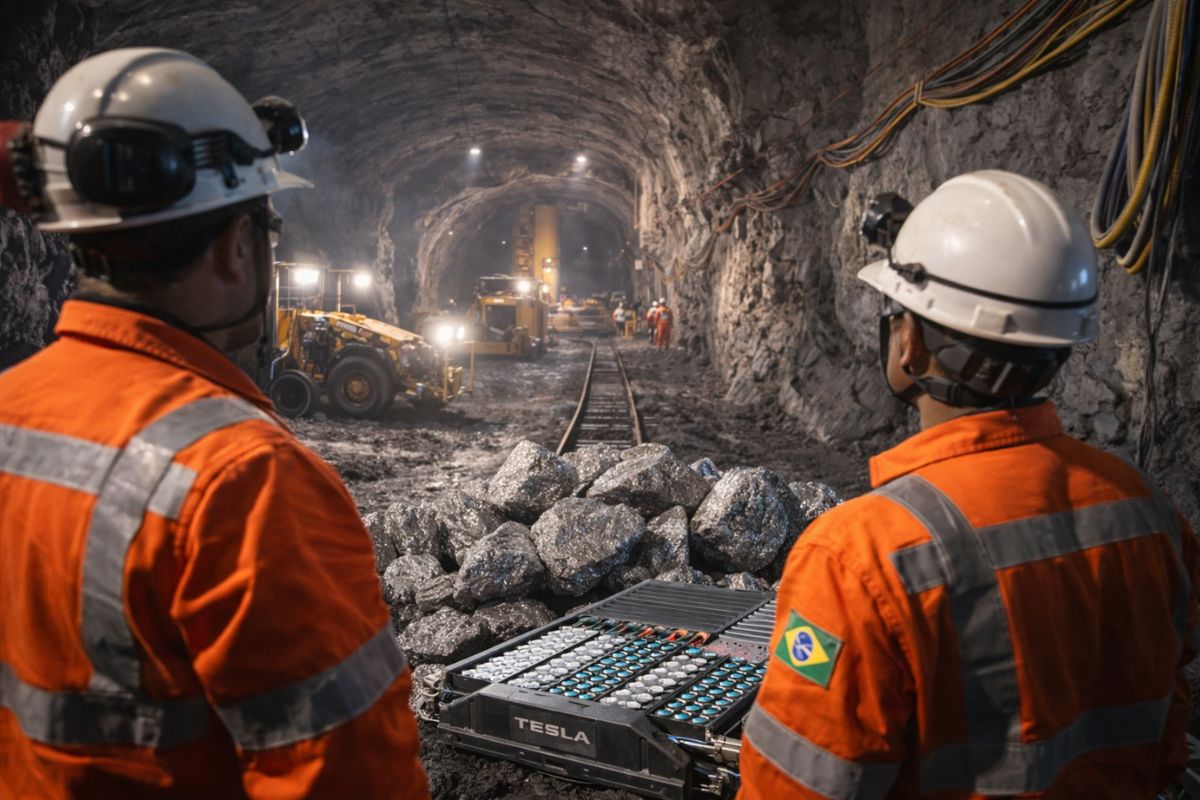
The Brazilian state enters the center of the global race for critical minerals by starting the construction of the largest underground nickel mine in Latin America, a mineral essential for electric car batteries that the entire world is competing for at this moment.
-
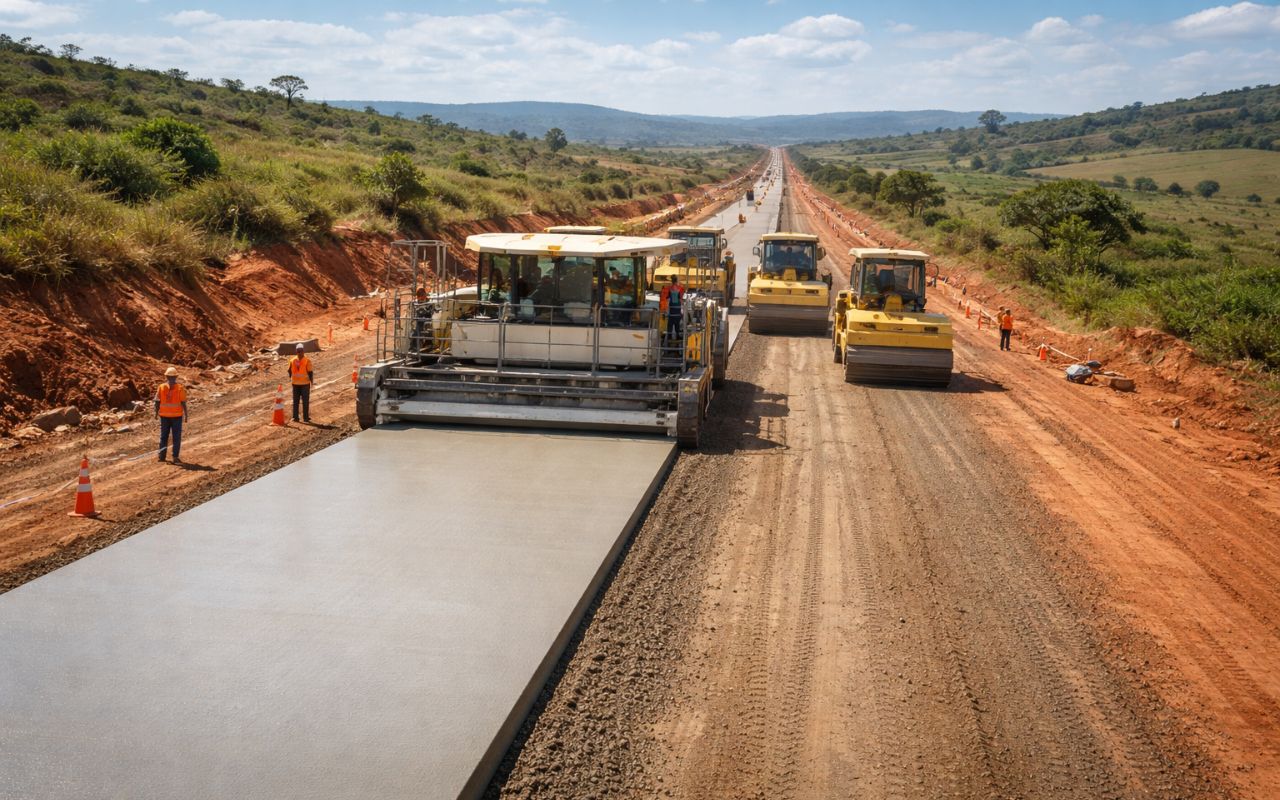
New CCR concrete paving technology promises roads up to 3x more durable, less maintenance, and cost reduction in Brazil.
-
Made from recycled plastic, plastic wood is gaining space in the construction industry because it does not rot, resists moisture, and reduces maintenance costs over the years.


This applies to both military scenarios and emergency camps, where the deployment time and assembly effort can define the actual utility of a solution.
On paper, the idea seems intuitive. In the physical world, it is much more challenging. A piece of paper can be folded freely, but a shelter must deal with thicker, stiffer, and heavier panels, while maintaining stability when transitioning from a compact state to a vertical position.
It is precisely in this transition that engineering enters decisively.
The researchers observed that varying the position of the fold lines and vertices allows for generating many structural patterns, from triangles to trapezoids.
This diversity is important because the final shape of the shelter depends not only on opening panels but on opening them in the correct order, angle, and relationship so that the internal volume appears without deforming the whole.
Therefore, the origami-inspired shelter is not just an object that folds. It is a system that needs to balance geometry, strength, and mobility.
The elegance of the solution depends less on appearance and more on the ability to open quickly without collapsing.
What Engineers Had To Calculate To Make The Idea Work

Mechanical engineering professor Masoud Rais-Rohani and graduate student Anthony Verzoni used mathematical and computational modeling to test the deployment of different versions of the origami-inspired shelter.
The goal was to ensure that the structure could be easily assembled and that the roof would rise along with the unfolding of the walls.
This point is central because the problem lies not only in the final result but in the pathway to it. When such a structure moves from the compact form to the habitable form, several forces come into play simultaneously.
The engineers analyzed, for example, the force required to lift the shelter, the impact of wall thickness, the weight of the panels, and the effect of these elements’ composition on the opening process.
Special attention was also given to hinges. In foldable structures with thick walls, the hinge cannot simply connect two parts.
It must withstand stress, allow sufficient rotation along the fold line, and prevent one panel from physically interfering with another during the transition. If this point fails, the shelter may exist in software but not work in practice.
The models showed that it is possible to accommodate complex folding patterns in a robust system.
But they also revealed an important point: the force required to open the origami-inspired shelter varies greatly throughout the movement and directly depends on the point where that force is applied. This means that it is not enough to think only about the opened shelter; the entire mechanics of the movement must be studied.
Assembly In Minutes Depends On More Than Creativity
One of the strongest arguments for the project is speed. According to Rais-Rohani, maximizing connectivity between panels is an essential feature of this type of concept, precisely because it would allow for assembling a shelter the size of a room in just a few minutes.
The promised speed does not arise from improvisation but from architecture designed to open in a coordinated manner.
This detail helps explain why the origami-inspired shelter is so appealing in emergency situations.
In natural disasters, forced displacements, and humanitarian crises, a useful solution is not the most beautiful or the most theoretically sophisticated, but the one that arrives, opens, and protects without requiring heavy infrastructure or large assembly teams.
At the same time, research makes it clear that speed without control can create another problem. If the structure requires excessive effort, if a wall jams, if the roof does not keep up with the opening, or if the load concentrates incorrectly, deployment becomes complicated.
Therefore, the study emphasizes the need to analyze the opening and closing of the system as an inseparable part of the design.
The results then serve as a basis for future choices regarding size, shape, and assembly loads.
In other words, the origami-inspired shelter is not yet presented as a final solution ready for mass distribution but as an engineering platform with clearer parameters for evolution.
This kind of precision is what separates a promising idea from a truly usable product.
Where This Technology Could Go If Research Advances
The next steps already indicate the intended direction. Future research should investigate the use of passive and active mechanical assistance systems to make deployment even faster and easier.
This means that the origami-inspired shelter could move away from relying solely on manual force and gain auxiliary mechanisms that reduce effort and opening time.
This advancement is particularly relevant to humanitarian and military applications, mentioned as possible fields for the technology.
In both cases, the value of the shelter lies not only in its ability to fold but to fold without losing strength, without demanding complex transport, and without turning assembly into an operational obstacle.
The more the system reduces effort and increases predictability, the greater its real value in the field is likely to be.
Anthony Verzoni summarized the team’s initial priority as creating shelter systems that move from compact shapes and unfold into large volumes sufficient to accommodate several people while limiting deployment effort.
This goal helps gauge the desired balance: the shelter needs to be small when transported and convincing when opened.
Rais-Rohani went further by expressing the expectation that the study will contribute to the production and mass distribution of prefabricated shelters of this type for humanitarian aid around the world.
It is a high ambition, but consistent with the scope of the problem the project seeks to address. Temporary housing remains one of the most challenging urgencies in rupture scenarios, and scalable solutions remain rare.







Seja o primeiro a reagir!