





 Portuguese
  English
  Spanish
 5 min of reading
  0 comments


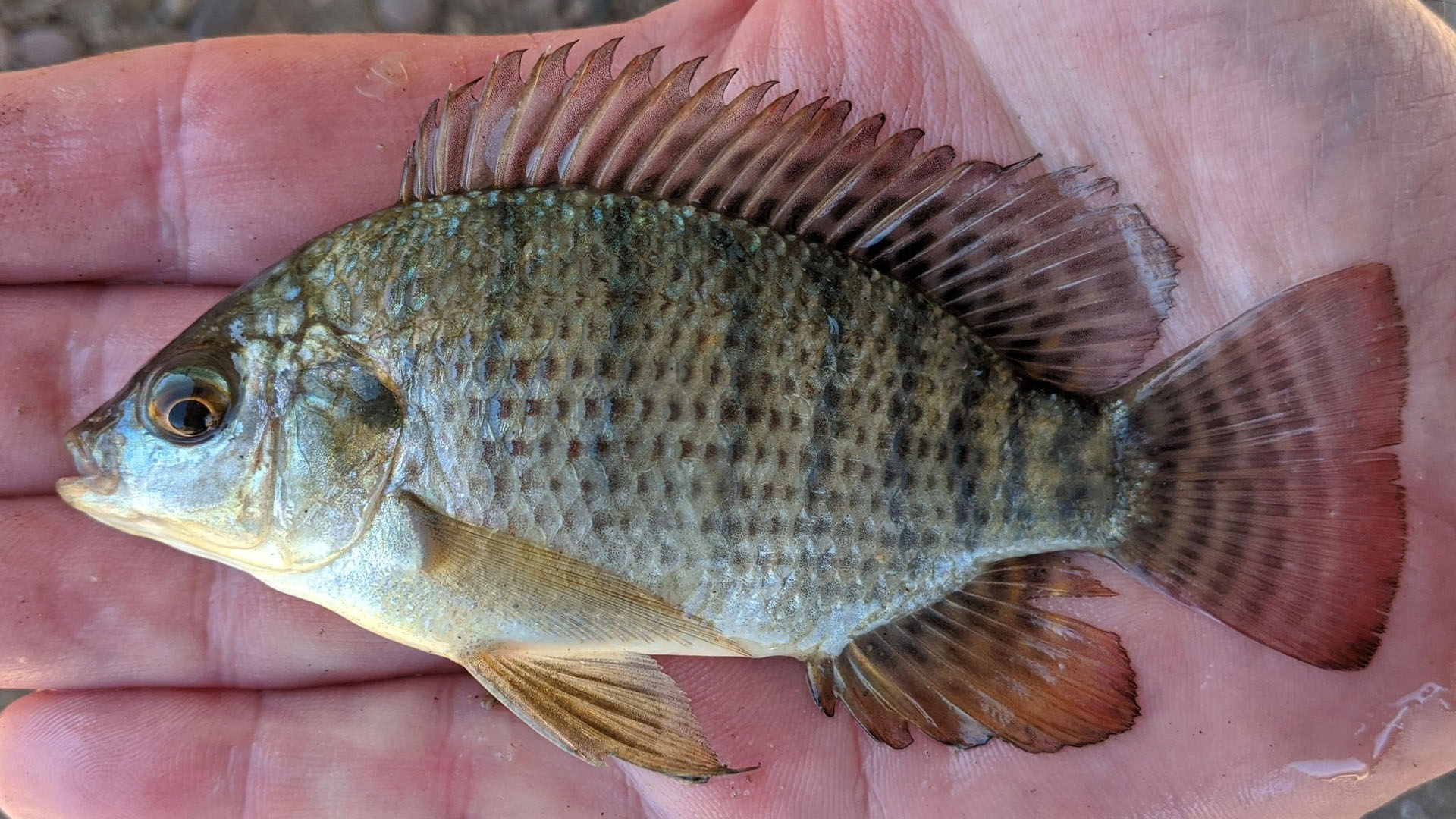
Technique Developed at the Federal University of Ceará Uses a Skin Biotech from Tilapia, Rich in Collagen, to Treat Corneal Ulcers in Dogs and Has Already Restored Vision to Hundreds of Animals, Paving the Way for Future Applications in Humans
Brazilian researchers have transformed a byproduct of the fishing industry into one of the most promising solutions in veterinary ophthalmology. The skin of Nile tilapia, a fish widely farmed in Brazil, is being used to produce a biotechnological skin capable of treating ulcers and severe corneal lesions in dogs, often preventing permanent blindness.
The technique was developed by the Production and Development of Medicines Center at the Faculty of Medicine of the Federal University of Ceará (NPDM-UFC), a national reference in research on tilapia skin for burns and regenerative medicine.
According to a report by Pesquisa FAPESP magazine, the collagen membrane obtained from the fish’s skin is used as a graft in corneal surgeries, accelerating healing and helping to restore the eye’s transparency.
-
These are the drivers who may stop paying tolls on highways in a project that promises to reduce costs for those who live from transportation in Brazil.

-
(Video): Italian pilot lands plane on moving train at 120 km/h and achieves unprecedented feat in aviation, even with a narrow runway and without direct visual contact.

-
It seems to have come out of a science fiction movie: A Brazilian city where it rains almost every day, recording over 4,000 mm per year, driven by climatic factors — a direct result of its strategic location in the Amazon.

-
The water crisis that could change everything this year has already begun; it’s not just about the climate, it affects technology, raises product prices, and can halt entire companies without warning.


According to a report from CNN Brasil, the technique has already been applied to more than 400 dogs with good clinical results, especially in animals with injuries so severe that they could lead to permanent vision loss.
From Burns to Blindness, the Journey of Tilapia Skin in Brazilian Science
The use of tilapia skin in medicine began to gain notoriety around 2015, when UFC initiated studies to use this material as a biological dressing for burn patients. The results showed reduced pain, less need for dressing changes, and good healing, drawing attention in Brazil and abroad.
Building on this advancement in burns, the group led by plastic surgeon Edmar Maciel expanded research into other areas of so-called regenerative medicine, including vaginal reconstruction, gender reassignment surgeries, and more recently, applications in neurology and ophthalmology.
It was in this context that the research line led by veterinarian Mirza de Souza Melo emerged, responsible for adapting tilapia skin for the treatment of corneal injuries in dogs and cats. In her master’s program in Translational Medicine at UFC, she tested the dermal matrix from tilapia compared to imported biological membranes and traditional grafts made from the animal’s own tissue.
The case studies and clinical series indicated that the material produced from the fish’s skin not only protects the ocular surface but also promotes tissue regeneration, preserving the transparency of the cornea and maintaining the animals’ vision.
How the Collagen Biotech That Treats Corneal Ulcers Works
The starting point is the skin of Nile tilapia (Oreochromis niloticus), taken from fish used in the food production chain. In the lab, this skin undergoes a lengthy decontamination and decellularization process, during which scales, cells, and debris are removed, leaving primarily a collagen-rich matrix.
This material is transformed into a biotechnological membrane – the so-called acellular dermal matrix – which functions as a true “scaffold” for cellular growth. Placed over the injured cornea during surgery, it acts as a high-tech dressing, protecting the eye and keeping the environment moist and suitable for regeneration.
In practice, after the traditional ophthalmological procedure, the veterinarian places the tilapia skin graft over the lesion and secures it with specific sutures. Over the following days, the membrane releases collagen and other structural proteins while being absorbed by the animal’s body.
According to scientific reports and interviews from the team to Pesquisa FAPESP and CNN Brasil, a study involving 60 dogs with corneal ulcers demonstrated that the animals treated with the tilapia dermal matrix had shorter healing time and hospital discharge than those who received imported membranes or conjunctival grafts.
Additionally, the technique has been especially useful in brachycephalic dogs – such as pugs, bulldogs, and shih tzus – who, due to their more exposed eyes, frequently suffer from severe corneal injuries often associated with trauma, dryness, or pre-existing diseases.
Low Cost, National Production, and Potential Use in Humans
One of the strengths of this innovation is that tilapia is a fish widely farmed in Brazilian territory, giving the country an abundant and inexpensive source of raw material. While biological membranes used today in ophthalmology are largely imported and based on bovine or porcine materials, the tilapia matrix can be produced locally from a byproduct that would previously be discarded.
According to the researchers, this characteristic can significantly reduce the cost of treatment, making complex corneal procedures more accessible for veterinary clinics and pet owners throughout the country. At the same time, the development of technology within public universities strengthens national scientific capacity and opens up space for partnerships with industry.
The good results in dogs have already motivated the UFC group to study the application of the biotechnological material in humans. One of the more advanced arms of the research is investigating the use of the tilapia dermal matrix in the recomposition of the dura mater, the membrane that covers the brain, in cranial surgeries. Trials in animals indicate that the material is biocompatible and does not provoke a significant inflammatory response, and the team is awaiting ethical authorization to begin tests in patients.
Despite the optimism, experts emphasize that for large-scale human use, whether in ophthalmology, neurology, or other areas, robust clinical studies are still needed, along with evaluation and approval by Anvisa, which may take several years.
What Changes for Pet Owners and Veterinary Ophthalmology in Brazil
From the perspective of pet owners, the main change is the prospect that animals that could have gone blind due to deep corneal ulcers now have better chances of recovering their vision, as long as they receive specialized care in a timely manner. The technique with tilapia skin does not replace consultation with a veterinarian; it is an additional tool in the hands of experienced ophthalmologists.
For veterinary ophthalmology, the tilapia dermal matrix represents a technological leap with Brazilian identity, combining cutting-edge science, intelligent use of waste, and potential global impact. The experience accumulated in over 400 cases, detailed in articles, dissertations, and reports, places Brazil at the forefront of a research line that unites animal welfare, innovation, and circular economy.
At the same time, the novelty raises ethical and regulatory debates: how to ensure large-scale production with rigorous quality control? How to prevent misuse or attempts to “DIY” with fish skin without proper preparation, which would be extremely dangerous for animals? These questions will need to be addressed as the technique becomes more popular.
In your case, what stands out most in this story, the use of a “waste” from the industry as a high-tech treatment, the fact that blind dogs can see again, or the future potential for application in humans? Share your opinion in the comments.









-

-

-

-

-

-

18 pessoas reagiram a isso.