





 English
  Francês
  Alemão
  Italiano
  Japonês
  Norueguês
  Portuguese
  Spanish
  3 min of reading


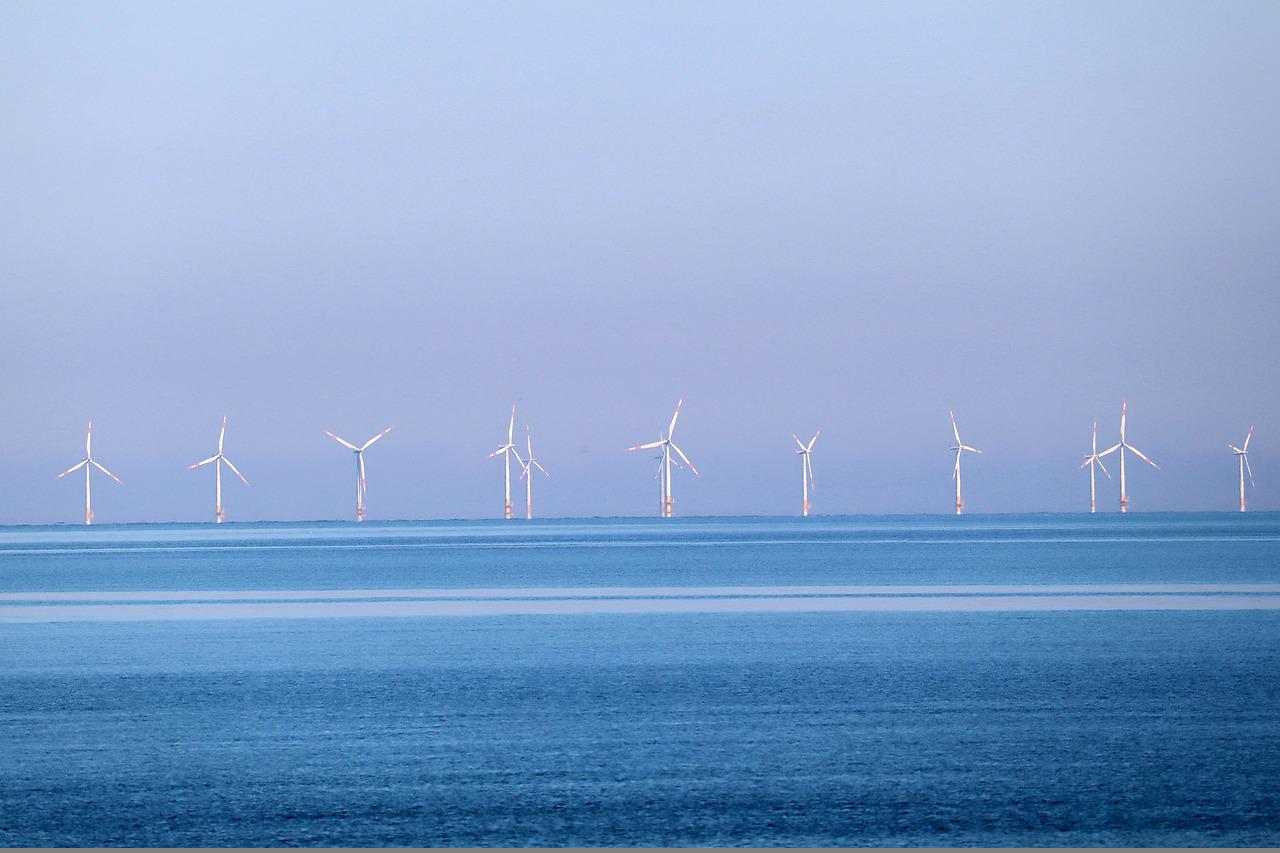
Petrobras’ Assessment Aims at Renewable Energy Production in Offshore Wind Farm, One of the Green Alternatives of the State Giant
Petrobras (PETR3;PETR4) announced that it is analyzing, alongside the Norwegian energy company Equinor, the environmental viability of an offshore wind farm in Aracatu, in the Campos Basin, 20 kilometers off the coast. The project under evaluation consists of an offshore wind farm with an energy production capacity of 4 gigawatts (GW).
The report transmitted by the company formalizes the statements made by Petrobras’ president, José Mauro Ferreira Coelho, last Wednesday (the 18th), in the morning, during a panel at the congress ‘Global Carbon Market – Decarbonization & Green Investments’, which runs until this Friday at the Botanical Garden of Rio de Janeiro, in the southern zone of the city.
At the event, Coelho stated that Brazil has great potential for offshore wind energy and that this mode of generation aligns with Petrobras’ experience, leadership, and competence in the maritime environment, especially in deep and ultra-deep waters. According to him, offshore wind farms are one of the environmentally friendly alternatives of the company, alongside the development and production of advanced biofuels.
Petrobras Points Out That Partnership with Equinor Was Established Back in 2018
According to Petrobras, the joint assessment is the result of a partnership established with Equinor back in 2018 and is associated with the Strategic Plan of the state-owned company for the years 2022 to 2026. The company also communicated that the environmental characterization document for the Aracatu Project, required in the environmental licensing process, was filed in August 2020.
The study related to the wind farm in the Campos Basin has the support of the Research and Development (R&D) program of the company’s Research and Innovation Center (Cenpes), being dedicated to reducing risks and accelerating technological maturity gains.
Petrobras’ director of Institutional Relations and Sustainability, Rafael Chaves, stated in a note that Brazil’s potential for offshore wind energy production allows the country to explore promising opportunities for diversifying its energy matrix.
Just like onshore wind generation, the technology associated with offshore wind farms uses the power of the winds to produce renewable energy, but it operates based on large-scale equipment and delivers large volumes of energy.
About Offshore Wind Energy
Offshore wind energy is a clean and renewable energy source obtained by harnessing the wind’s force that blows offshore, where it reaches greater and more constant speeds due to the absence of barriers. In order to explore this resource as much as possible, mega-structures are developed that are established on the seabed and equipped with the latest technical innovations.
-
With 160,000 m² of collectors, an area larger than 20 football fields, Silkeborg, in Denmark, hosts a solar thermal plant that heats 19,500 homes and could become the largest solar heating plant in the world.

-
A study reveals the expansion of renewable energy procurement in Brazil and shows how companies are taking advantage of opportunities to reduce expenses, ensure energy efficiency, and strengthen strategic environmental commitments.

-
Mato Grosso do Sul excels in the sugar-energy sector: the state reaches a milestone of 22 operating mills and accelerates the production of clean energy in MS with a focus on sustainability.

-
231 turbines of 260 meters at 160 km from the coast, monopiles weighing as much as nine blue whales embedded in the North Sea, and a crane ship taller than the Eiffel Tower: Hornsea 3 will be the largest offshore wind farm on the planet by 2027, and its first components have already arrived in England.
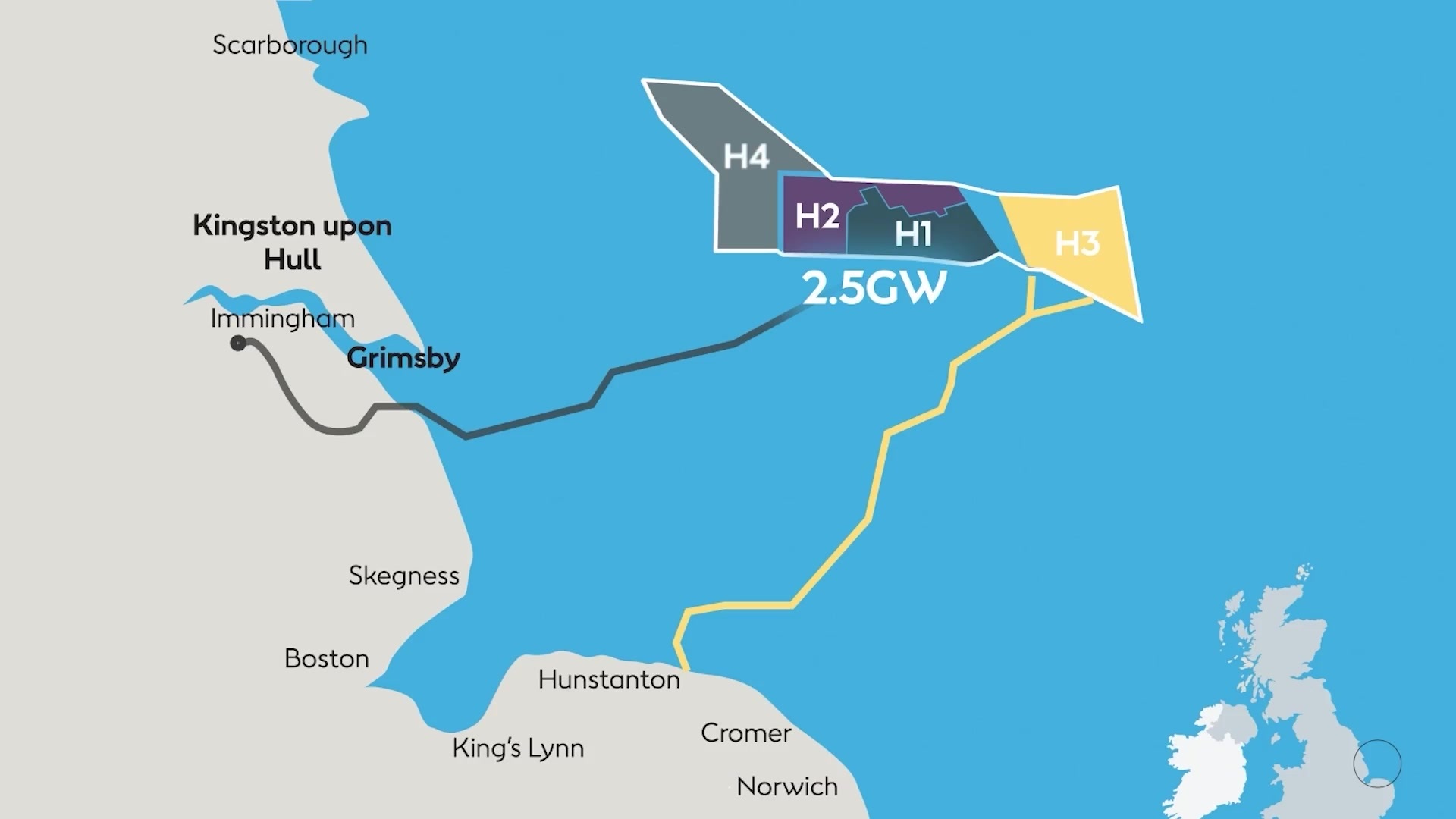

In this regard, offshore wind turbines are turbines built and located in bodies of water, such as oceans and river estuaries. Although the term is generally used to refer to wind farms at sea, offshore wind farms can also be located close to the coast.
Offshore wind farms have the advantage of being able to occupy very large areas, given that they are situated offshore. As a result, these farms typically have several hundred megawatts of installed capacity and, considering that wind energy is a form of clean energy, the environmental impact caused by these structures can be minimal.
Additionally, there is also the advantage that offshore wind farms can be constructed very close to where the energy is consumed, as many large cities are located near the sea.






Seja o primeiro a reagir!