Portuguese
  Spanish


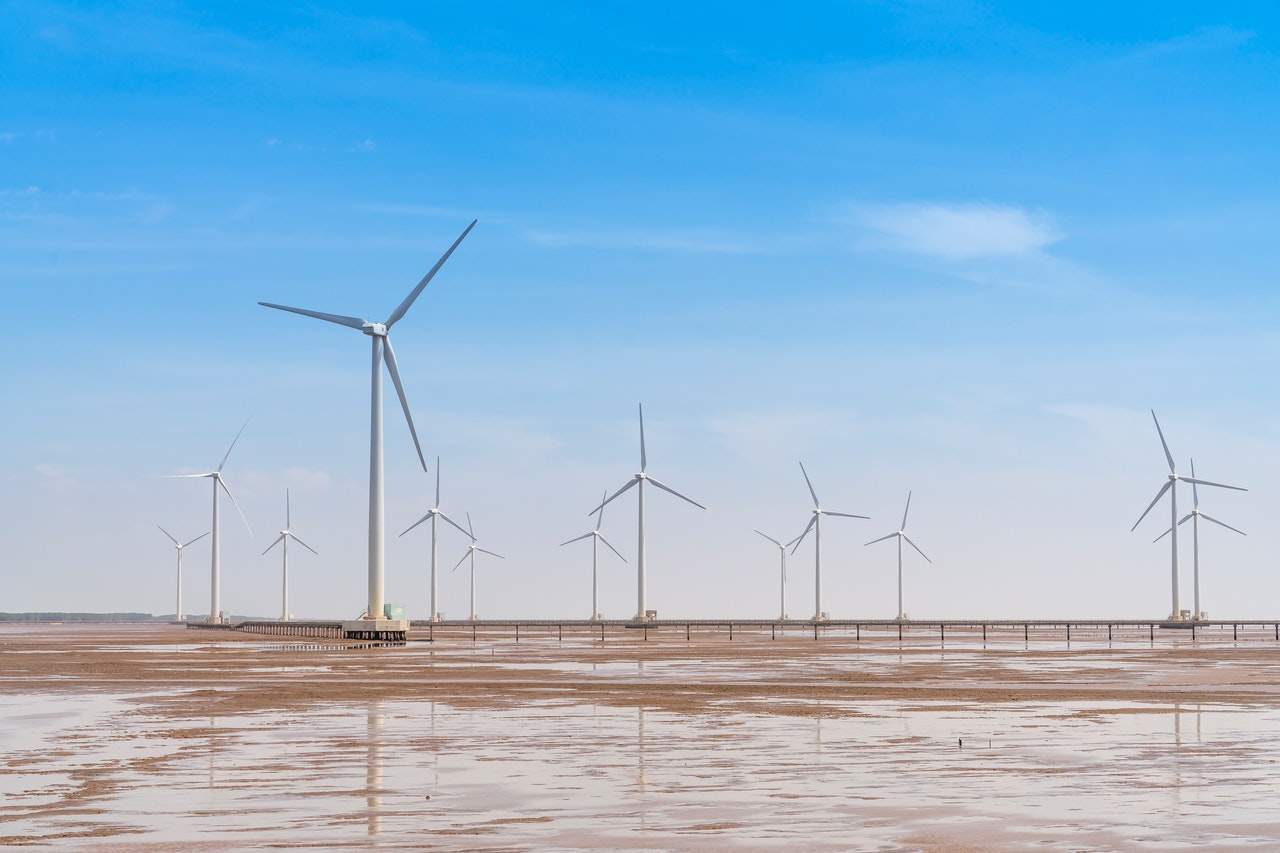

The Turbine Also Functions as a Way to Promote Clean Energy, Given That One of Its Main Representatives Is Wind Energy
Wind energy, as noted in the 2022 report from the English consultancy Ember, is the second largest source of clean electricity on the planet. In relation to Brazil, this matrix is already the second largest producer of energy in the country, accounting for 10.8% of production. Brazil ranks sixth among the countries in the world in the ranking of total installed wind energy capacity onshore, according to data from the Global Wind Energy Council.
Currently, there are numerous structures aimed at harnessing the force of the winds for energy generation, whether it’s large turbines from Mingyang Smart Energy, which have blades 118 meters long, or cylindrical and bladeless turbines like those from Vortex, or even the modern floating structure of Windcatcher, which consists of dozens of small rotors.
In this context, mechanical engineer Cat Adalay and designer Rachel Carr, both Canadians working for the company Aurea, made the decision to create a portable wind turbine so that more individuals could directly access this clean energy modality. Thus, the Shine was born, giving its users the opportunity to generate their own clean energy, regardless of weather and temperature conditions.
-
World’s Largest Engie Solar Plant in Brazil Highlights Billion-Dollar Energy Waste Issue: Company Considers Batteries and Bitcoin Mining to Avoid Wasting Production

-
Air Products Cancels $2.9 Billion Clean Hydrogen Megaproject in Louisiana, Shuts Down Arizona Unit, Highlighting High Costs of U.S. Energy Transition
-
Over 60 Tractors Take to the Streets in Lopera as Solar Parks Compete with Olive Groves, Affecting 13,000 to 100,000 Trees According to Conflicting Reports

-
Green Hydrogen Projects in Northeastern Brazil Stalled for 18 Months Awaiting Government Decree, Delaying Billions in Investments


Shine Turbine Is Easily Assembled and Operates According to Wind Intensity
The Shine turbine has an internal 12,000 mAh battery at 5V, as well as a capacity of 40 W. It can recharge and provide power to portable electronics, such as cell phones, tablets, cameras, flashlights, among others. The turbine weighs 1.3 kg and takes only 2 minutes to assemble, so when ready, it is the size of a one-liter water bottle.
Depending on the wind intensity, its charging time for devices varies. If the winds are strong, the turbine recharges a cell phone in just 20 minutes. On the other hand, if the winds have a medium intensity, the charging time increases to about an hour. Lastly, if there is only a gentle breeze, the duration for charging will average twelve hours.
The portable Shine turbine is thus perfectly suited for those who spend a lot of time outdoors and is being sold on the crowdfunding platform Indiegogo for around $325, with deliveries expected to start in October.
Renewable Energy: Brazil Ranks Sixth in Global Wind Energy Potential and Has Great Results with Solar Source
Published on April 4, Monday, the Global Wind Energy Council (GWEC) report details and comprehensively analyzes the state of the global wind energy sector. As shown by the Brazilian Wind Energy Association (Abeeólica), it is evident that Brazil moved up one position in the 2021 Onshore Wind Energy Total Installed Capacity Ranking, now occupying sixth place. In 2012, Brazil was in 15th place, and last year it was recognized as the third country to install the most wind power plants, according to GWEC.
In the 2021 installed capacity ranking, Brazil reached 21.5 gigawatts (GW) of installed capacity in onshore wind power plants, holding the sixth position, behind Spain (28.3 GW); India (40 GW); Germany (56.8 GW); the United States (134.3 GW); and China (310.6 GW).
According to Exame’s website, on a global scale, the Global Wind Report 2022 from the Global Wind Energy Council highlights that the planet’s capacity expanded by 93.6 GW last year, raising the accumulated wind energy capacity to a total of 837 GW, thereby evidencing an annual growth of 12%.
For more information, click here to read the full article.