





 English
  Francês
  Alemão
  Italiano
  Japonês
  Norueguês
  Portuguese
  Spanish
  3 min of reading


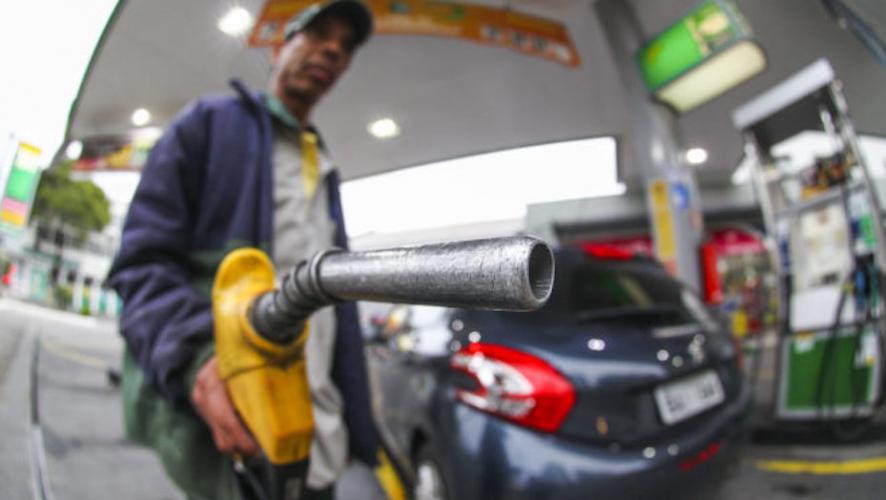
According to ANP Research, the Highest Price of Gasoline Found in Brazil Reached R$ 5.85 at a Gas Station in Angra dos Reis, RJ.
In Brazil, Angra dos Reis sets a record for the price of gasoline, reaching R$ 5.85. The information comes from the National Agency of Petroleum, Natural Gas and Biofuels through a survey conducted between December 8 and 14. The last price adjustment for gasoline and diesel made by Petrobras at the refinery occurred last month.
Also Read
- Operation Car Wash 70 Targets Fraud in R$ 6 Billion Contracts for Petrobras Ship Leasing
- Many Offshore Job Openings in Various Roles for IMMEDIATE Hiring in RJ.
- 100 IMMEDIATE Job Openings for High School Professionals Announced Yesterday in RJ
- The recruitment for the Peregrino C platform is ongoing, with 350 new offshore and onshore job openings anticipated by Equinor.
December was the month when gasoline reached the highest price in history for consumers in Brazil. During the same period, the maximum price of a liter of ethanol reached R$ 5.47 in Pará, and diesel reached R$ 4.98 in Minas Gerais.
Although the price of gasoline has increased significantly, the average price of gasoline, ethanol, and diesel in Brazil last week was R$ 4.52, R$ 3.10, and R$ 3.72, respectively.
-
Government unlocks R$ 554 million for a highway that has been requested for decades and accelerates the duplication of BR.
-
Without bricks, without cement, and without endless construction: the cardboard house that is assembled in modules and can be moved.

-
Billions of barrels on the equatorial margin could lead Amapá to double its oil production in Brazil — the state aims to enter the route of companies in the Campos Basin, attract investments, and boost jobs and businesses in the oil and gas sector.

-
Without bricks, without cement, and without endless construction: the cardboard house that is assembled in modules and can be moved.

Petrobras is responsible for fuel price adjustments, and it ties the prices to international market values and exchange rates; therefore, any variation abroad directly impacts domestic prices.
According to Fernanda Delgado, a professor and researcher at FGV Energia, “The increase was already expected. It’s a normal end-of-year movement due to winter in the northern hemisphere, which raises fuel consumption, and it should remain at this level until the coming months.”
According to the researcher, Brent (the international reference value for crude oil) increased from US$ 60 to US$ 66 last month, in addition to the rising dollar.
“The forecast is that fuel prices will decrease starting in March next year. But it all depends, primarily, on the geopolitical game involving the United States, Russia, and the Middle East,” concludes Fernanda.
Bolsonaro stated this week that breaking Petrobras’s monopoly is one way to lower prices for consumers, and he and his team are doing everything possible to reduce fuel prices.
“At the refinery, the price is low, but it remains high [for consumers] because of state taxes, mainly ICMS [Tax on the Circulation of Goods and Services], and then, there is a monopoly in distribution, and we are seeking to break this monopoly to reduce prices. Only with competition can it decrease,” said Bolsonaro.
According to ANP, since January 2002, a price liberalization regime has been in effect in Brazil throughout the entire production, distribution, and resale chain of fuels and petroleum derivatives.
“Thus, there is no type of price control, nor setting of maximum and minimum values, or requirement for prior official authorization for fuel price adjustments at any stage of commercialization,” the Agency informed in a statement.









Seja o primeiro a reagir!