





 Portuguese
  English
  Spanish
  3 min of reading


Company Showcases Innovations Applied in the Libra Block at the Industry’s Most Important Offshore Event
Rio de Janeiro – Petrobras will highlight, at the 50th edition of the Offshore Technology Conference (OTC), from May 6 to 9 in Houston, its technological journey to enable one of the main exploration and production projects in its portfolio: the development of the Libra block in the pre-salt of the Santos Basin. As the main event for offshore oil and gas in the sector, OTC will bring together experts, academic representatives, operators, and suppliers from around the world interested in exchanging experiences about the most modern technological solutions applied to the industry.
Libra is one of the company’s major bets for the future not only due to its production potential but also because of its ability to drive the development of innovative technologies for the entire sector. The five technologies employed in Libra were crucial for Petrobras to achieve a record monthly average production from a single offshore well in this block. The volume produced by this well reached over 60,000 barrels of oil equivalent (boe) per day.
-
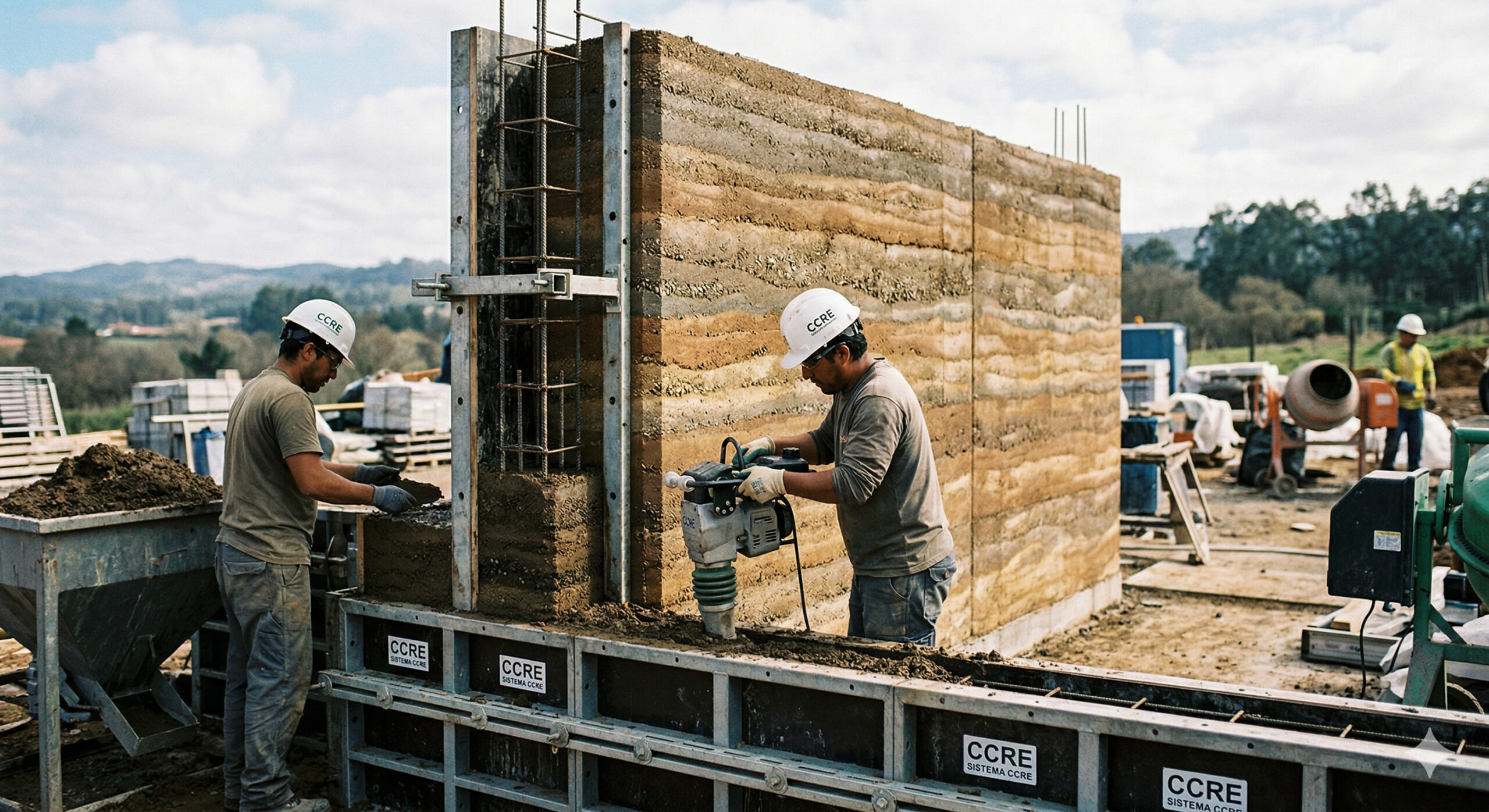
Without cement, without steel, and using only earth and recycled cardboard, engineers have created a construction system that drastically reduces carbon emissions and could change the way houses are built around the world.
-
Alert in the electric sector: excess solar energy triggers overload in the Brazilian electrical system, forces the operator to shut down power plants, and exposes an unexpected risk that could affect stability and energy costs.

-
Russia spent $5 billion and 28 years modernizing a nuclear warship that had been inactive since 1997. The Admiral Nakhimov returned to the sea in August 2025 as the heaviest surface combat ship in the world, with 176 missile launchers, including hypersonic Zircon missiles.

-
James Webb finds 300 galaxies with mysterious scars, and this discovery may show that the universe was born much more violently than astronomers had imagined.


Special Session
On the first day of the OTC (May 6), Petrobras will present a special session fully dedicated to Libra, consisting of seven presentations. Innovations applied in the project will be discussed, such as the FPSO (floating production, storage and offloading unit) that allows the high-rate production of the well by reinjecting all produced gas, including the carbon dioxide present in it, avoiding its combustion. This is an environmentally friendly innovation that accelerates the understanding of the behavior of the oil reservoir and contributes to reducing CO2 emissions. Another highlighted solution will be the turret, where production and injection lines are connected – which has the largest vertical load capacity in the industry.
Technical Capacity
“We will show at OTC the unique experience of developing Libra, a project without parallel in the industry due to the high presence of carbon dioxide and contaminants in the reservoirs, located in ultra-deep waters. These peculiar conditions led our professionals, together with our partners Shell, Total, CNOOC, and CNPC and suppliers, to develop unprecedented technologies to make production in this area feasible,” says the Production Development and Technology director, Rudimar Lorenzatto. He will present on pre-salt results, our participation in the latest exploratory block auctions, and production prospects at a breakfast for OTC guests, also on Monday (May 6).
In the technical sessions, company representatives will address the challenges involved in managing reservoirs in the Campos Basin, as well as solutions to increase the economic attractiveness of offshore projects, among other topics.
OTC Award
During the conference, engineer Carlos Mastrangelo, retired from Petrobras, will receive the OTC Distinguished Achievement Award for Individuals for developing the concept of FPSO as a definitive production system and its regulation in Brazil and the USA.
“Today, if Petrobras is the largest FPSO operator in the global industry and holds the most expertise in this segment, it is largely due to the pioneering work of professionals like Mastrangelo, who transformed this type of unit – originally oil tankers – into authentic production systems. Since they do not require the installation of pipeline infrastructure and can store oil, FPSOs have become a more efficient alternative for our company,” says Rudimar.
This is the second time in the 50-year history of the North American edition of OTC that a Brazilian has received this award. The first was awarded to engineer Marcos Assayag. In 2007, when he was the executive manager of Petrobras Research Center (Cenpes), Assayag was recognized for his contribution to the development of technologies for deep and ultra-deep waters.
Petrobras has also received three OTC awards for innovations applied in offshore: in 1992 for the set of pioneering technologies used in the Marlim field in the Campos Basin; in 2001 for the strategy to develop Roncador; and in 2015 for innovations conceived to enable production in the pre-salt of the Santos Basin.
Source: Petrobras








Seja o primeiro a reagir!