





 Portuguese
  English
  Spanish
  5 min of reading
  0 comments


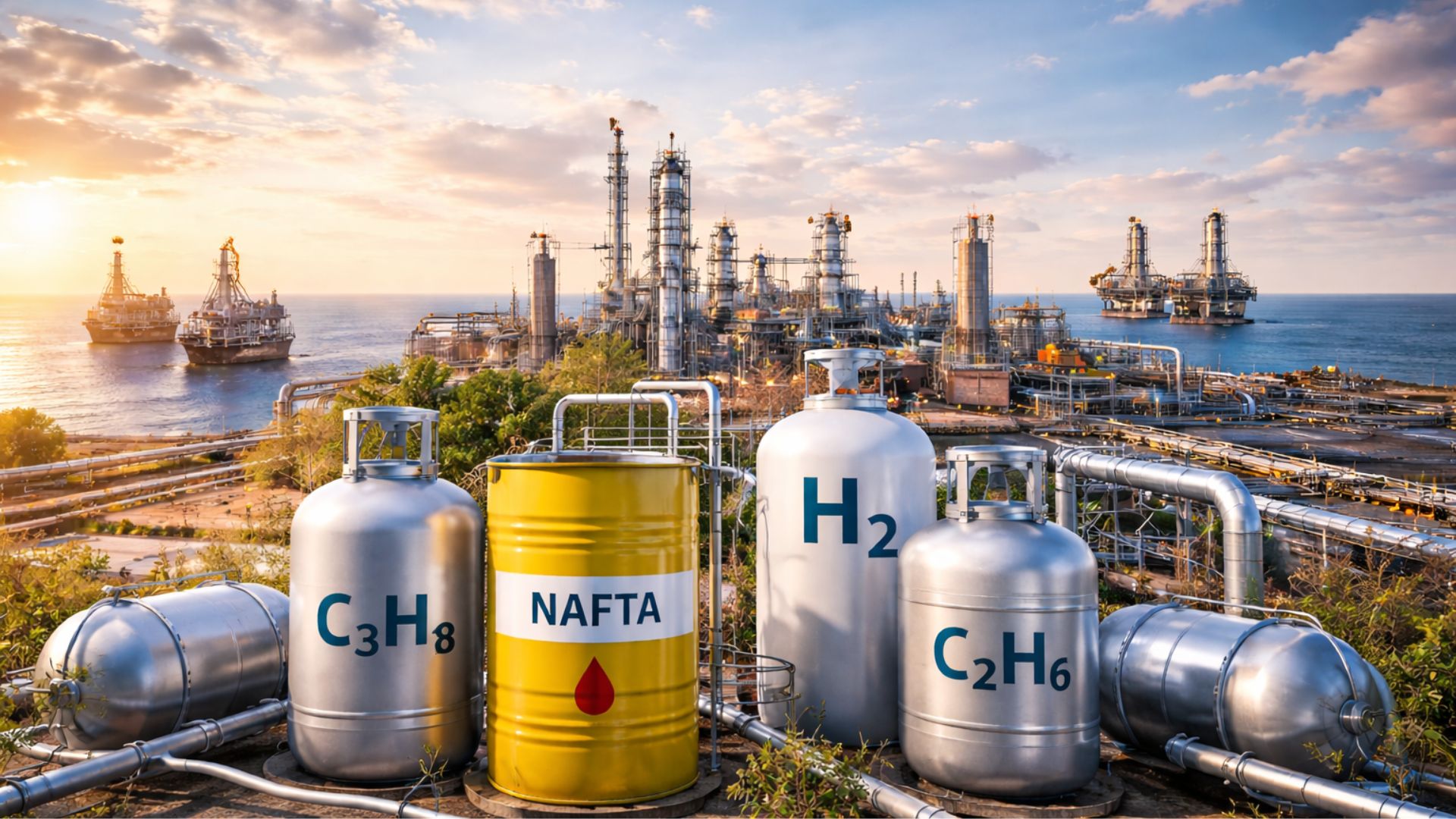
Petrobras Announces New Commercial Contracts with Braskem, Involving Strategic Supply of Naphtha, Ethane, Propane, and Hydrogen, Ensuring Industrial Predictability and Investments Starting in 2026
On December 18, 2025, Petrobras announced, through a material fact to the market, the celebration of new long-term commercial contracts with Braskem, due to the proximity of the expiration of the currently active agreements. The contracts involve the supply of naphtha, ethane, propane, hydrogen, and propylene, effective from 2026, with estimated values that, when combined, exceed US$ 17 billion.
Commercial Contracts Between Petrobras and Braskem Strengthen Industrial Integration
The agreement represents one of the most significant movements in the energy and petrochemical sector in Brazil, as it ensures operational predictability, supply stability, and alignment with international market conditions. Petrobras and Braskem thus reinforce a strategic partnership that supports a large part of the national petrochemical chain.
The new commercial contracts cover different essential products for the petrochemical industry and have terms ranging from five to 11 years. Petrobras emphasized that the negotiation took place under market conditions, observing criteria of transparency, fairness, and corporate governance.
-
A study confirms that the natural gas sector will reduce greenhouse gas emissions in Brazil by 0.5% and accelerate the energy transition by 2026.

-
Petrobras implements a severe adjustment and confirms a 55% increase in the price of aviation kerosene with a proposal for installment payments for the companies.

-
The rise in oil prices could ensure an extra revenue of R$ 100 billion for the Federal Government, indicates a recent economic study.

-
Naturgy begins an investment of R$ 1.6 million to expand the gas network in Niterói and benefit thousands of new residences and businesses.

The initiative guarantees legal security and predictability for both Petrobras, which ensures the flow of its production, and for Braskem, which maintains the continuous supply of strategic raw materials for its industrial plants in Brazil.
This type of long-term contract is essential in capital-intensive sectors, where investment decisions depend on stability and advance planning.
Supply of Naphtha from Petrobras to Braskem is the Main Agreement
The largest contract signed involves the purchase and sale of petrochemical naphtha, intended for the supply of Braskem’s units in the states of São Paulo, Bahia, and Rio Grande do Sul. The agreement has a term of five years, starting on January 1, 2026, with an estimated value of US$ 11.3 billion.
The prices of naphtha will be referenced to the international market, ensuring alignment with global industry practices. Furthermore, the contracts establish a mandatory minimum monthly withdrawal, with the possibility of negotiating additional volumes according to Braskem’s demand. This structure provides operational flexibility and contributes to the balance between supply and consumption throughout the contractual period.
Naphtha Volume Grows Until 2030 Based on Commercial Contracts
The contracted quantities of petrochemical naphtha may reach up to 4.116 million tons in 2026, with progressive growth over the following years. In 2030, the maximum expected volume may reach 4.316 million tons annually.
This increase aligns with Braskem’s industrial strategy to maintain competitiveness and production efficiency, while Petrobras strengthens its refining and logistics planning. The predictability of volumes is one of the main benefits of long-term commercial contracts, reducing risks and operational costs.
Ethane, Propane, and Hydrogen Expand Partnership in Rio de Janeiro
Another relevant axis of the agreements involves the supply of ethane, propane, and hydrogen for Braskem in the state of Rio de Janeiro. This contract has an estimated value of US$ 5.6 billion and a term of 11 years, reinforcing the long-term commitment between the companies.
Between 2026 and 2028, the currently contracted quantity will be maintained, equivalent to 580 thousand tons annually in ethylene equivalent, with production and supply from Reduc (Duque de Caxias Refinery), operated by Petrobras. Hydrogen is an essential input in petrochemical industrial processes, in addition to gaining increasing importance in energy efficiency strategies.
Expansion of Hydrogen and Derivatives Supply Starting in 2029
From 2029 to 2036, the commercial contracts foresee a significant increase in supply, which may reach 725 thousand tons annually in ethylene equivalent. This volume is associated with a Braskem expansion project that is still under development.
The supply may occur both through Reduc and the Boaventura Energy Complex, enhancing logistical security and Petrobras’s operational capacity. This flexibility reinforces the strategic nature of the agreement, which goes beyond replacing old contracts and projects future growth.
Sale of Propylene Complements Commercial Contracts
In addition to the main inputs, Petrobras signed contracts for the sale of propylene, with an estimated value of US$ 940 million and a term of five years starting from May 18, 2026. The product will be supplied by different refineries of the state company.
The Reduc in Rio de Janeiro may provide up to 100 thousand tons per year, while Recap in São Paulo may reach up to 140 thousand tons annually. Refap in Rio Grande do Sul will have volumes scaled over the contractual period, ranging from 14 thousand to 60 thousand tons per year. Prices will also be tied to international references, maintaining consistency with other commercial contracts established between Petrobras and Braskem.
Governance, Transparency, and Analysis of Commercial Contracts
Petrobras reported that the contracts were classified as TPR (Transaction with Related Parties), being negotiated under strictly reciprocal conditions and aligned with the market. All operations were analyzed by the Statutory Audit Committee (CAE).
This process reinforces corporate governance and legal security of the contracts, a fundamental aspect for the credibility of companies with investors and regulatory agencies. Transparency is a central element in operations of this magnitude, especially when involving companies with a history of corporate integration.
Strategic Impacts for Petrobras, Braskem, and the National Industry
The new commercial contracts consolidate a strategic relationship that supports a significant part of the Brazilian petrochemical industry. For Petrobras, the agreements ensure stable demand for its derivatives and improve revenue predictability in the medium and long term.
For Braskem, the security in the supply of naphtha, ethane, propane, and hydrogen reduces operational risks and supports industrial expansion plans. At the sector level, the contracts contribute to the stability of the productive chain, preserving investments, jobs, and international competitiveness.
This is a structuring movement, which reinforces the roles of both companies in Brazil’s economic and industrial development in an increasingly challenging global scenario.









Seja o primeiro a reagir!