





 Portuguese
  English
  Spanish
 4 min of reading
  0 comments


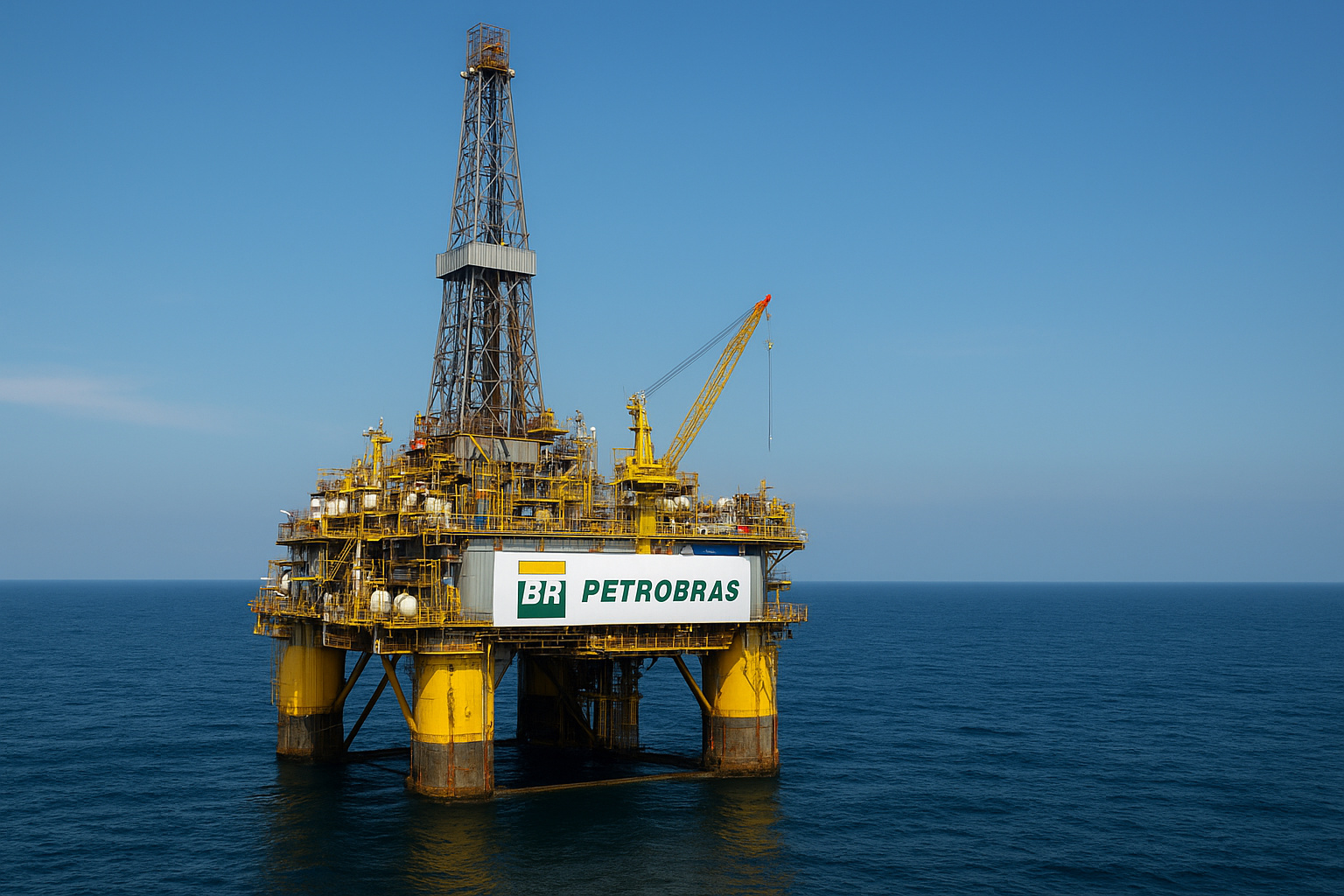
Petrobras announced a new oil discovery in the Campos Basin, and this news has gained prominence because it could transform the dynamics of national production in the coming decades. The state-owned company identified a hydrocarbon-bearing interval in the North Brava block, located about 105 kilometers off the coast of Rio de Janeiro. According to Petrobras’ website, the confirmation occurred due to electrical profiles, signs of gas, and fluid samples. These materials are already being sent for laboratory analyses that, consequently, will help determine the quality of the reservoirs.
Although tests are still ongoing, Petrobras immediately started the process of evaluating the commercial potential of the accumulation. Thus, the company maintains its strategy to accelerate projects that can strengthen the country’s energy autonomy. This discovery reignites debates about technological development, the history of Brazilian exploration, and the future of national production.
The Strategic Importance of the Discovery
The Campos Basin has immense historical relevance. Since the 1970s, it has consolidated itself as one of the pillars of oil production in Brazil. According to the National Oil Agency (ANP), this region sustained a significant part of national production for many years. Therefore, every new discovery there reinforces the strategic role of the area and highlights the continuity of Petrobras’ investments.
-
A major turn in the Justice system suspends tax increases and directly impacts oil and gas companies in Brazil by affecting costs, contracts, and financial planning, leaving uncertain what could happen to the sector if these costs had increased.

-
Brava Energia begins drilling in Papa-Terra and Atlanta and could change the game by reducing costs in oil while increasing production and strengthening competitiveness in the offshore market.

-
Petrobras surprises the world again by announcing a new discovery in the pre-salt with excellent quality oil.

-
Offshore industrial demand in Macaé skyrockets with the recovery of oil and gas and could grow by up to 396% by 2026 in the Campos Basin.
In addition, the North Brava block, where the new discovery emerged, was acquired in December 2022 in the first cycle of the ANP’s Permanent Offering of Sharing. As Petrobras holds 100% of the stake, it can make decisions quickly and align the entire process with the company’s strategic planning. This operational autonomy facilitates the advancement of investigations and, at the same time, increases the efficiency of exploration.
According to Petrobras’ website, technologies such as Big Data, supercomputing, and artificial intelligence have allowed real-time analyses and reduced geological uncertainties. These resources enhance the company’s accuracy and, therefore, make the exploratory process safer.
The Historical Context of the Campos Basin
The history of the Campos Basin is directly connected to the advancement of national technology. During the 1980s and 1990s, for example, Brazil developed advanced deep-water exploration techniques. According to the ANP, this period established the country as a global reference in this area. Consequently, it reinforced Petrobras’ image as one of the global leaders in this type of operation.
However, over the years, some fields began to show signs of maturity. Still, Petrobras decided to invest in new platforms, modernize systems, and enhance the recovery factor. According to the Jornal do Brasil, this approach yielded important results, as the company made two discoveries deemed “exceptional” in just one week. One of them occurred in the Santos Basin and the other in the Campos Basin itself.
This information shows that the new discovery is not an isolated event. In fact, it is part of a continuous cycle of technological evolution and exploratory expansion. Petrobras maintains a trajectory marked by innovation, resilience, and strategic vision.
Prospects for the Future of Exploration
With the data collected from the pioneering well 1-BRSA-1383A-RJS, Petrobras will continue drilling until it reaches the expected depth. The laboratory results will indicate the recoverable volume and, consequently, define the commercial potential of the discovery. If the numbers confirm viability, the company may plan new platforms and increase production in the region.
According to the Petronotícias website, this discovery could boost the recovery of domestic oil production growth. Furthermore, it could strengthen Brazil’s position as a global leader in deep-water exploration. Although the process still requires detailed studies, the outlook is positive because the region has a favorable history.
Petrobras understands that each new discovery requires technical care. However, the company states that the use of modern technologies reduces risks and improves the accuracy of analyses. This set of factors creates a favorable environment for the sustainable growth of national production.
Relevance for the Brazilian Economy
The new discovery has a strong economic impact. By increasing national reserves, it reinforces Brazil’s energy autonomy. This reduces imports, strengthens investments, and at the same time, stimulates industrial sectors related to oil. According to the federal government, the oil and gas sector generates billions in taxes that support essential public policies.
Moreover, the discovery benefits the chemical industry, as many products use petroleum derivatives as raw materials. Thus, production chains for paints, plastics, and resins gain strength. The entire economic structure benefits when the country increases its production capacity.
In statements released on Petrobras’ website, President Magda Chambriard stated that the state-owned company “has gone back to exploring oil in Brazil.” This phrase symbolizes a renewed focus on national production and reveals a clear intention to strengthen the country as a global producer.
Challenges and Risks Ahead
Even with promising prospects, Petrobras faces technical and environmental challenges. Characterizing the reservoir depends on meticulous and often lengthy testing. At the same time, there is pressure from environmental institutions for the country to reconcile fossil fuel exploration with energy transition goals.
Still, Petrobras asserts that technologies such as AI and big data reduce risks and enhance operational safety. According to the state company’s website, these tools make analyses faster and more accurate. This shows that the company invests in methods that balance efficiency, safety, and environmental responsibility. See more news about Petrobras here.
The discovery by Petrobras in the Campos Basin represents much more than a geological event. It symbolizes the union between technology, strategy, and national history. If commercial viability is confirmed, Brazil could increase its production, strengthen its economy, and consolidate its leadership in deep waters. Petrobras reaffirms its role as a protagonist in the country’s energy development.








Seja o primeiro a reagir!