





 Portuguese
  English
  Spanish
 6 min of reading
  0 comments


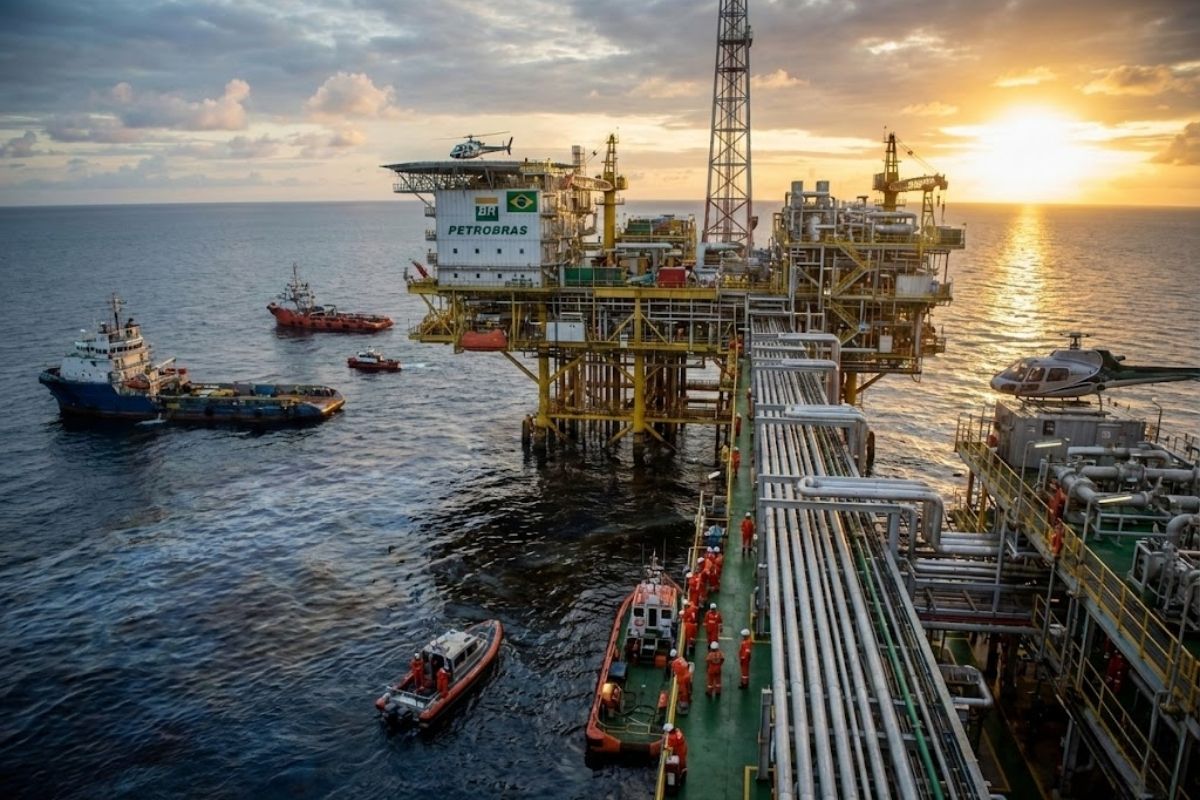
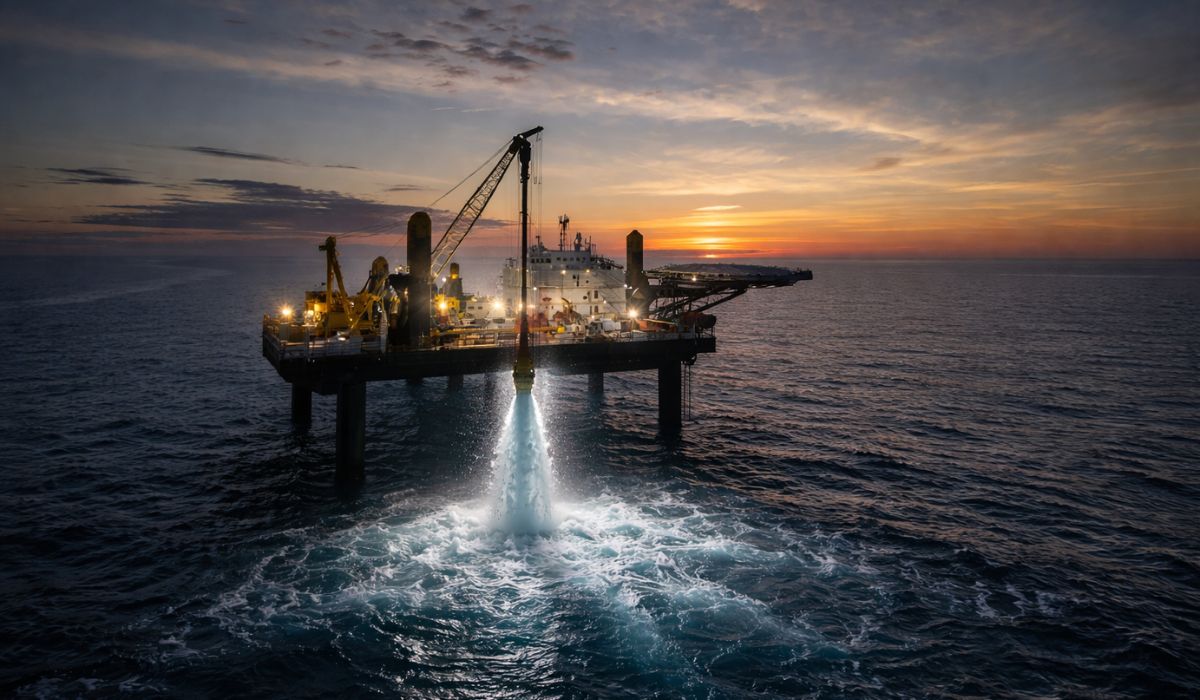
Petrobras Interrupted Exploratory Drilling in the Mouth of the Amazon on Tuesday (6) After Identifying Fluid Loss in Two Auxiliary Lines of the Drillship Connected to the Morpho Well, 175 km from Amapá. Leak Was Contained; Ibama Informed; No Oil Was Spilled. Operation Pauses for Evaluation and Repair.
According to G1’s portal, Petrobras announced the suspension of exploratory drilling in the Mouth of the Amazon after detecting fluid loss in two auxiliary lines, support pipes connecting the drillship to the Morpho well, in deep water, about 175 kilometers off the Amapá coast. The incident was contained and isolated immediately, according to the company.
The occurrence did not involve oil, and Ibama was notified about the case. Nevertheless, the interruption reignites the controversy surrounding the Equatorial Margin, an area that extends from Amapá to Rio Grande do Norte and concentrates a dispute between environmental criticism and the defense of energy potential by oil specialists.
What Happened at the Morpho Well and Why Petrobras Stopped Drilling
Petrobras reported that on Sunday (4), it identified drilling fluid loss in two auxiliary lines connecting the drilling rig to the Morpho well.
-
Offshore industrial demand in Macaé skyrockets with the recovery of oil and gas and could grow by up to 396% by 2026 in the Campos Basin.
-
Offshore industrial demand in Macaé surges with the recovery of oil and gas and could grow by up to 396% by 2026 in the Campos Basin.
-
Brazilian giant expands borders in the Southeast: Petrobras confirms new oil discovery in ultra-deep waters in the pre-salt of the Campos Basin.

-
Alert in the global energy market: Severe tropical cyclone hits the coast and disrupts gas production at major plants in Australia, threatening global supply.


These lines are essential support structures for the operation because they connect the drillship to the well during the exploratory research phase.
As soon as the leak was identified, Petrobras claims that the loss was immediately contained and isolated. Even with the control of the event, the company decided to halt drilling to carry out a direct technical procedure: bringing the pipes to the surface, conducting assessment, and making necessary repairs before resuming work.
Petrobras also emphasized that there are no problems with the rig or the well, and that both remain in a safe condition.
In the same vein, the company stated that the occurrence does not pose risks to the safety of the drilling operation.
What Material Leaked: Drilling Fluid, the “Mud” Used in the Process
The material released was the drilling fluid, known as “mud,” used to support the advance of the drill bit and the stability of the well.
This fluid has clear operational functions: cooling the drill bit, removing rock fragments, and controlling pressure in the well during drilling.
According to Petrobras, it is a water-based fluid, with low-toxicity additives, common in offshore drilling.
The company also stated that the fluid meets permitted toxicity limits and is biodegradable, asserting that there is no risk to the environment or the population.
This set of information explains why, despite Petrobras having suspended drilling, the official communication emphasizes the maintenance of safety conditions and the implementation of control measures.
Ibama Was Informed and Reinforces That There Was No Oil in the Spill
Ibama reported that it has already been notified about the case and that there was no oil spill. The president of Ibama, Rodrigo Agostinho, stated that a depressurization problem occurred, which caused the leak of a liquid described as hydraulic fluid, of biodegradable nature.
Agostinho also declared that there is no oil in the spill and that the rig has not yet reached oil, something that, according to him, will only occur in February. In practice, this means that the current stage remains within the logic of exploratory research, without production.
According to the president of Ibama, Petrobras has been in contact with the agency since Monday (5) and the emergency plan is functioning as expected. He also stated that in the coming days, Petrobras will make repairs and resume operations.
Where the Drilling Is Located: 175 km from Amapá and 500 km from the Mouth of the Amazon River
The drilling takes place in block FZA-M-059, in open water, about 175 km from the Amapá coast and 500 km from the mouth of the Amazon River. The location helps to dimension the type of operation involved, typical of deep waters, with logistics and monitoring that depend on the drillship and technical connections with the well.
Petrobras describes the area as located in the far west of the Brazilian Equatorial Margin and covering about 268,000 km². This extent includes the continental shelf, the slope, and the deep water region, up to the limit between the continental and oceanic crusts.
This geographical cut is central to understanding why the episode gains repercussion. The Equatorial Margin is treated as a strategic exploratory frontier, but it also concentrates resistances and high environmental demands.
Ibama Authorization and the Status of Exploration: Research, Not Production
In October 2025, Ibama authorized Petrobras to drill a well in deep waters in the Mouth of the Amazon region, located in the Equatorial Margin, which extends from Amapá to Rio Grande do Norte. The authorization granted is exclusively for exploratory research, without permission for production.
The drilling by Petrobras began immediately after Ibama’s authorization. The informed expectation is that the exploration will last about five months, and the concrete effects of the initiative can only be observed after this period.
In this phase, therefore, there is no oil production. The goal is to collect geological data to verify the presence of oil and gas on a commercial scale.
Even without production, the stage is treated as relevant and, at the same time, controversial within the public debate.
Why the Equatorial Margin Divides Opinions
Activity in the region is heavily criticized by environmentalists, while oil specialists emphasize its importance for production.
This contrast explains why a suspension, even if related to a contained leak and without oil, gains symbolic weight in the debate.
On one side, environmental criticism often emphasizes socio-environmental sensitivity, operational risk, and the need for maximum caution in areas of high complexity.
On the other side, those who highlight the energy importance point to the potential for new volumes and the relevance of expanding production alternatives, especially in an area described as a new frontier for exploration.
In this context, any incident becomes fuel for the narrative dispute, even when official communications reinforce control, safety, and the absence of oil spill.
Exploratory Potential: Estimates from the Government, the MME, and the EPE
The exploratory potential is one of the pillars of interest in the Equatorial Margin. The government estimates that the Equatorial Margin would have reserves that would allow the exploration of 1.1 million barrels of oil daily.
The official comparison indicates that this is more than the capacity of the two main fields in the Santos Basin: Tupi, with about 850,000 barrels per day, and Búzios, which exceeded 900,000.
According to the Ministry of Mines and Energy (MME), it would be possible to extract up to 10 billion barrels of oil from the region.
Along the same lines, Brazil has a proven reserve of 16.8 billion barrels, described as sufficient to keep the country from needing to buy oil from other countries until 2030.
The Energy Research Company (EPE) estimates that the Mouth of the Amazon Basin has a recoverable volume of 6.2 billion barrels of oil equivalent. This estimate is part of a study that comprises a project dedicated to analyzing Brazilian sedimentary basins.
These numbers help to explain why Petrobras maintains focus on exploratory research, even amid controversy.
The debate intensifies because it involves scale, production expectations, and long-term strategic choices.
What Petrobras Says About Safety and Next Steps
Petrobras stated that it has adopted all control measures and notified the competent authorities. The company also reported that the fluid used meets permitted toxicity limits and is biodegradable, reinforcing the thesis that there is no harm to the environment or people.
The immediate operational plan of Petrobras, as described, is to bring the auxiliary lines to the surface for evaluation and repair. Once this is completed, the expectation, according to the president of Ibama, is that Petrobras will resume operations in the coming days.






-

2 pessoas reagiram a isso.