





 Portuguese
  English
  Spanish
  4 min of reading
  0 comments


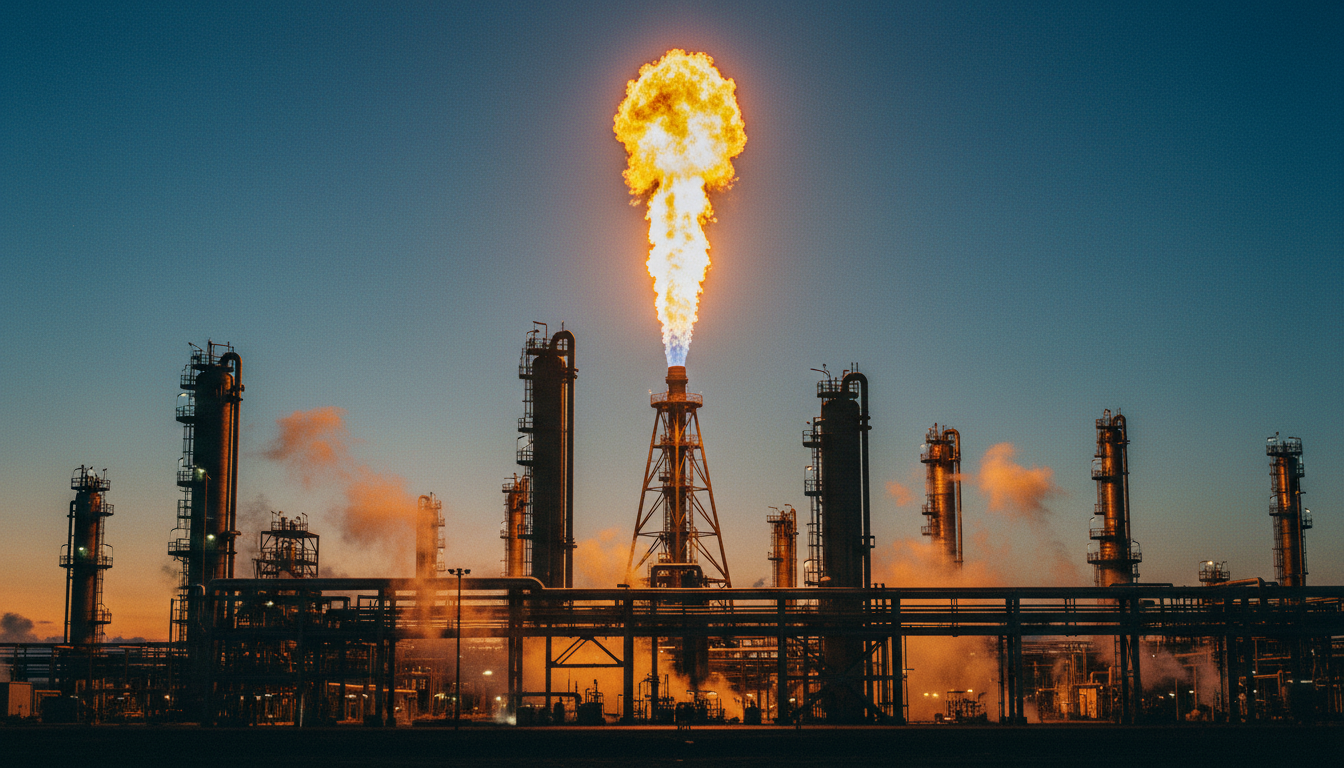
The Smart Tocha Petrobras uses artificial intelligence and computer vision to analyze the flame of the torches in real time, automatically adjusting steam injection and ensuring efficient combustion in six refineries across the country, with energy savings equivalent to the consumption of an entire city of 20,000 inhabitants
The Smart Tocha Petrobras is a system that few know outside the refining world, but it is quietly transforming how six of Brazil’s largest refineries control their emissions. Developed by Petrobras in partnership with Cenpes and PUC-Rio, the system uses artificial intelligence and computer vision to monitor the burning of gases in the torches — those giant flames visible at the top of the refineries — and automatically adjust steam injection to ensure complete combustion.
According to Nicolás Simone, Executive Director of Digital Transformation and Innovation at Petrobras, “the gains brought by the Smart Tocha in the refineries are equivalent to the energy supply of a city with about 20,000 inhabitants, seeking performance improvement and environmental compliance in operations.” Therefore, the impact goes far beyond a simple technological update.
How the Smart Tocha Petrobras sees the flame and corrects the burning by itself

The torches are mandatory safety equipment in refineries. Thus, they burn flammable or toxic gases that cannot be released directly into the atmosphere. For combustion to be complete and not generate pollutants, it is necessary to inject steam in an exact proportion to the volume of gases. Before the Smart Tocha Petrobras, this adjustment was done manually or with fixed parameters, which led to excess steam or incomplete burning.
-
Most oil platforms in the world operate at only 77% of their potential, and McKinsey has just calculated that artificial intelligence alone can cut costs in half and increase value by 30% in just one year.

-
After 10 months of work and six months of almost total dedication, a student creates a wind turbine that exceeds 500 revolutions per minute and could help lower electricity prices in urban areas.
-
Brazil exposes critical fragility in air defense, says site. With few Gepard, Igla-S, and RBS 70 systems, the country does not cover medium altitude and remains vulnerable to drones, missiles, and attacks that cause billions in recent wars.

-
The truce after the last cyclone is over: a new cold front is hitting five states between Saturday and Sunday with up to 100 millimeters of rain, risk of hail, and wind gusts that could cause damage from Rio Grande do Sul to São Paulo.
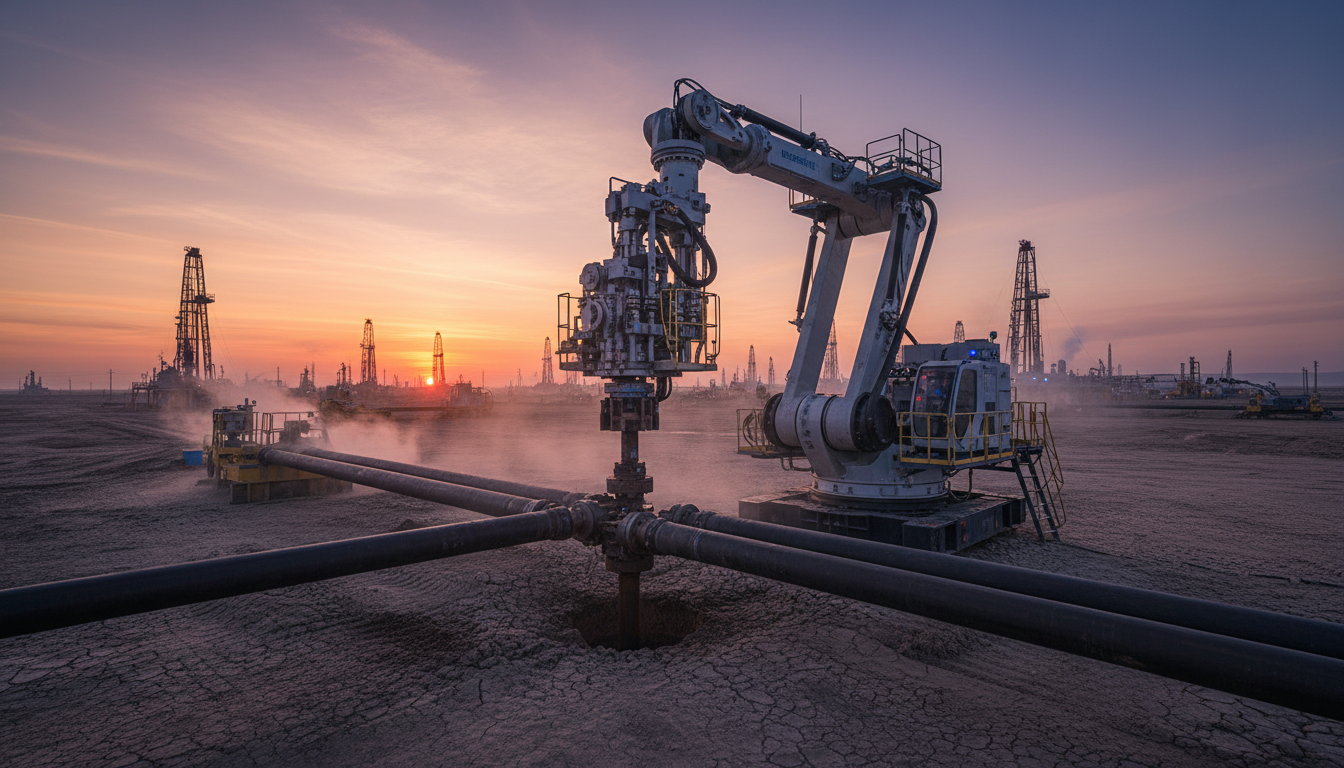
The AI of the Smart Tocha generates continuous images of the flame and detects deviations in burning quality in real time. When it identifies an anomaly, the system automatically adjusts the steam flow without any operator needing to intervene. Consequently, combustion remains efficient and safe 24 hours a day.
- Computer vision: cameras generate continuous images of the torch flame
- Machine learning: algorithms detect quality deviations in real time
- Automation: automatic adjustment of steam injection without human intervention
- Low cost: reuses existing infrastructure, investment focused on R&D
The six refineries that already operate with the Smart Tocha Petrobras

The system has been implemented in six Petrobras refining units spread across three Brazilian states. Thus, the coverage includes some of the largest refineries in the country:
- Repar (Presidente Getúlio Vargas) — Araucária, Paraná
- RPBC (Presidente Bernardes) — Cubatão, São Paulo
- Revap (Henrique Lage) — São José dos Campos, São Paulo
- Reduc (Duque de Caxias) — Duque de Caxias, Rio de Janeiro
- Recap (Capuava) — Mauá, São Paulo
- Replan (Paulínia) — Paulínia, São Paulo
The development involved the expertise of researchers from PUC-Rio, including professors Hélio Lopes, Simone Barbosa, Marcos Kalinowski, and Marcus Poggi from the Department of Computer Science. Additionally, the concept of the Smart Tocha Petrobras was formalized in mid-2020, and the implementation in the six refineries took place between 2023 and 2024. Thus, the law that requires oil companies to invest billions in technology finds in the Smart Tocha a concrete example of results.
RefTOP Program: US$ 300 million to make Brazilian refineries globally competitive

The Smart Tocha Petrobras is part of the RefTOP (World-Class Refining) program, which anticipated initial investments of US$ 300 million by 2025. Therefore, the program’s goal is to position Petrobras refineries among the best in the world in operational efficiency.
The gains from the Smart Tocha Petrobras include reductions in greenhouse gas emissions, savings in steam consumption, and improvements in energy efficiency. At Revap, in São José dos Campos, the results already demonstrate concrete improvements in energy efficiency and GHG reduction, as reported by PUC-Rio.
The profession of operator in large oil facilities gains a new dimension with systems like this, where AI supervision complements human experience.
What the Smart Tocha Petrobras still does not solve and what lies ahead
Despite significant advancements, the Smart Tocha Petrobras still has limitations. Petrobras has not disclosed exact percentages of emission reductions per refinery, nor specific return on investment metrics for the system. Additionally, detailed results by unit are not publicly available, only aggregated data.
However, the initiative demonstrates that artificial intelligence applied to refining is no longer a theoretical concept — it is operational reality in six Brazilian units. Still, scalability to other Petrobras refineries and the private sector remains the next challenge. On the other hand, the low implementation cost, based on cameras and software over existing infrastructure, suggests that expansion could be faster than in other industrial automation projects.




Seja o primeiro a reagir!