





 Portuguese
  English
  Spanish
  5 min of reading


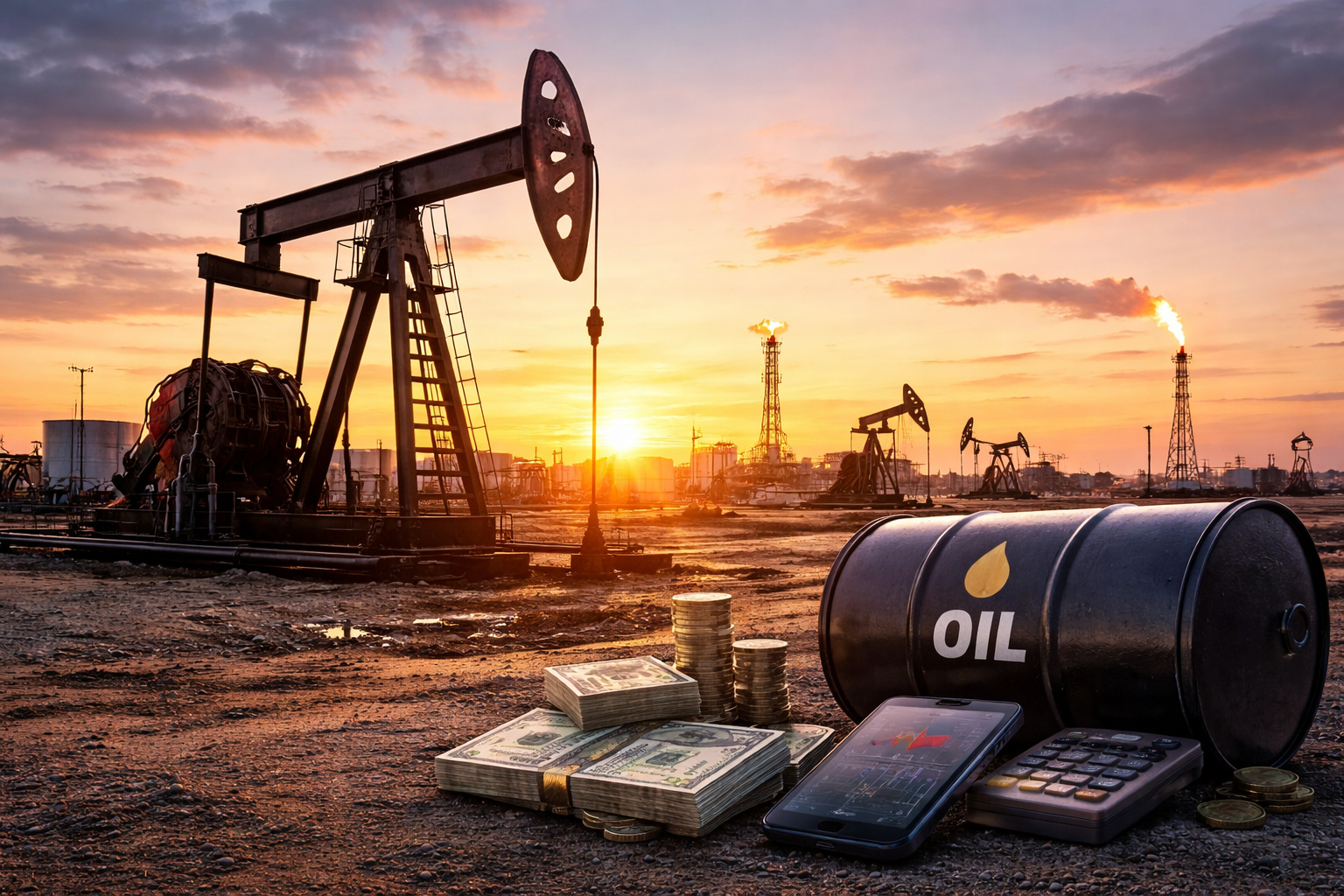
The international oil market has once again recorded strong volatility in light of signs of progress in a possible agreement between Russia and Ukraine. On Tuesday, WTI crude oil for February closed down 2.72%, falling US$ 1.54 to US$ 55.13 per barrel, its lowest level since 2021, according to data from the New York Mercantile Exchange (Nymex).
This movement did not occur in isolation. On the contrary, it reflects a combination of geopolitical factors, expectations about global supply, and adjustments in investors’ risk perception. As the conflict in Eastern Europe signals possible diplomatic pathways, the market begins to price in a scenario of greater oil availability in the medium term.
As a result, prices reacted quickly, putting pressure on WTI and other international benchmarks as well.
-
Lula reveals a masterstroke by Petrobras to undo a deal made by Bolsonaro, which involves the return of an important refinery that currently produces less than half of what was expected and makes Brazil dependent on international diesel.

-
A study confirms that the natural gas sector will reduce greenhouse gas emissions in Brazil by 0.5% and accelerate the energy transition by 2026.

-
Petrobras implements a severe adjustment and confirms a 55% increase in the price of aviation kerosene with a proposal for installment payments for the companies.

-
The rise in oil prices could ensure an extra revenue of R$ 100 billion for the Federal Government, indicates a recent economic study.


The Influence of the Russia-Ukraine Conflict on the Oil Market
Since the beginning of the war between Russia and Ukraine in February 2022, oil has incorporated a significant geopolitical premium. Russia has, historically, held a central position in the global energy market, ranking among the largest oil producers and exporters in the world.
According to data from the International Energy Agency (IEA), prior to the conflict, the country accounted for about 10% of global supply. With sanctions imposed by Western countries, part of that oil faced trading restrictions, altering flows and raising prices.
However, whenever signs of diplomatic thaw emerge, the market reacts preemptively. Thus, expectations of an agreement between Russia and Ukraine reduce fears of prolonged disruptions in supply, pressing prices down.
In this way, the advancement of negotiations is interpreted as a relieving factor for global supply.
WTI and Its Role as a Market Thermometer
The WTI (West Texas Intermediate) serves as one of the main benchmarks of the oil market. Traded on Nymex, it reflects not only the dynamics of production in the United States but also global expectations regarding supply, demand, and economic growth.
When WTI hits the lowest value since 2021, as it did in this movement, the signal emitted by the market is clear. Investors see an environment of lesser scarcity and greater balance between production and consumption.
According to the U.S. Energy Information Administration (EIA), the United States maintains high production levels, close to historic records. At the same time, stocks have shown signs of recovery in certain periods, which helps relieve pressure on prices.
Thus, the scenario combines domestic and international factors.
Global Supply in Focus and Change of Expectations
Beyond geopolitics, global supply has returned to center stage. OPEC+ countries maintain production control policies but face challenges in sustaining cuts in a lower price environment.
According to statements from the Organization of the Petroleum Exporting Countries (OPEC), the balance between defending prices and preserving market share has become more delicate. Meanwhile, producers outside the cartel, such as the United States, Brazil, and Guyana, have increased their production capacity in recent years.
Consequently, the market has begun to coexist with the perception of more abundant supply. This factor, combined with the expectation of an agreement in Eastern Europe, has reinforced the bearish pressure on WTI.


Global Demand and Economic Growth
On the demand side, global economic growth remains moderate. According to the International Monetary Fund (IMF), recent projections indicate a more contained expansion in developed economies, while emerging countries show uneven growth.
This scenario reduces the expectation of accelerated oil consumption. Additionally, the energy transition, albeit gradual, is starting to influence long-term strategic decisions.
Therefore, even though oil remains essential for the global economy, the growth rate of demand does not exhibit the same vigor observed in previous cycles.
Historical Context and Comparison with 2021
In 2021, the oil market was experiencing a distinct moment. After the pandemic shock, global economic recovery boosted demand, while supply reacted more slowly. As a result, prices rose consistently.
Now, the context has changed. Global production is more adjusted, demand is growing cautiously, and geopolitical risk is beginning to be re-evaluated. Therefore, WTI’s return to levels close to those of 2021 reflects a structural repricing, rather than just a one-off movement.
This adjustment shows how the energy market quickly responds to changes in the macroeconomic and political landscape.
Impacts for Producing and Consuming Countries
The fall in oil prices brings distinct effects around the world. For producing countries, lower prices reduce revenues and pressure public budgets. For consumers and importers, however, the movement tends to alleviate energy costs and inflation.
According to the World Bank, fluctuations in the price of oil continue to be one of the main vectors impacting emerging economies, influencing exchange rates, external accounts, and monetary policies.
In Brazil, for example, variations in international prices affect decisions regarding fuels, investments in the oil and gas sector, and strategies of state-owned and private companies.
An Increasingly Geopolitically Sensitive Market
The recent episode reinforces a central characteristic of the oil market. It remains highly sensitive to geopolitical events. Even initial signs of negotiation or ceasefire are enough to alter expectations and prices.
According to recurring analyses published by Reuters, investors closely monitor any movement involving major producers, export routes, and strategic alliances.
Thus, the advancement of a possible agreement between Russia and Ukraine serves as an immediate trigger for adjustments in the future oil market.
A Constantly Evolving Landscape
When observing the broader landscape, it is evident that oil continues to play a central role in the global economy. However, the current environment is marked by greater complexity.
Diversified supply, moderate demand, energy transition, and geopolitical tensions coexist simultaneously. As a result, sharp movements, such as the recent decline in WTI, are likely to recur.
Therefore, more than just looking at point prices, the market starts to analyze structural trends. In this context, the recent drop in oil prices and the lowest value of WTI since 2021 reflect a moment of deep reassessment of global energy expectations.









Seja o primeiro a reagir!