





 Portuguese
  English
  Spanish
  5 min of reading
  0 comments


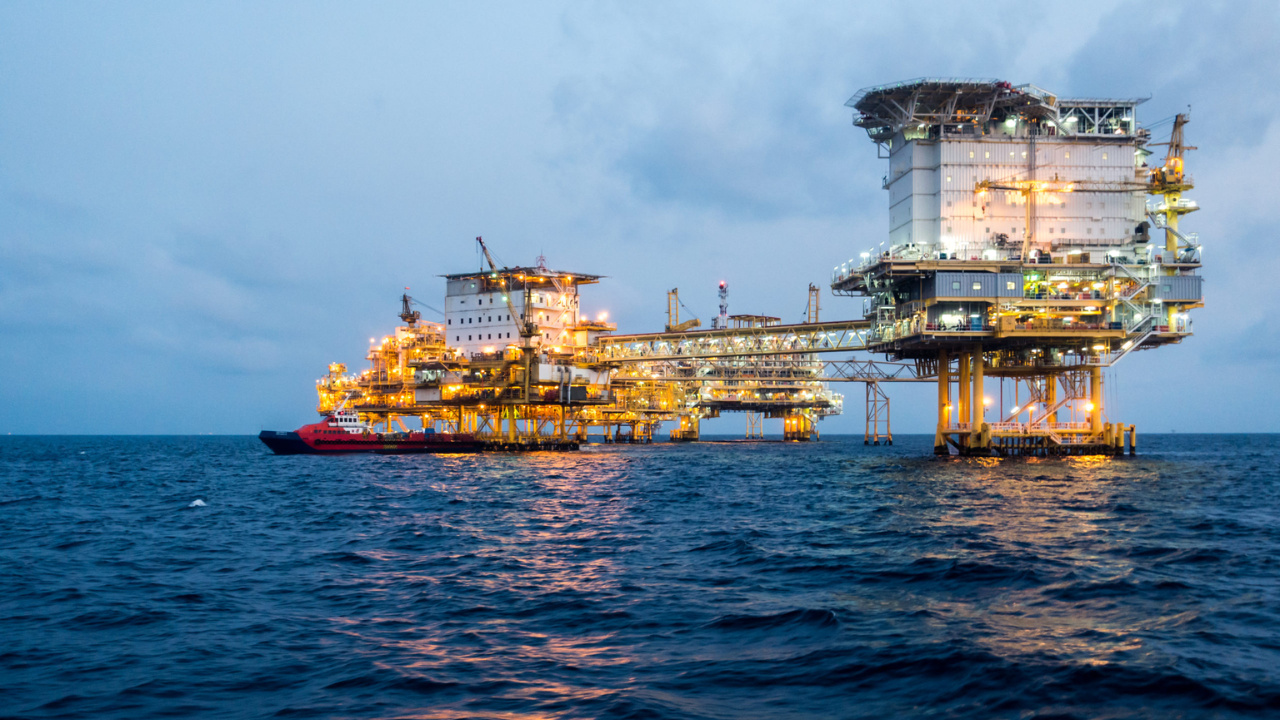
Oil-Producing Cities Lead Per Capita GDP in Brazil in 2023, According to IBGE, with Highlights on Saquarema and Maricá, While Capitals Regain Participation in the National Economy.
The presence of oil remains a decisive factor in the formation of the highest incomes per capita in Brazil. Data for 2023, released by IBGE (Brazilian Institute of Geography and Statistics), show that municipalities with strong activity in the extractive industry occupy the top positions in the per capita GDP ranking.
The absolute highlight is Saquarema, in Rio de Janeiro, which leads the national list.
In addition to Saquarema, cities like São Francisco do Conde, in Bahia, Maricá, in the state of Rio de Janeiro, Paulínia, in São Paulo, Presidente Kennedy, in Espírito Santo, and Ilhabela, also in São Paulo, are among those with the highest per capita GDPs.
-
Lula reveals a masterstroke by Petrobras to undo a deal made by Bolsonaro, which involves the return of an important refinery that currently produces less than half of what was expected and makes Brazil dependent on international diesel.
-
A study confirms that the natural gas sector will reduce greenhouse gas emissions in Brazil by 0.5% and accelerate the energy transition by 2026.

-
Petrobras implements a severe adjustment and confirms a 55% increase in the price of aviation kerosene with a proposal for installment payments for the companies.

-
The rise in oil prices could ensure an extra revenue of R$ 100 billion for the Federal Government, indicates a recent economic study.

Common to these municipalities are economies directly linked to oil extraction and refining, significantly increasing wealth generation when compared to the number of inhabitants.
Extractive Industry Concentrates Wealth in Few Municipalities
The dynamics observed in the numbers reveal a significant economic concentration. According to IBGE, the extractive industry is the main engine that raises the per capita GDP of these cities. Even though production volume has increased, the behavior of international prices has influenced the sector’s performance in 2023.
“Much of this influence refers to the concentration of these activities in few municipalities,” says Luiz Antonio de Sá, regional accounts analyst at IBGE.
The specialist explains that, despite production advancements, the decline in global prices weighed on the final result. “In the extractive industries, the effect of the reduction in international oil and iron ore prices was predominant in the result because the price drop [of 22.7%] was greater than the volume increase [of 9.2%],” Sá says.
Even in this scenario, municipalities strongly tied to oil maintained prominent positions in the national income ranking.
Oil Royalties Strengthen Municipal Coffers
Another central point in understanding these cities’ leadership is the collection of oil royalties. In 2023, Saquarema and Maricá were the municipalities that received the most resources from this source. Data from the National Agency of Petroleum, Natural Gas, and Biofuels (ANP) indicate that Saquarema collected R$ 1.33 billion, while Maricá received R$ 1.03 billion.
These amounts represent a significant portion of the R$ 6.04 billion distributed among all Brazilian municipalities during the period. The influx of these resources reinforces public investments and increases the added value of the local economy, directly impacting the per capita GDP.
Ranking of the Highest Per Capita GDPs in Brazil in 2023
The list published by IBGE highlights the weight of oil but also shows relevant exceptions. Check out the municipalities with the highest per capita GDPs in the country:
- Saquarema (RJ) – R$ 722,441.52
- São Francisco do Conde (BA) – R$ 684,319.23
- Maricá (RJ) – R$ 679,714.48
- Paulínia (SP) – R$ 606,740.73
- Presidente Kennedy (ES) – R$ 537,982.68
- Ilhabela (SP) – R$ 424,535.26
- Santa Rita do Trivelato (MT) – R$ 409,443.67
- Louveira (SP) – R$ 388,732.46
- São João da Barra (RJ) – R$ 382,417.42
- Extrema (MG) – R$ 377,790.63
In the case of Santa Rita do Trivelato, in Mato Grosso, the highlight does not come from oil but from agribusiness. The municipality is one of the agricultural hubs of the country, with intense production of soybeans, corn, and cotton, which sustains a high per capita GDP.
National Per Capita GDP Remains Distant from the Reality of the Leaders
While some municipalities report per capita incomes above R$ 700,000, the Brazilian average remains well below this threshold. In 2023, Brazil’s per capita GDP was R$ 51,693.92.
The calculation considers the division of the total GDP of the country, which reached R$ 10.9 trillion, by the estimated population of 207.8 million inhabitants. Just as happens at the municipal level, the indicator reflects the relationship between the production of goods and services and the population size.
Despite the high per capita GDP, cities strongly connected to oil extraction have lost relative space in the Brazilian economy. All seven municipalities that reduced their participation in the national GDP have economies linked to the extractive industry.
Maricá leads this decline, decreasing from 1.6% to 1.2% in participation of Brazil’s GDP. Following are Niterói, Saquarema, Ilhabela, Campos dos Goytacazes, Paulínia, and Itajaí. This trend indicates that, although oil generates high local income, its relative contribution to the overall economy can fluctuate based on prices and demand.
Capitals Recapture Protagonism After Recent Losses
While oil cities faced relative retraction, Brazilian capitals regained space in the national economy. Between 2020 and 2022, these cities lost 2.2 percentage points of participation, declining from 29.7% to 27.5%. In 2023, the index rose to 28.3%, although still below the pre-pandemic level.
In 2002, capitals accounted for 36.1% of Brazil’s GDP. The lowest point of this participation was recorded in 2022.
“We already had a scenario of deconcentration until 2020, but in the following two years we saw an intensification of the capitals’ participation loss, due to the context of reduced circulation of people and in-person activities,” analyzes Luiz Antonio de Sá.
Looking at a longer horizon, only two capitals increased their participation in the national GDP between 2002 and 2023. Porto Velho, in Rondônia, grew by 2.1%, while Maceió, in Alagoas, advanced by 0.5%.
“In both exceptions, we observe a gain related to industrial activities. In the case of Porto Velho, with hydropower generation, and in Maceió, coming from the transformation industry,” explains Sá.
These cases show that, besides oil, other industrial sectors can also drive local economies when there is productive concentration.
São Paulo Leads Participation in Brazilian GDP
In terms of the largest individual contributions to the national GDP, São Paulo maintained its leadership in 2023. The São Paulo capital accounted for 9.7% of all goods and services produced in the country, an increase of 0.3 percentage points compared to 2022.
Following are Rio de Janeiro, Brasília, Belo Horizonte, Manaus, and other large cities. Among the municipalities with a strong presence of oil, Maricá also ranks among the highest absolute GDP values.
Largest Participations in National GDP in 2023
- São Paulo (SP) – R$ 1.07 trillion (9.75%)
- Rio de Janeiro (RJ) – R$ 418.5 billion (3.82%)
- Brasília (DF) – R$ 365.7 billion (3.34%)
- Maricá (RJ) – R$ 134.1 billion (1.23%)
- Belo Horizonte (MG) – R$ 130.2 billion (1.19%)
- Manaus (AM) – R$ 127.6 billion (1.17%)
- Curitiba (PR) – R$ 120.1 billion (1.1%)
- Osasco (SP) – R$ 119.4 billion (1.09%)
- Porto Alegre (RS) – R$ 104.7 billion (0.96%)
- Guarulhos (SP) – R$ 97.5 billion (0.89%)
The data reinforces that oil remains a central element in the formation of wealth in several Brazilian municipalities, while the national economic scenario continues to be marked by movements of concentration and regional redistribution of productive activity.







Seja o primeiro a reagir!