





 Portuguese
  English
  Spanish
  5 min of reading
  0 comments


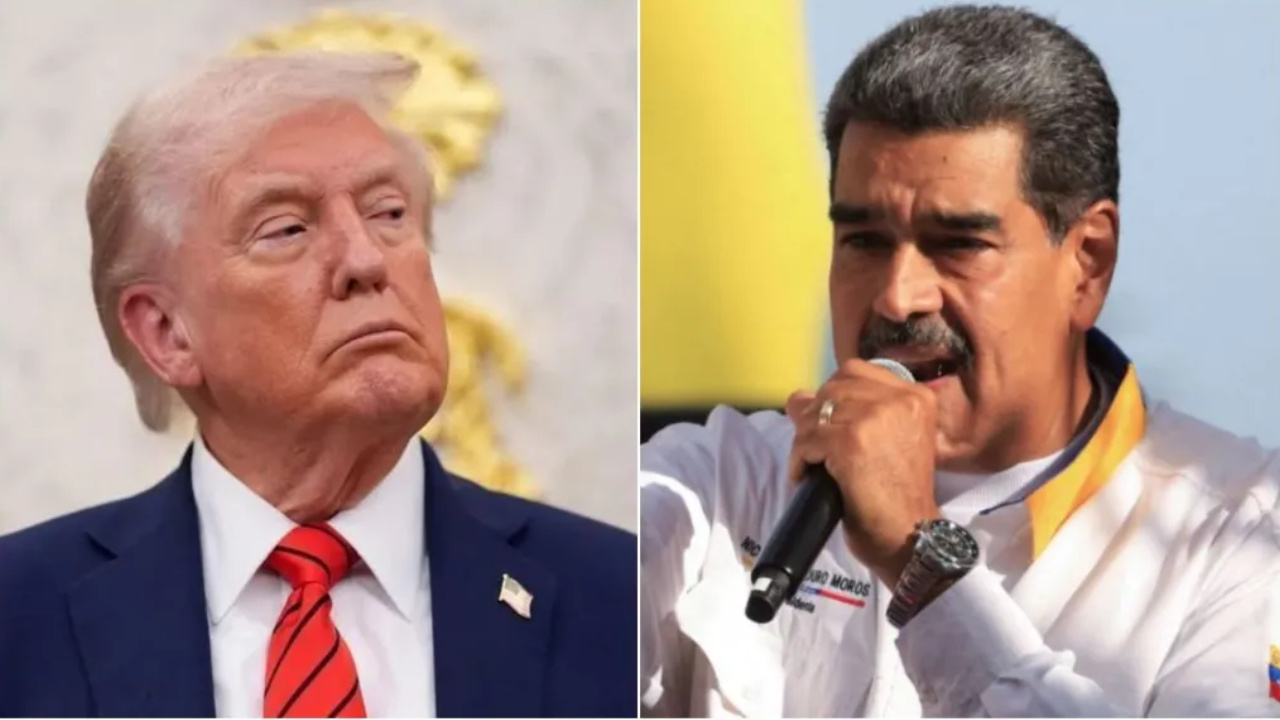
Venezuelan Oil Becomes Focal Point of U.S. Strategy After Trump Admits Direct Interest in Resources and Orders Total Blockade of Sanctioned Tankers.
For the first time, the President of the United States, Donald Trump, publicly admitted that U.S. military and strategic actions in the Caribbean do not only aim to combat drug trafficking. According to him, the American presence in the region is also directly linked to interest in oil, land, and other assets of Venezuela.
The statement alters the tone adopted by the White House until now and adds new elements to the already delicate relationship between Washington and Caracas, at a time of significant regional instability.
Trump’s Statement Exposes Economic Motivation
The admission occurred through a post on the social network Truth Social. Trump stated that the South American country is surrounded by the “largest armada ever assembled in the history of South America” and made it clear that the military presence in the region is conditional on the return of assets.
-
Lula reveals a masterstroke by Petrobras to undo a deal made by Bolsonaro, which involves the return of an important refinery that currently produces less than half of what was expected and makes Brazil dependent on international diesel.
-
A study confirms that the natural gas sector will reduce greenhouse gas emissions in Brazil by 0.5% and accelerate the energy transition by 2026.

-
Petrobras implements a severe adjustment and confirms a 55% increase in the price of aviation kerosene with a proposal for installment payments for the companies.

-
The rise in oil prices could ensure an extra revenue of R$ 100 billion for the Federal Government, indicates a recent economic study.


According to the American president, the United States military will continue operating around Venezuela “until they return to the United States of America all the oil, land, and other assets they stole from us.” He also stated that Nicolás Maduro’s government uses these resources to finance crimes such as drug trafficking, human trafficking, kidnappings, and murders.
In the same statement, Trump announced tougher measures involving Venezuelan oil. He ordered a total and complete blockade of all sanctioned tankers entering and leaving the country.
“For the theft of our assets and for many other reasons, including terrorism, drug trafficking, and human trafficking, the Venezuelan regime has been designated as a foreign terrorist organization. Therefore, today, I am ordering a total and complete blockade of all sanctioned tankers entering and leaving Venezuela. The illegal immigrants and criminals that Maduro’s regime sent to the United States during the weak and inept Biden administration are being returned to Venezuela at an accelerated pace. The United States will not allow criminals, terrorists, or other nations to steal, threaten, or harm our nation and, likewise, will not allow a hostile regime to take our oil, land, or any other assets, which must be returned to the United States immediately.”
The statement reinforces the strategy of economic and logistical pressure on Caracas, especially in the oil sector, the country’s main source of revenue.
White House Denies Intent for Prolonged War
Despite the aggressive rhetoric, the White House attempted to downplay the perception of military escalation. Last week, spokesperson Karoline Leavitt stated that Trump is not “interested in a prolonged war” with Venezuela.
According to her, that “is definitely not in the president’s plans” and the central objective would be to achieve “peace.” Still, Leavitt defended the increase of American military deployment in the Caribbean, arguing that the priority remains to prevent illegal drug trafficking to the United States.
She added that the issue is on the presidential agenda “every day” and that each attack on suspicious vessels is a way to prevent drugs from reaching American territory.
While the official discourse tries to balance firmness and restraint, internal movements indicate a possible hardening of the U.S. stance. The American government has promoted a change in command of the Southern Command, responsible for military operations in South America, the Caribbean, and Central America.
The new head will be Evan L. Pettus, the current military vice-commander, appointed by Secretary of War Pete Hegseth. He will replace Alvin Holsey, appointed by former President Joe Biden, who announced retirement after leaving office.
According to American media, the expectation is that actions near Venezuela will deepen, as Pettus is considered to be more aligned with the current administration’s foreign policy.
Venezuela Seeks International Support and Strengthens Alliance with Russia
In light of increasing pressure, the Venezuelan government has intensified diplomatic maneuvers. President Nicolás Maduro revealed details of a recent conversation with Russian President Vladimir Putin, which took place on Tuesday (11).
“Today I received a call in Russian. I had a long conversation with our older brother, friend, and brave man, President Vladimir Putin of Russia. He told me, among many other things: I want to express my admiration for the courage of the Venezuelan people in the face of the circumstances they have had to confront.”
According to Maduro, Putin promised “unconditional support” in defense of the country’s sovereignty and peace.
An official statement released by the Kremlin confirmed the content of the conversation. The text states that Vladimir Putin expressed solidarity with the Venezuelan people in the face of “growing external pressure” and reaffirmed support for Maduro’s government policy.
“Vladimir Putin expressed his solidarity with the Venezuelan people and reaffirmed his support for the policy of Maduro’s government, aimed at protecting national interests and sovereignty in the face of growing external pressure.”
The statement also highlighted that Putin supports Caracas’s efforts to ensure political stability, economic development, and social protection, emphasizing that Venezuelans deserve respect for their struggle in defense of sovereignty.
Russia–Venezuela Meeting Scheduled for 2026
During the conversation, Maduro also informed that a high-level meeting between Russia and Venezuela in Caracas is scheduled for 2026. According to him, Putin confirmed his presence at the event.
The announcement comes amid rising tensions involving oil, strategic interests, and power disputes in the Caribbean, consolidating the energy resource as one of the main axes of the current diplomatic crisis among the United States, Venezuela, and its international allies.





Seja o primeiro a reagir!