





 Portuguese
  English
  Spanish
  4 min of reading


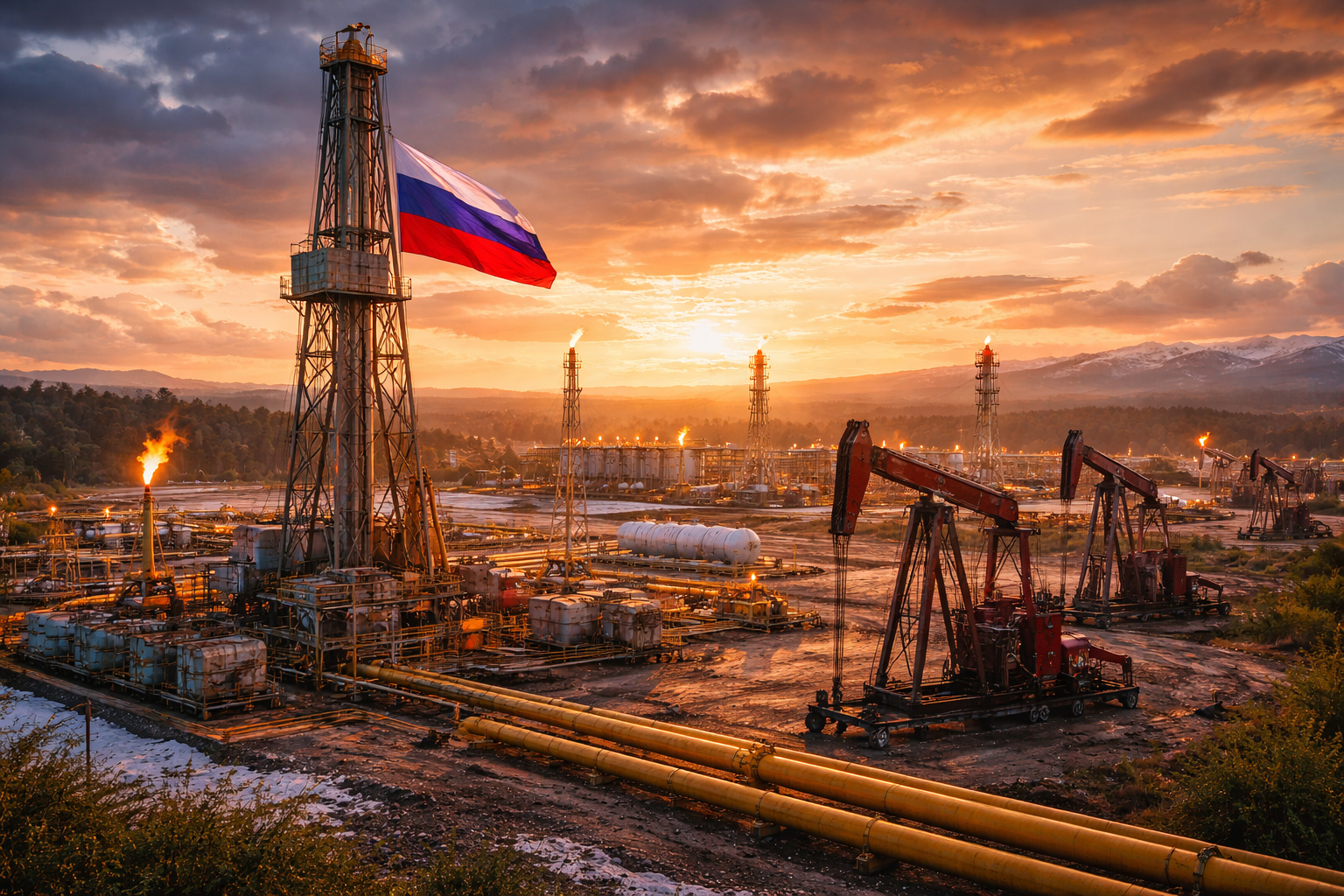
The oil has once again taken center stage in the international debate. In this context, Russia announced new projections for its production in the coming years. According to the Russian government, the country is expected to maintain stable volumes in 2025 and, shortly after, promote moderate growth in 2026.
According to statements made in 2025, Deputy Prime Minister Alexandr Novak stated that oil production is expected to remain at 516 million tons in 2025, precisely matching the level recorded in 2024. Following that, for 2026, the expectation is for an increase of approximately 2%, reaching 525 million tons.
The statement was made during an interview with Russian public television. At that time, Novak emphasized that the Executive adopts a conservative methodology. According to him, the government is working with an average projection of Brent between US$ 69 and US$ 70 per barrel, precisely to reduce risks.
-
Petrobras confirms that it will reimburse amounts to distributors and return the price difference from the gas auction following a regulatory decision.
-
Petrobras buys back fields for billions — what no one is talking about regarding this decision and how it could impact jobs and oil in Brazil.
-
New escalation of tensions and oil crisis in the Middle East forces world powers to accelerate energy transition plans.
-
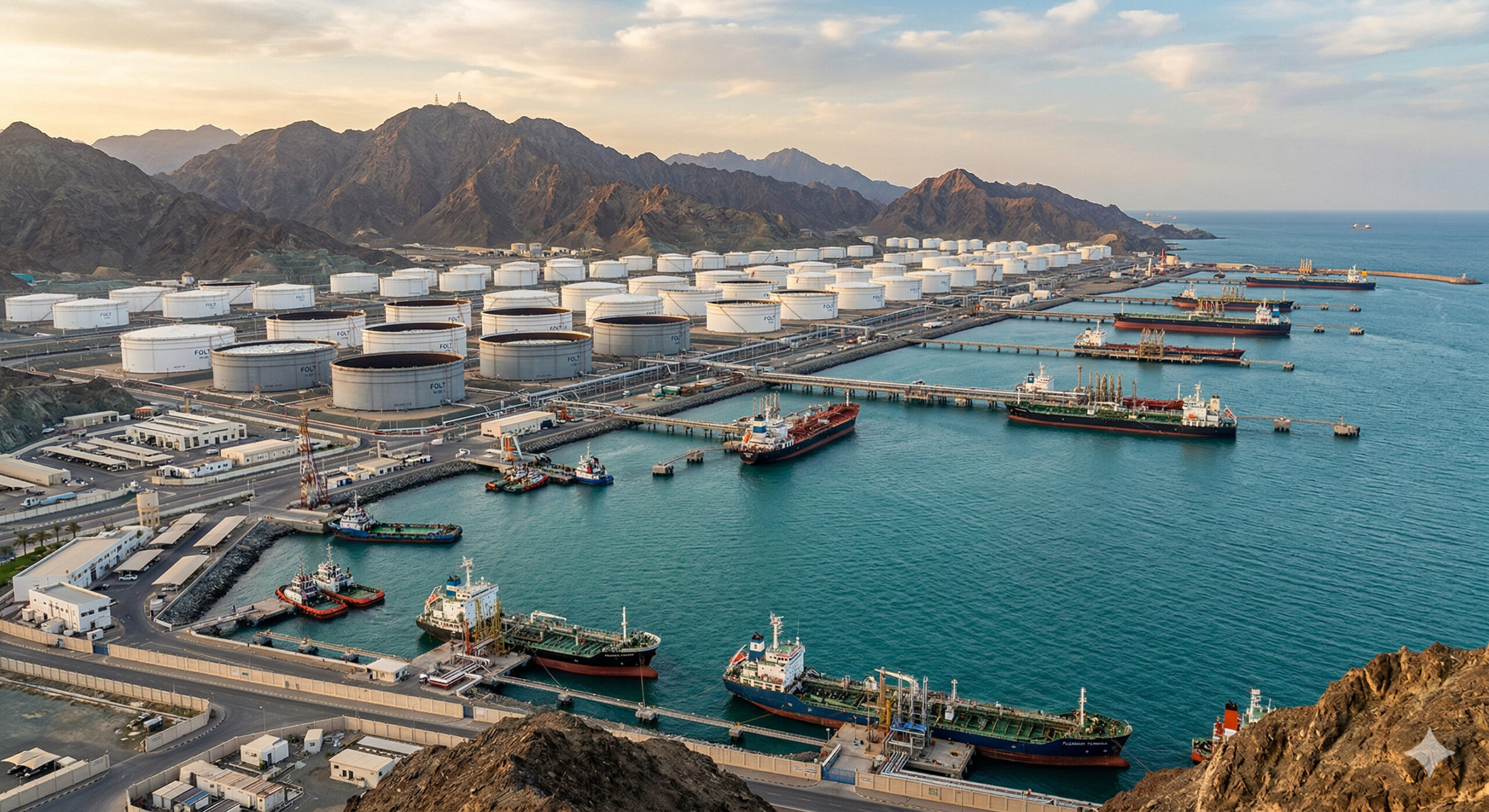
Giant reservoirs with a capacity of 18 million cubic meters have turned Fujairah into one of the largest energy vaults on the planet. This facility, located outside the Strait of Hormuz, stores oil on a colossal scale and has become a silent piece that supports the global flow of fuels.
Oil and Russia’s Historical Relevance in the Global Market
To fully understand this projection, first and foremost, it is necessary to look at Russia’s historical trajectory in the oil market. Since the Soviet era, the country has held a central position among the world’s largest producers.
After the dissolution of the Soviet Union, initially, the Russian oil industry faced difficulties. However, throughout the 2000s, investments, privatizations, and technological modernization allowed for a rapid recovery. As a result, Russia regained prominence in global oil trade.
Even in adverse scenarios, as occurred in recent years, the country maintained high production levels. Thus, Russian oil has established a reputation for resilience, especially in the face of geopolitical and economic crises.
Oil, Sanctions, and Strategic Adaptation
More recently, Russian oil has faced a new cycle of challenges. On one hand, sanctions imposed by Western countries altered traditional markets. On the other hand, financial and logistical restrictions demanded rapid changes.
Nevertheless, despite this, production remained relatively stable. According to official data released by the Russian government, the country has managed to redirect exports and adjust contracts. In this way, it preserved volumes and revenues.
Moreover, at the same time, new markets have gained importance, especially in Asia. Consequently, Russia reduced dependence on European buyers. This movement therefore supports the confidence expressed in the growth projection for 2026.
Oil and the Conservative Pricing Logic
Another central point of Alexandr Novak’s statements involves pricing. In this aspect, the Russian government adopts a deliberately cautious stance. By working with prices between US$ 69 and US$ 70 per barrel, the Executive avoids overestimating revenues.
Historically, this strategy is not new. Oil-producing governments often use conservative projections to protect their budgets. Thus, even in adverse scenarios, the fiscal impact becomes more manageable.
According to Novak, this approach ensures predictability. In a volatile market, where geopolitical shocks occur frequently, planning with prudence becomes essential.
Oil and the Global Balance Between Supply and Demand
At the same time, the Russian projection directly relates to the global balance of supply and demand. Currently, the oil market operates at a sensitive point, where small adjustments generate wide-ranging effects.
According to recent reports from the International Energy Agency, global demand remains relatively firm. Meanwhile, the growth of supply occurs unevenly across regions.
In this scenario, a 2% increase in Russian production appears as a moderate adjustment. That is, it is not an aggressive expansion, but a calculated move, aligned with the current market conditions.
Oil and Russia’s Role in OPEC+
Moreover, the Russian stance also reflects its role within the OPEC+ alliance. Although it is not a formal member of OPEC, Russia acts as one of the main orchestrators of the expanded group.
Through this coordination, producing countries seek to reduce volatility, adjusting supply according to the economic scenario. Therefore, the decision to maintain stability in 2025 and gradually grow in 2026 reinforces this commitment.
According to industry analysts, gradual movements tend to sustain prices, avoiding shocks that could harm producers and consumers.
Oil and Fiscal Impact on the Russian Economy
Oil remains a pillar of the Russian economy. Consequently, revenues from the sector finance a significant portion of the public budget. They support investments in infrastructure, social policies, and strategic programs.
By adopting prudent projections, the government seeks to protect this revenue flow. According to Novak, planning with caution allows for the absorption of external shocks without compromising fiscal stability.
Additionally, this predictability favors long-term investments. Exploration and production projects require regulatory and economic security. Without this, large investments become unviable.
Oil and the Energy Transition in Official Discourse
Despite the advancement of the energy transition in the global debate, Russia maintains a gradual perspective on the process. According to strategic documents published by the government, oil will remain relevant for decades.
In this sense, the growth projection for 2026 does not contradict the energy transition. On the contrary, it reflects the assessment that demand for oil will remain consistent in the medium term.
Thus, the country seeks to balance climate adaptation and economic security. As new sources advance, oil continues to support the productive structure.
A Market Attentive to Upcoming Moves
Finally, the Russian projection reinforces how the global market monitors each decision of major producers. Even modest adjustments influence expectations, future contracts, and investment strategies.
Historically, announcements from Russia have always reverberated in oil prices. Since the 2000s, the country exerts significant influence over the international market.
In this way, by signaling stability followed by moderate growth, Russia reinforces its image as a strategic producer. Russian oil, therefore, continues to reflect not only production numbers but also the political, fiscal, and geopolitical choices that shape the future of global energy.







-

Uma pessoa reagiu a isso.