





 Portuguese
  English
  Spanish
 4 min of reading
  1 comment


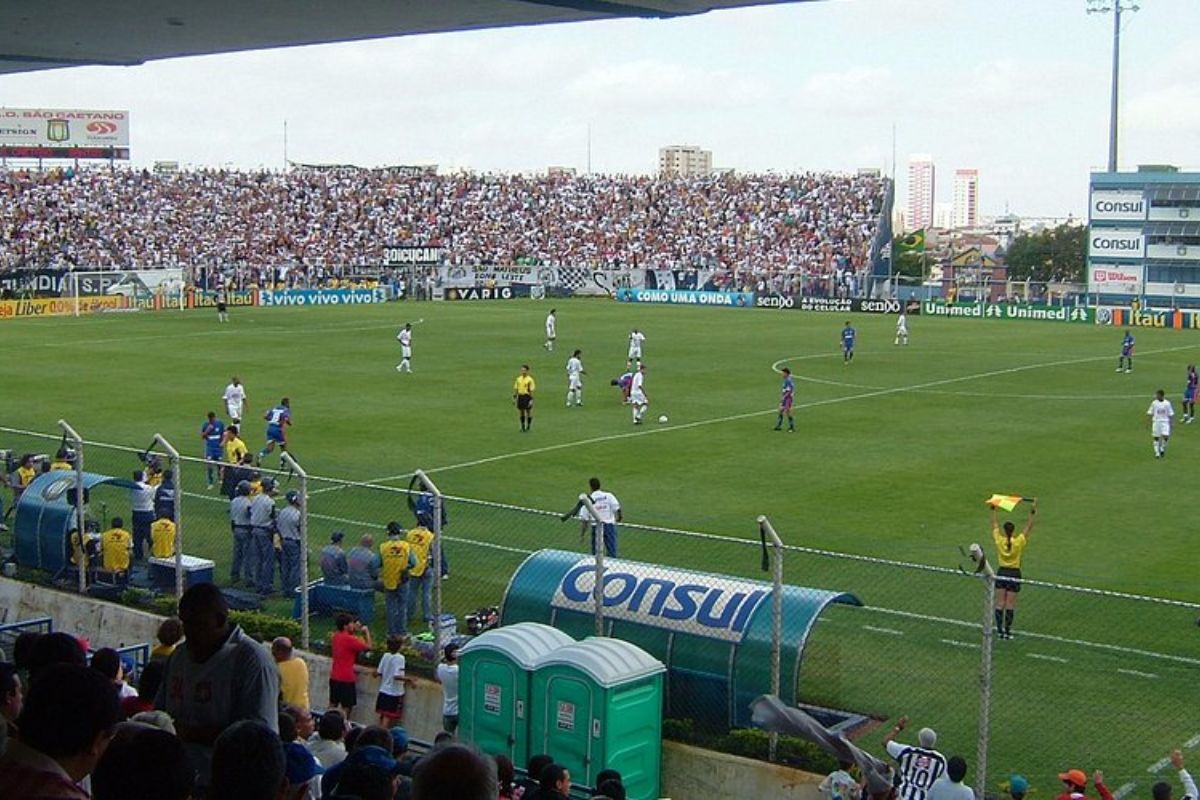


The Federal Police Revealed That a Criminal Organization Linked to International Drug Trafficking Acquired a Football Club in São Paulo to Disguise Illegal Financial Operations, with Arrests, Luxury Seizures, and Indications of the Team Being Used as a Front
The Federal Police confirmed that a football club in São Paulo was used by an international drug trafficking gang to launder money. The operation focused on the financial core of the group, which moved significant amounts through shell companies and manipulated sports contracts.
Among those detained are businessmen and a former military police officer, identified as the organization’s money changer. The investigation identified the purchase of a traditional club in the state as a central tool to legitimize the profits of crime, with simulated transactions and funds concealed by sports activities.
How the Gang Operated Within São Paulo Football
The Federal Police investigation details that the group created a network of companies linked to events, transport, and sports to mask the origin of money obtained from trafficking. The football club in São Paulo was acquired by one of the leaders of the scheme, who used intermediaries with criminal backgrounds to facilitate the transaction.
-
It seems simple, but it enriches: from R$ 500 to R$ 6,000 per piece and up to 10 days of handcrafted production, how is the couple from Praia Grande making a high income with hyper-realistic miniatures and turning a hobby into a money-making machine?

-
Artisanal well erupts with water in the sertão of Bahia, revealing a surprising flow with six active fissures underground and changing the landscape in the Bahian semi-arid region.

-
NASA published a photo taken from space of a mountain range in the interior of Goiás, and the whole world wanted to know what it was: beneath it lies the largest hot water spring on the planet, with temperatures reaching 70 degrees in the middle of the Cerrado.

-
A thermal block costing only R$ 0.40 catches attention by reducing heat by up to 80% using recycled styrofoam, a common kitchen ingredient, and a manual technique capable of producing 50 blocks from a single bag of cement.


The team, historically known for outstanding campaigns in the São Paulo Championship and the Libertadores, became a showcase for unbacked cash flows. Inflated signings, fictitious sponsorships, and transfers between corporate accounts were used as laundering mechanisms.
The Federal Police operation targeted the financial structure of the organization, responsible for converting international trafficking resources into seemingly legitimate investments. Three people were arrested in São Paulo and Paraná, including the former police officer accused of mediating illegal currency transactions.
During the actions, luxury cars, jewelry, and watches were seized, assets considered part of the money laundering process. The investigators believe that the club was used as a front to move millions of dollars without raising suspicion in the banking system.
Who Are the Main Investigated and the Link to International Trafficking
The main target of the operation is William Barilia Agat, known as “concierge of the PCC.” According to the Federal Police, he used his influence within organized crime to open doors in legal sectors, including football. The club’s purchase was made through an old accomplice, Manuel Sabino, who had held a managerial position and had previously been arrested for extortion in the Brás area of São Paulo.
The investigators tracked the movement of funds indicating the use of shell company accounts and the intermediation of money changers, confirming that the club acquisition was just one arm of a broader scheme. The Federal Police stresses that the transaction had no relation to the group currently managing the club.
In a statement, the football club in São Paulo involved in the case reported that the mentioned individuals were only linked to previous administrations and that it is cooperating with the authorities. The current board claims to have no relation to the investigated facts and reiterates that the control of the team was fully transferred before the operation was triggered.
The Federal Police continues to analyze documents and bank statements to identify other possible laundering channels, including investments in cryptocurrencies, sports events, and international transfers. The suspicion is that football was only one of the fronts used to disguise drug trafficking profits.
The Use of Clubs as Instruments of Money Laundering in Brazil
Similar cases have been monitored by the Public Prosecutor’s Office and the Federal Police, who consider the sports sector a conducive environment for hiding resources due to the high circulation of money and low traceability of revenues. Games, image rights, and sponsorships are operations that can be easily manipulated to legitimize illicit amounts.
Experts in sports compliance warn that the lack of strict financial controls in small and medium-sized clubs increases the risk of contamination by funds of criminal origin. The expansion of foreign and private investments has also required more frequent audits and transparency in financial reports.
The operation reveals how football can still be exploited as a channel for money laundering, especially when it mixes popular passion and management vulnerability. The case of the football club in São Paulo reignites the debate about the need for control and traceability mechanisms in sports entities.
Do you believe that Brazilian clubs need stricter financial oversight? Or does the sector already have enough tools to curb irregularities? Share your opinion in the comments — we want to hear from those who experience this in practice.









Que time é esse que vocês encobertas?