





 Portuguese
  English
  Spanish
  3 min of reading
  0 comments


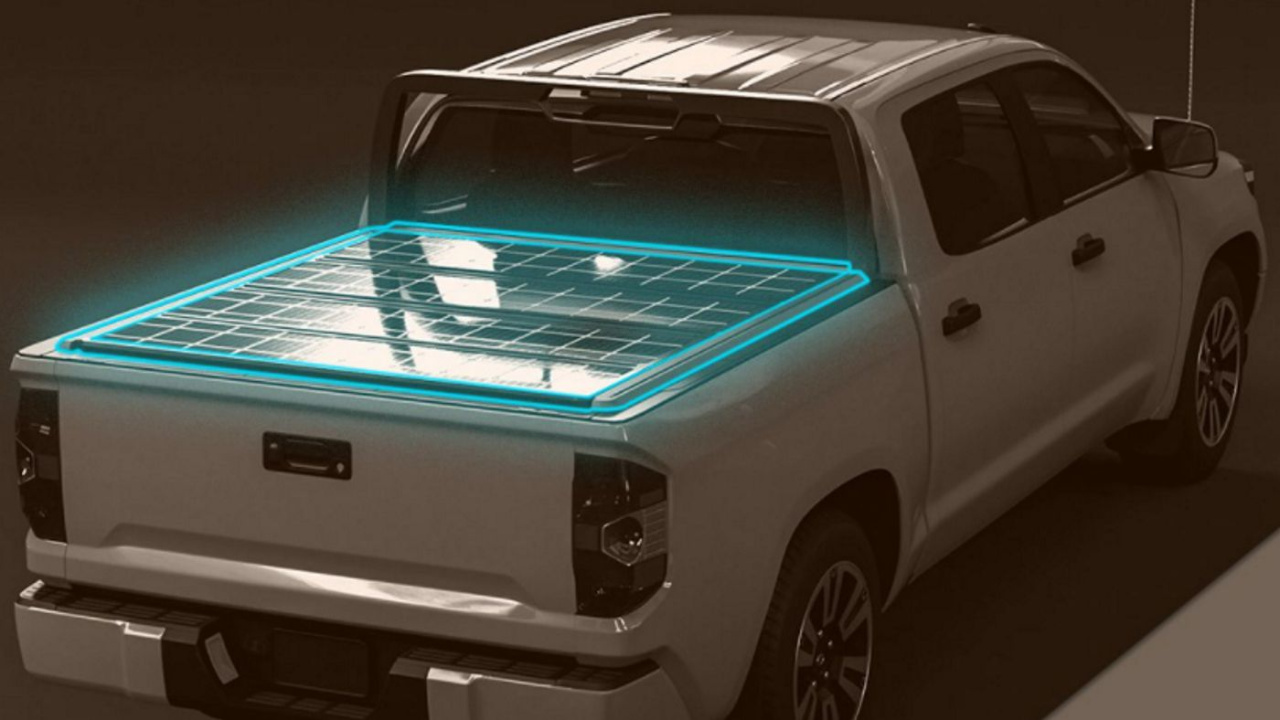
A New Solar Energy-Based Solution Promises to Transform the Use of Electric Pickups, with a Canopy Equipped with Solar Panels Capable of Powering Auxiliary Batteries and Equipment on Adventures Outside the Urban Environment.
The combination of electric mobility and solar energy is beginning to gain practical applications in the automotive sector. Amidst the race for innovation, the American company Worksport introduced the SOLIS, a hard canopy with integrated solar panels, designed specifically for the Rivian R1T electric pickup and compatible with other popular models on the market.
The proposal emerges as a strategy to attract consumers interested in technology, sustainability, and energy autonomy. Although it does not directly alter the vehicle’s main range, the solution expands the possibilities of using solar energy in situations outside urban infrastructure.
Solar Canopy Offers Direct Energy Generation
The SOLIS is designed to provide up to 250 watts of direct solar generation. According to Worksport, this capacity allows for recharging a built-in auxiliary battery in approximately four hours, depending on sunlight conditions.
-
Europe records strong euro economy with solar energy in March and sparks curiosity about which country leads growth that redefines the energy market and reduces costs.

-
Piauí reaches a historic milestone in energy transition: State records nearly 160,000 households powered by solar energy and leads growth in the Northeast.

-
Argentina debuts its first 100% solar-powered highway and transforms an entire road into a showcase of clean energy.

-
Minas Gerais reaches a historic record and surpasses the power of Itaipu, but network costs generate debate: Understand why solar energy in MG impacts the electricity bill of those without panels.


This system does not connect, for now, to the main battery of the Rivian R1T. Still, the generated energy can be used to power external equipment, such as power tools, portable lighting, electronic devices, and camping items. In this way, solar energy takes on a functional role in long trips and outdoor activities.
Focus on Adventure Reinforces the Identity of the Rivian R1T
The Rivian R1T is already positioned as a luxury electric pickup aimed at adventure enthusiasts. The arrival of the solar canopy adds another differentiating element compared to the competition, allowing for greater energy independence in remote environments.
There is an expectation that the product will be commercially available starting in mid-January. Until then, Worksport has been releasing technical details and increasing the interest of consumers looking for sustainable solutions associated with electric mobility.
High Cost May Limit Adoption in Some Markets
Despite the innovative proposal, price may be a limiting factor, especially outside the United States. The complete set of the SOLIS, which includes the canopy, auxiliary battery, and inverter, will be marketed for US$ 949, the equivalent of about R$ 5.2 thousand.
This amount adds to the base price of the canopy, estimated at US$ 1,999, approximately R$ 11 thousand. With additional features, the total cost exceeds R$ 16 thousand. This amount tends to restrict adoption in markets like Brazil, where the final price can be impacted by taxes and logistics.
Aluminum Structure and Compatibility Expand Reach
From a construction standpoint, the SOLIS uses aerospace-grade aluminum. The choice of material seeks to ensure strength and durability without compromising the weight of the structure. Worksport claims that the canopy was developed to withstand adverse conditions, maintaining consistent performance over time.
In addition to the Rivian R1T, the system was designed to accommodate other widely used pickup models. These include Ford F-150, Chevrolet Silverado, GMC Sierra, Nissan Frontier, Ram 1500, and Toyota Tundra. This compatibility expands the reach of the technology and reinforces the potential for the expansion of solar energy applied to the automotive sector.
Solar Energy as a Complement to Electric Mobility
Although it is still unable to directly recharge the vehicle’s main battery, Worksport’s solution demonstrates how solar energy can serve as a complement to electric mobility. By providing electricity for auxiliary uses, the system reduces dependence on external sources and expands the functional autonomy of the user.
With the gradual advancement of these technologies, the integration of solar energy and electric vehicles is expected to gain new applications. In this context, the SOLIS represents an intermediate step, focused more on user experience than on total energy performance, but signaling future pathways for the sector.









Seja o primeiro a reagir!